Let it snow: Ski industry to increasingly rely on artificial powder as climate warms
Advertisement
Read this article for free:
or
Already have an account? Log in here »
To continue reading, please subscribe:

Digital Subscription
One year of digital access for only $205*
- Enjoy unlimited reading on winnipegfreepress.com
- Read the E-Edition, our digital replica newspaper
- Access News Break, our award-winning app
- Play interactive puzzles
*First annual payment billed as $205.00 + GST for one year. This annual subscription will automatically renew at $233.00 + GST every 52 weeks (10% off the regular annual price of $259.35). Offer available to new and qualified returning subscribers only. Cancel any time.
To continue reading, please subscribe:
Add Free Press access to your Brandon Sun subscription for only an additional
$1 for the first 4 weeks*
- Enjoy unlimited reading on winnipegfreepress.com
- Read the E-Edition, our digital replica newspaper
- Access News Break, our award-winning app
- Play interactive puzzles
*Your next Brandon Sun subscription payment will increase by $1.00 and you will be charged $17.95 plus GST for four weeks. After four weeks, your payment will increase to $24.95 plus GST every four weeks.
Read unlimited articles for free today:
or
Already have an account? Log in here »
Hey there, time traveller!
This article was published 05/01/2024 (995 days ago), so information in it may no longer be current.
CALGARY – At Cypress Mountain ski resort, director of operations Jeremy Wentzel has been eagerly waiting for a chance to fire up the snow guns.
The Vancouver ski destination has manufactured more than 81 acres of artificial snow for skiers and boarders to enjoy since opening for the season Dec. 7, but much of that was lost to rainfall and warm temperatures later in the month.
With cooler weather in the forecast, however, Wentzel said a prime opportunity to pump out fresh powder could be just around the corner.
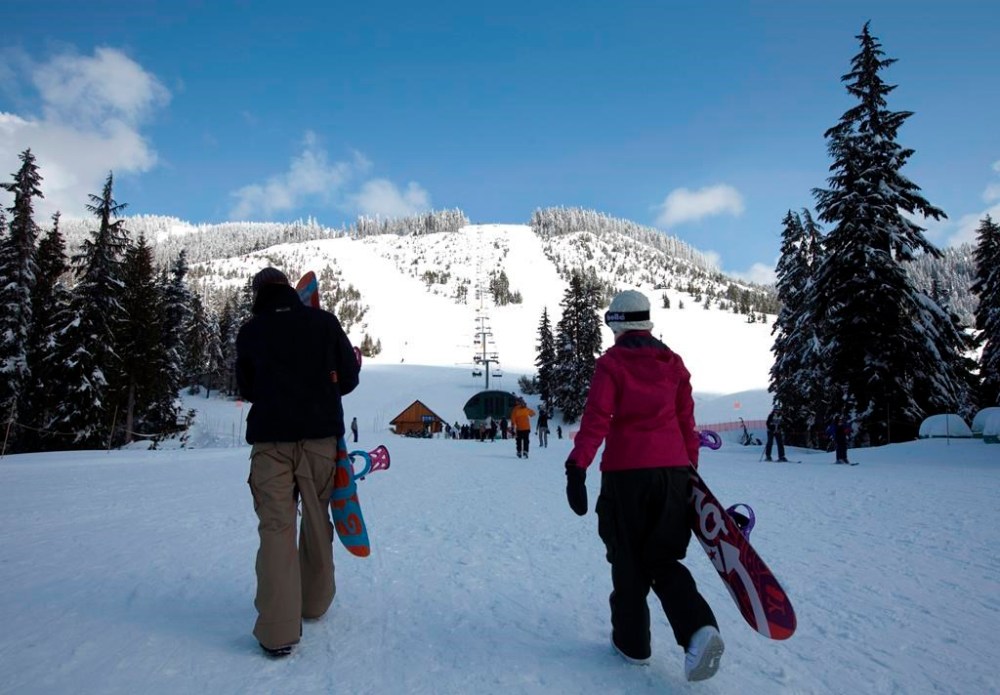
“We’re just waiting for temperatures to fall slightly, because we’re getting very, very close to a pretty significant snow-making window,” Wentzel said.
“It has been a challenge this Christmas period. But temperatures do generally get there eventually, and then you get to put on display what having a robust snow-making system can do for you.”
Artificial snow-making — which involves using machines, or “guns,” to spray a mixture of water and compressed air that then freezes into snowflakes — has been used by the Canadian ski industry since its development in the 1950s.
But with climate change now posing an existential threat to an industry that depends on winter weather, snow-making is expected to become more important than ever.
A study by the University of Waterloo in partnership with the University of Innsbruck in Austria suggests snow-making production requirements by the Canadian ski industry will increase between 55 and 97 per cent by 2050, as climate change brings warmer winters and less natural snowfall.
In Ontario alone, for example, changing weather patterns due to climate change could shorten the average length of the ski season by up to 60 per cent.
Already, in an average winter, Canadian ski resorts produce an estimated 42 million cubic metres of machine-made snow.
But making snow is not as simple as hitting a switch and blasting flakes wherever and whenever you want them. For one, the weather must be cold enough for water to freeze, so all the snow-making capability in the world won’t help in an extended plus-zero-degreesstreak.
“There is a bit of a conundrum there,” said Tara Lovell, spokeswoman for Ontario’s Blue Mountain Resort, where an exceptionally mild December meant a very limited number of runs were open over the holiday season.
“I would say that our (snow-making) system hasn’t been able to get up and running as much as we would have liked.”
Snow-making is also expensive. It requires the installation of water pipes and pumphouses, hydrants and snow guns across significant swaths of terrain. This year, Blue Mountain committed to a “multi-year, multi-million-dollar” investment in snow-making infrastructure improvements that includes enhancing the system’s automation capabilities, Lovell said.
These kinds of investments are meant to help the resort navigate increasingly erratic weather patterns, she added.
“Decades ago, you could kind of guarantee that winter will eventually come and we can make snow when it’s here. But now, those snow-making windows can come in the middle of the night for just an hour here, an hour there,” she said.
“So the more efficient our system is, the better off we are at making sure we’re maximizing what we can, despite the volatility of Mother Nature.”
But while snow-making may be the ski industry’s answer to climate change, it has also been criticized by activists for contributing to it. The University of Waterloo study found artificial snow production at Canadian ski resorts consumes 478,000 megawatt-hours of electricity annually and an estimated 43.4 million cubic metres of water.
And as the demand for artificial snow grows, so too will ski resorts’ demand for water and power.
Waterloo professor Daniel Scott said the sustainability of snow-making varies greatly from location to location, depending on the source of the water and how green the local electricity grid is.
He said the ski industry will need to ensure snow-making is being done in a responsible way — in particular, limiting negative impacts on downstream watersheds and conflict with other water users.
“(Snow-making) can be very unsustainable, or it can be very sustainable,” Scott said.
For her part, Lovell said she believes there are few industries more concerned about sustainability than the ski industry.
“I can’t forecast what is yet to come when it comes to climate change, but we do see those changes happening,” she said.

“For our business to be sustainable, we need to make sure that we can continue to provide a snow-related product to our guests, despite what we’re seeing and the trends that may be coming.”
Back at Cypress Mountain in Vancouver, Wentzel said the resort likely would not have been open at all over the holidays if it didn’t have its snow-making system. He said making snow is a way for the ski industry to take back some control from Mother Nature.
“Snow-making has been a huge investment priority for us,” he said.
“It’s a pretty big insurance policy for the mountain, because it allows you to manage your own fate, if you will.”
This report by The Canadian Press was first published Jan. 5, 2024.