Insured damage from severe weather exceeded $3.1B in 2023: insurance bureau
Advertisement
Read this article for free:
or
Already have an account? Log in here »
To continue reading, please subscribe:

Digital Subscription
One year of digital access for only $205*
- Enjoy unlimited reading on winnipegfreepress.com
- Read the E-Edition, our digital replica newspaper
- Access News Break, our award-winning app
- Play interactive puzzles
*First annual payment billed as $205.00 + GST for one year. This annual subscription will automatically renew at $233.00 + GST every 52 weeks (10% off the regular annual price of $259.35). Offer available to new and qualified returning subscribers only. Cancel any time.
To continue reading, please subscribe:
Add Free Press access to your Brandon Sun subscription for only an additional
$1 for the first 4 weeks*
- Enjoy unlimited reading on winnipegfreepress.com
- Read the E-Edition, our digital replica newspaper
- Access News Break, our award-winning app
- Play interactive puzzles
*Your next Brandon Sun subscription payment will increase by $1.00 and you will be charged $17.95 plus GST for four weeks. After four weeks, your payment will increase to $24.95 plus GST every four weeks.
Read unlimited articles for free today:
or
Already have an account? Log in here »
Hey there, time traveller!
This article was published 08/01/2024 (998 days ago), so information in it may no longer be current.
OTTAWA – Severe weather and natural disasters caused more than $3 billion in insured damages for the second year in a row in 2023.
The Insurance Bureau of Canada’s annual tally places 2023 fourth on the bureau’s list of most expensive weather years — a list that is still topped by 2016, when a devastating wildfire destroyed much of Fort McMurray, Alta.
Here are some of the notable events of 2023, a year that featured Canada’s hottest summer on record.
1. Wildfires
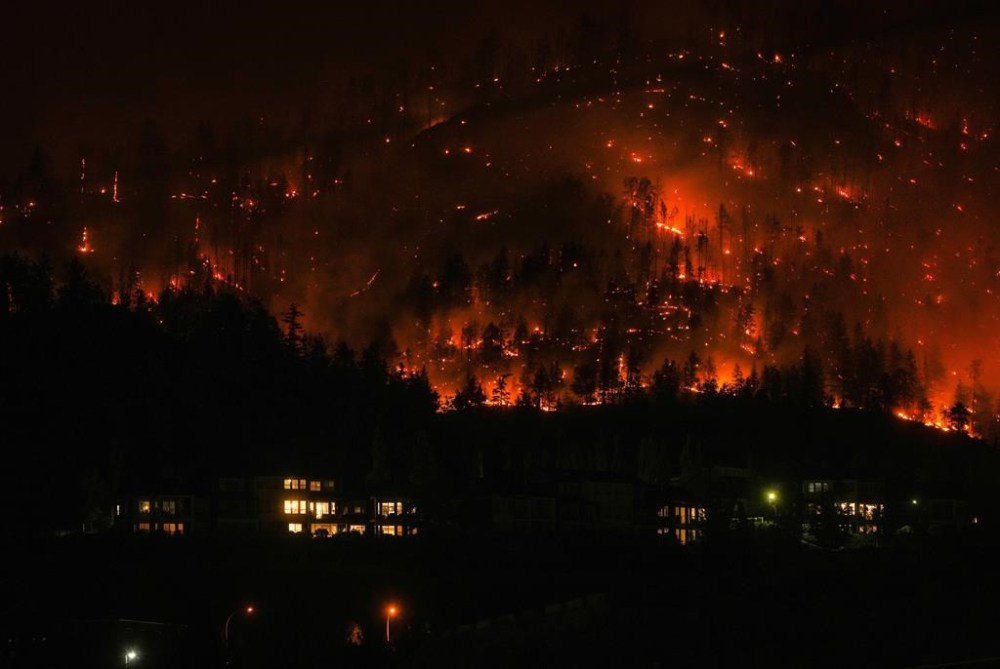
The Okanagan and Shuswap fires last August and September cost $720 million, making them the most expensive insured event ever recorded in British Columbia.
More than $480 million of that was caused by three fires around Okanagan Lake, which burned for weeks and destroyed 70 homes in West Kelowna and another 20 in Westbank First Nation.
Wildfires raged across the country for more than four months in 2023, burning more than 18.5 million hectares of forest.
The insurance bureau listed the cost of insured damages from fires in the Northwest Territories last summer at $60 million.
The total cost of last summer’s fires is much higher. Estimates from B.C., Alberta, Saskatchewan and the Northwest Territories put the cost of actually fighting the fires at $1.4 billion, not including the cost of evacuations and economic interruptions.
2. Severe summer storms
The insurance bureau tallied the cost from a string of storms in Ontario last July and August at $340 million.
Those storms brought hail, wind and tornadoes to areas near Petrolia, South Buxton and Essex County. About 125 homes were damaged by a tornado that hit the south Ottawa neighbourhood of Barrhaven on July 13.
Researchers from the Northern Tornadoes Project at Western University say they are collecting data to determine whether the so-called tornado alley is shifting eastward toward more densely populated parts of the country.
Meanwhile, hailstorms in Winnipeg and Calgary combined to cause more than $250 million in damages.
The sudden storm in Calgary on July 15 damaged homes, cars and businesses, tearing leaves off trees and destroying gardens. A major thunderstorm hit southern Manitoba on Aug. 25, bringing winds over 100 km/h along with rain and hail, particularly in northern Winnipeg.
And a large prairie storm system on Canada Day caused another $100 million in damages in Alberta and Saskatchewan. People reported golf-ball sized hail in some areas and a tornado touched down in central Alberta.
3. April ice storm in Ontario and Quebec
Freezing rain blanketed the National Capital Region and parts of Quebec on April 5, leaving more than a million people without power as ice-laden lines collapsed.
A 60-year-old man was killed when he was crushed by a falling tree outside his home southwest of Montreal.
The storm ultimately caused $330 million in insured damages, the Insurance Bureau of Canada said, in what officials called the worst ice storm since 1998.
That 1998 storm damaged power transmission towers along the St. Lawrence Valley, leaving millions in the dark, some for many weeks. Environment Canada says the storm affected one in four Canadians.
4. East Coast cold snap
Extreme cold blanketed the country in early February, with temperatures dipping to -25 C in some places and feel-like temperatures closer to -50 C.
Arctic air blanketed much of the country Feb. 4, from Newfoundland and Labrador to parts of Ontario and much of the North.
A huge surge of demand on the power grid left tens of thousands of people in the dark across Atlantic Canada. That forced people to leave their homes and caused pipes to burst in houses and businesses alike.
In all, the insured damages were tallied at $120 million.
The impacts were felt well beyond the winter months. An estimated 95 per cent of some of Nova Scotia’s most prized grape varieties were destroyed by the deep freeze, along with raspberries, peaches, cherries and plums. That prompted the provincial government to announce an emergency program to help farmers.
5. Fires and floods in Nova Scotia
Nova Scotia’s difficult year continued into the spring, when a wildfire broke out near the Halifax suburb of Tantallon on May 28.
Around 150 homes were destroyed in the fast-moving flames and more than 16,000 people were forced to flee their homes. Evacuation orders remained in place into early July.
The total insured damages were more than $165 million.
Then in late July, a deluge of more than 250 millimetres of rain caused deadly flash floods in West Hants County.
Two six year-old children, a 14-year-old girl and a 52-year-old man drowned after two vehicles were swept off the roads on July 22.
The provincial government is pledging to produce detailed flood plain maps by 2026, in order to provide information emergency management officials said they did not have at the time.
Insured damages from those floods totalled $170 million.
The insurance bureau noted that flooding happened across much of the country last year and more than 1.5 million households cannot get affordable flood insurance.
It called for the federal government to make good on a promise to create a national flood insurance program, something that was included in the 2023 federal budget, to help people who live in those high-risk areas.
This report by The Canadian Press was first published Jan. 8, 2024.
Related Articles
Earth shattered global heat record in '23 and it's flirting with warming limit, European agency says


Advertisement Advertise With Us
Advertisement Advertise With Us