Game-time guacamole may get harder to make as climate reduces avocado shipments from Mexico

Advertisement

Advertise with us

MEXICO CITY (AP) — Guacamole, a favored game-time snack in the United States, may be getting harder to make because a lack of rain and warmer temperatures have resulted in fewer avocados being shipped from Mexico.

Read this article for free:


or

Already have an account? Log in here »

To continue reading, please subscribe:

Subscribe and receive a limited-edition Free Press branded hat or tote.

Digital Subscription

One year of digital access for only $205*

  • Enjoy unlimited reading on winnipegfreepress.com
  • Read the E-Edition, our digital replica newspaper
  • Access News Break, our award-winning app
  • Play interactive puzzles

*First annual payment billed as $205.00 + GST for one year. This annual subscription will automatically renew at $233.00 + GST every 52 weeks (10% off the regular annual price of $259.35). Offer available to new and qualified returning subscribers only. Cancel any time.

To continue reading, please subscribe:

Add Free Press access to your Brandon Sun subscription for only an additional

$1 for the first 4 weeks*

  • Enjoy unlimited reading on winnipegfreepress.com
  • Read the E-Edition, our digital replica newspaper
  • Access News Break, our award-winning app
  • Play interactive puzzles
Start now

*Your next Brandon Sun subscription payment will increase by $1.00 and you will be charged $17.95 plus GST for four weeks. After four weeks, your payment will increase to $24.95 plus GST every four weeks.

Hey there, time traveller!
This article was published 10/02/2024 (967 days ago), so information in it may no longer be current.

MEXICO CITY (AP) — Guacamole, a favored game-time snack in the United States, may be getting harder to make because a lack of rain and warmer temperatures have resulted in fewer avocados being shipped from Mexico.

The western state of Michoacan, which supplies almost 90% of the creamy textured fruit used in the Super Bowl snack, has suffered a hotter, drier climate that has led to a lack of water in growing areas.

Lakes in the state are drying up: Desperate avocado growers send tanker trucks down to suck up the last water, or divert streams, to feed their thirsty orchards, sparking conflicts. The state received about half the rain it normally gets last year, and reservoirs are at about 40% of capacity, with no rain in sight for months.
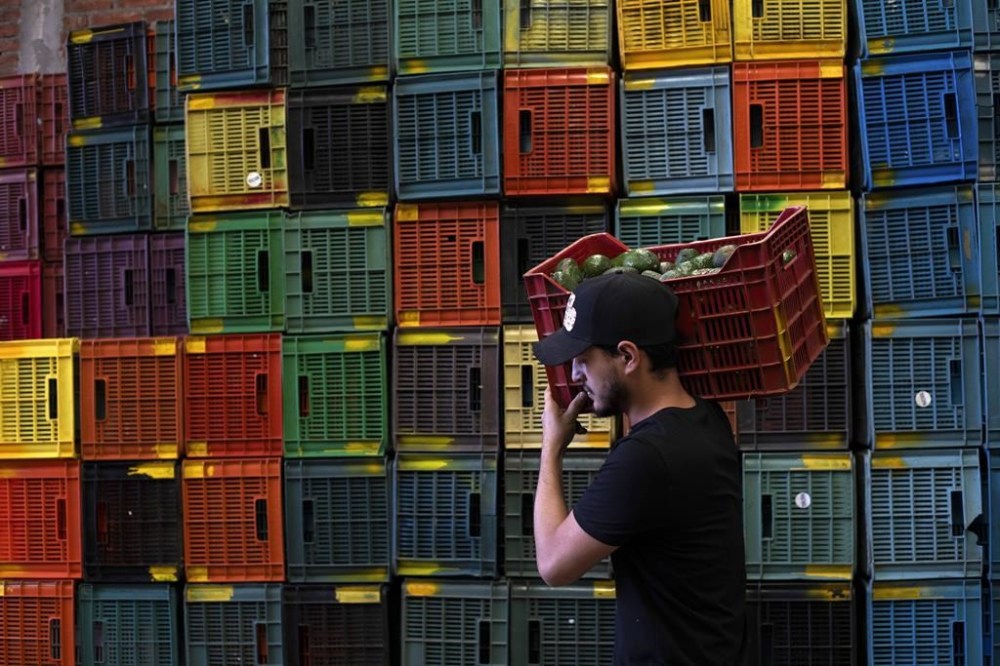
A worker carries a crate of avocados at a plant in Uruapan, Michoacan state, Mexico, Friday, Feb. 9, 2024. A lack of rain and warmer temperatures has resulted in fewer avocados being shipped from Mexico to the United States. (AP Photo/Armando Solis)

Meanwhile, some growers are illegally cutting down pine forests that feed the water system to plant more avocados. To top it all off, a nother American obsession — tequila — is starting to cause problems too.

The whole situation is not good for avocados. Last year, avocado exports from Michoacan for the Super Bowl grew by 20% to 140,000 tons. This year, that number actually declined by 2,000 tons, despite increased planting; meaning fewer of the creamy textured fruit in U.S. produce departments. Alejandro Méndez, the state secretary of the environment, estimates 30% of avocado orchards in Michoacan are now water-stressed.

Something’s got to give, and with consumers demanding more environmentally conscious produce, state officials are finally putting together a sustainable certification program.

The certification program would presumably result in growers improving their water use, enabling them to offer consumers both greener avocados and more of them.

Coming soon to a grocery store near you: fruit with a sticker saying something like “this avocado wasn’t grown on deforested land,” or “this avocado used water responsibly.”

Officials are still working on a catchy slogan for the greener avocados. But given that it’s coming from the same people who brought you years of Super Bowl ads about avocados from Mexico, a catchy slogan is highly likely.

“The idea is that there is going to be a certification sticker with a QR code that you can scan with your telephone, and that link will take you to a page with a satellite photo of the orchard … and the forest associated with the orchard,” said Méndez.

Because they use more water than pine forests, growers will have to contribute to a fund that ensures several acres of forest are preserved for each acre of orchard.

“So with that orchard, you can be assured the dollar you paid for this avocado is going to preserve this piece of forest,” said Méndez, who estimates about 70% of the orchards in place before 2011 were planted on old farmland, not forests. But the remaining 30% give the rest a bad name, he complains.

The decision to act comes not a moment too soon. The Center for Biological Diversity said Thursday that more than 28,000 people have signed an online petition calling on grocery chains to adopt more sustainable avocado-sourcing policies.

“Many people in Mexico have lost their forests and water because of the 304 million pounds of avocados we’ll be eating on Super Bowl Sunday,” said Stephanie Feldstein, the center’s director for population and sustainability. “Our obsession with avocados has a horrific hidden cost. It’s time for grocery chains to take responsibility and make sure they’re not buying avocados grown in deforested areas.”

Up to now, there hasn’t been much consumers could do. There are few certified sustainable avocados available year-round on the market, and if you want guacamole, there’s not much else you can use. That’s despite all the news coverage about how avocado growers and packers have to pay protection money to drug cartels.
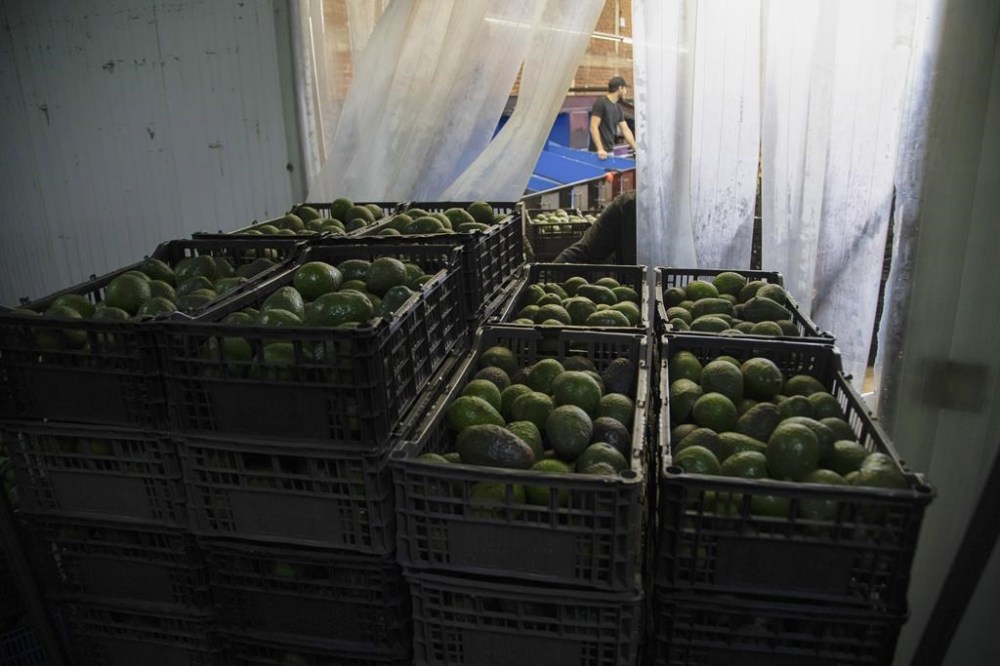
Avocados are stored in crates at a plant in Uruapan, Michoacan state, Mexico, Friday, Feb. 9, 2024. A lack of rain and warmer temperatures has resulted in fewer avocados being shipped from Mexico to the United States. (AP Photo/Armando Solis)

Julio Santoyo, a front-line anti-logging activist in Villa Madero, Michoacan, says he’s taking a wait-and-see attitude toward the new certification program. Until then, Super Bowl this year — like every year — was “a kick in the pants,” he said.

“The growth in illegal orchards continues unabated,” Santoyo said. “We assume that more than half of the avocados consumed around the Super Bowl are from illegal planting.

“Up to now, the Mexican government has not taken practical steps to certify environmentally sustainable avocado production,” he said.

The crisis is clear in the once heavily forested, lake-dotted state. Lake Cuitzeo, Mexico’s second largest, was once a vast sheet of water reflecting blue skies near the state capital; it is now about 60% dry, exposing kilometers (miles) of dry ground and grass.

And poor Michoacan faces new threats from U.S. consumers: Part of the state next to neighboring Jalisco is certified to grow the blue Weber agave, the only plant from which true tequila can be distilled.

While agave likes drier, hotter, poorer soils than avocados, growers are still cutting down native scrub and low, thorny woods to plant the spikey-leafed seedlings, whose barrel-like centers will later be cooked down and fermented.

It’s a relatively new problem, fed by rising demand for tequila.

“In the last two years, the price for a kilo of agave went up a lot, it went up to almost 35 or 40 pesos per kilo (about a dollar per pound),” Méndez said.

“We have 50 million agave plants,” he said. “It’s grown a lot, and we have started to see deforestation as well in that area.”


Report Error Submit a Tip

More Stories

Province looks to seize notorious drug den

Erik Pindera 5 minute read Preview

Province looks to seize notorious drug den

Erik Pindera 5 minute read 12:00 PM CDT

Provincial justice officials are trying to seize a Dominion Street drug den that has been the source of trouble in the West End for years.

The owner of 982 Dominion St., 45-year-old Robert Edward Johnson, was most recently arrested in June along with several others after a lengthy Winnipeg Police investigation into thefts and illicit drug sales connected to the house.

“The residence has a reputation within the neighbourhood as being a location where individuals habitually attend for the purpose of purchasing and/or consuming controlled substances,” reads a statement of claim filed by the province’s director of civil forfeiture in the Court of King’s Bench last week.

“For several years, the residence has been associated with criminal activity, violence, and disorder, resulting in numerous police attendances and complaints from members of the surrounding community.”

Read
12:00 PM CDT

Mayoral candidate Vogiatzakis criticized for living outside Winnipeg

Malak Abas 4 minute read Preview

Mayoral candidate Vogiatzakis criticized for living outside Winnipeg

Malak Abas 4 minute read Updated: Yesterday at 6:03 PM CDT

A mayoral hopeful took heat from other candidates Friday for living outside Winnipeg while running in the civic election.

Mike Vogiatzakis’s primary residence is in the Rural Municipality of St. Andrews, about 25 kilometres north of Winnipeg — a community with its own mayor and councillors.

But the funeral director said he owns a home in Winnipeg where he divides his time, and he would move to the city full-time if elected mayor.

“It doesn’t matter where a person lives. Why are we dividing St. Andrews and Manitoba and Winnipeg? I’ve met the criteria to run for mayor,” Vogiatzakis said Friday morning.

Read
Updated: Yesterday at 6:03 PM CDT

Jets bench boss Arniel talks rebuilding from last season’s struggles

Mike McIntyre and Ken Wiebe 12 minute read Preview

Jets bench boss Arniel talks rebuilding from last season’s struggles

Mike McIntyre and Ken Wiebe 12 minute read Thursday, Oct. 1, 2026

Scott Arniel has a lot on his plate these days.

But the head coach of the Winnipeg Jets took some time Thursday to sit down with Free Press hockey writers Mike McIntyre and Ken Wiebe to discuss a number of topics on the eve of a new hockey season. This interview has been condensed and edited for clarity.

Wiebe: What was the evaluation of last season like? What did you personally do in an attempt to improve after going from first-overall to 26th-overall?

I just went back and looked at things and made sure my communication was where it needed to be with my players. Was my communication where it needed to be with my boss, with my general manager (Kevin Cheveldayoff)? How our coaching staff worked. How we handled highs and lows. Things I felt I could have done better.

Read
Thursday, Oct. 1, 2026

Living the dream

Ken Wiebe 7 minute read Preview

Living the dream

Ken Wiebe 7 minute read 4:48 PM CDT

DETROIT – As Tyrel Bauer took a left turn out of the tunnel from the Winnipeg Jets dressing room and into the stands, he was met with a hearty round of applause from the 25 friends and family members who had made the trek from various points around North America.

Bauer had just realized a childhood dream and the significance of the moment was not lost on some of his biggest supporters.

“It was a special walk, for sure. A special walk,” Bauer said on Saturday afternoon before the Jets departed for a two-game road trip that begins on Sunday in Detroit against the Red Wings. “Those people who came – and many more that weren’t there and were cheering on from afar – they’ve always been there.

“I wanted that for my family, maybe even more than I wanted it for me. They’ve been through thick and thin. I’ve stressed mom out quite a bit over the years doing my job. That meant a lot for them and I’m really happy they could be there for it.”

Read
4:48 PM CDT

Health minister warns $1.2 billion in annual federal funding set to expire in March

Scott Billeck 4 minute read Preview

Health minister warns $1.2 billion in annual federal funding set to expire in March

Scott Billeck 4 minute read Thursday, Oct. 1, 2026

Manitoba’s health minister is warning of possible cuts to health care with $1.2 billion in annual funding from Ottawa set to expire next year.

“We’re very concerned that what would be the largest cut to health care in a generation is right in front of us,” Health Minister Uzoma Asagwara said Thursday at the Manitoba legislature. “It means that services that Manitobans depend on will be in jeopardy and be at risk.

“Any reductions, any cuts from Canada, will have direct impacts on the health outcomes of Manitobans.”

Asagwara, who serves as the provincial and territorial health minister lead, chaired a virtual meeting Tuesday with provincial and territorial health ministers to discuss federal funding for health care, mental health care and substance use services, which is scheduled to expire March 31, 2027.

Read
Thursday, Oct. 1, 2026

Retired guidance counsellor defends explicit 2025 sex-ed presentation to high school football team in disciplinary hearing

Maggie Macintosh 7 minute read Preview

Retired guidance counsellor defends explicit 2025 sex-ed presentation to high school football team in disciplinary hearing

Maggie Macintosh 7 minute read Updated: Yesterday at 12:26 PM CDT

Gus Watanabe, a former employee of Oak Park High School in Winnipeg, was the subject of a public disciplinary hearing on Thursday.

Read
Updated: Yesterday at 12:26 PM CDT