Why drought on the prairies is making your steak more expensive
Advertisement
Read this article for free:
or
Already have an account? Log in here »
To continue reading, please subscribe:

Digital Subscription
One year of digital access for only $205*
- Enjoy unlimited reading on winnipegfreepress.com
- Read the E-Edition, our digital replica newspaper
- Access News Break, our award-winning app
- Play interactive puzzles
*First annual payment billed as $205.00 + GST for one year. This annual subscription will automatically renew at $233.00 + GST every 52 weeks (10% off the regular annual price of $259.35). Offer available to new and qualified returning subscribers only. Cancel any time.
To continue reading, please subscribe:
Add Free Press access to your Brandon Sun subscription for only an additional
$1 for the first 4 weeks*
- Enjoy unlimited reading on winnipegfreepress.com
- Read the E-Edition, our digital replica newspaper
- Access News Break, our award-winning app
- Play interactive puzzles
*Your next Brandon Sun subscription payment will increase by $1.00 and you will be charged $17.95 plus GST for four weeks. After four weeks, your payment will increase to $24.95 plus GST every four weeks.
Read unlimited articles for free today:
or
Already have an account? Log in here »
Hey there, time traveller!
This article was published 25/02/2024 (934 days ago), so information in it may no longer be current.
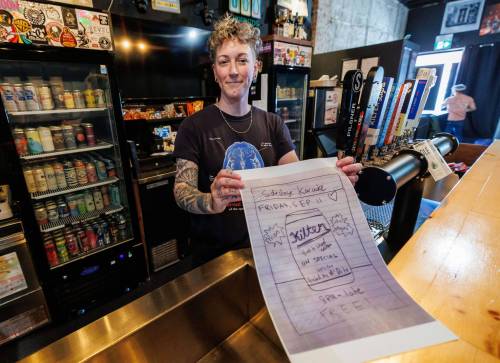
CALGARY – Ask John Wildenborg if he thinks Canadians will be paying more for steak during future barbecue seasons, and the owner of Calgary specialty butcher shop Master Meats doesn’t hesitate.
“Prices are definitely going to go higher, no ifs, ands or buts about it,” he said.
“It keeps me up at night, actually, thinking about coming into the summer and where prices are going to be. It’s not a good situation.”

Beef — whether in the form of a juicy burger or a classic tenderloin steak — is a mainstay of many Canadians’ diets. Its popularity is the reason why consumer demand for beef has historically remained strong, even through periods of economic downturn when Canadians have less money in their wallets.
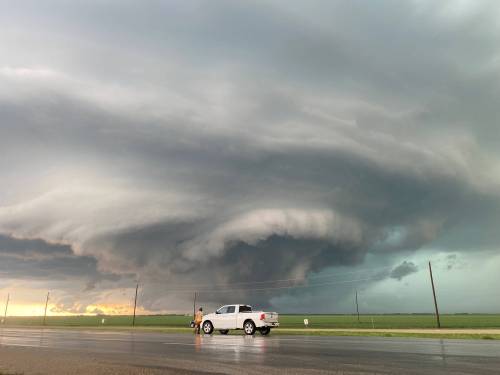
But the business of beef is changing, in large part due to consecutive years of severe drought across North America’s main cattle-producing regions. From parched southern Alberta to water-scarce east Texas, ranchers have been downsizing their herds due to a lack of grass for grazing. The resulting shortfall in cattle supply is reducing overall beef production and helping to push retail beef prices higher.
“A 10-ounce New Yorker right now … would cost around $20. Three years ago that was maybe a $15 steak,” Wildenborg said.
“And this is usually the slow time of year for beef, but wholesale prices haven’t dropped off at all since Christmas. I’m paying 40 per cent higher than I was last year at this time.”
Food in general, as consumers know, has increased in price over the last three years due to the COVID-19 pandemic and an overall rising cost of living. But while inflation is starting to moderate in a number of food categories, the drought factor means beef prices are not.
“When you talk to producers, whether it’s in the Canadian provinces or key cattle-producing regions of the United States, many producers will tell youthey’ve had to experience two ‘hundred-year droughts’ back-to-back over the course of 10 years,” said Lance Zimmerman, a Kansas-based senior beef analyst with Rabobank.
“Add to that a global pandemic and all the challenges that go along with that, and we’ve had a 10- to 15-year period that’s been particularly challenging for a lot of cattle producers. It has led to a lot of liquidation.”
Liquidation is when a rancher makes the decision to sell off a greater proportion of heifers and cows for slaughter rather than retaining them to grow his or her herd. Ranchers may decide to do this because of a variety of factors, including high input costs, limited labour availability and high interest rates, as well as the challenges associated with long-term drought.
In Canada, the size of the national cattle herd has been declining for years, a trend that continued last year amid a punishing drought in Western Canada. This country’s beef cow inventory fell in 2023 by 1.5 per cent to 3.66 million animals — the lowest level since 1989.
South of the border, U.S. Department of Agriculture figures show an even more dramatic story. There, the national cattle herd has been contracting for five years, reaching 28.2 million animals in 2023. That’s the smallest number of cattle the U.S. has seen since 1961.
Fewer cattle means less beef production, which translates to fewer exports as well as higher prices at the retail counter.
“Unfortunately for the consumer, those prices are going to ratchet higher,” said Zimmerman.
“On a U.S. basis, retail beef prices are currently about US$8 a pound, and by our estimation, over the next several years we can expect another dollar-and-a-half increase, quite easily.”
In southeast Alberta, near the tiny community of Jenner, rancher Brad Osadczuk shipped some of his cattle east to Saskatchewan last summer to graze on rented pastureland. It was the only way he could feed them because his own grassland was entirely depleted by drought.
“This past year was the worst year for drought in adult life and I was born in 1971,” Osadczuk said. “Our native prairie just never turned green.”
While Osadczuk was able to avoid reducing his herd size, he said many ranchers in his area have been choosing not to replace cows after they sell them for at least the past five years.
“We’ve been mitigating drought for a long time,” he said.
“So we’re kind of at a point in this part of Alberta where our herds are pretty small already.”
Even if the current drought cycle were to end this year, cattle numbers can’t rebound overnight. That’s why experts say the new era of higher beef prices is here to stay, at least for a while.
“This isn’t a short-term thing,” Osadczuk said.
“For a female calf that is born today, it’s four years before that female can have its own calf that can end up in the food chain.”
Anne Wasko, a Saskatchewan-based market analyst with Gateway Livestock, said North American cattle and beef supplies will remain tight for several years, and much is riding on Mother Nature.
“We’re going to be looking at smaller supplies in ’24, ’25 and possibly out as far as ’26,” she said.
“We truly need moisture, first and foremost, to turn this boat around.”
This report by The Canadian Press was first published Feb. 25,2024.