

Ottawa signs memorandum of understanding with Germany for Canadian hydrogen
Advertisement
Read this article for free:
or
Already have an account? Log in here »
To continue reading, please subscribe:
Monthly Digital Subscription
$0 for the first 4 weeks*
- Enjoy unlimited reading on winnipegfreepress.com
- Read the E-Edition, our digital replica newspaper
- Access News Break, our award-winning app
- Play interactive puzzles
*No charge for 4 weeks then price increases to the regular rate of $19.00 plus GST every four weeks. Offer available to new and qualified returning subscribers only. Cancel any time.
Monthly Digital Subscription
$4.75/week*
- Enjoy unlimited reading on winnipegfreepress.com
- Read the E-Edition, our digital replica newspaper
- Access News Break, our award-winning app
- Play interactive puzzles
*Billed as $19 plus GST every four weeks. Cancel any time.
To continue reading, please subscribe:
Add Free Press access to your Brandon Sun subscription for only an additional
$1 for the first 4 weeks*
*Your next subscription payment will increase by $1.00 and you will be charged $16.99 plus GST for four weeks. After four weeks, your payment will increase to $23.99 plus GST every four weeks.
Read unlimited articles for free today:
or
Already have an account? Log in here »
Hey there, time traveller!
This article was published 18/03/2024 (635 days ago), so information in it may no longer be current.
HALIFAX – Canada and Germany signed a memorandum of understanding on Monday for the future sale of hydrogen produced from proposed projects in Atlantic Canada.
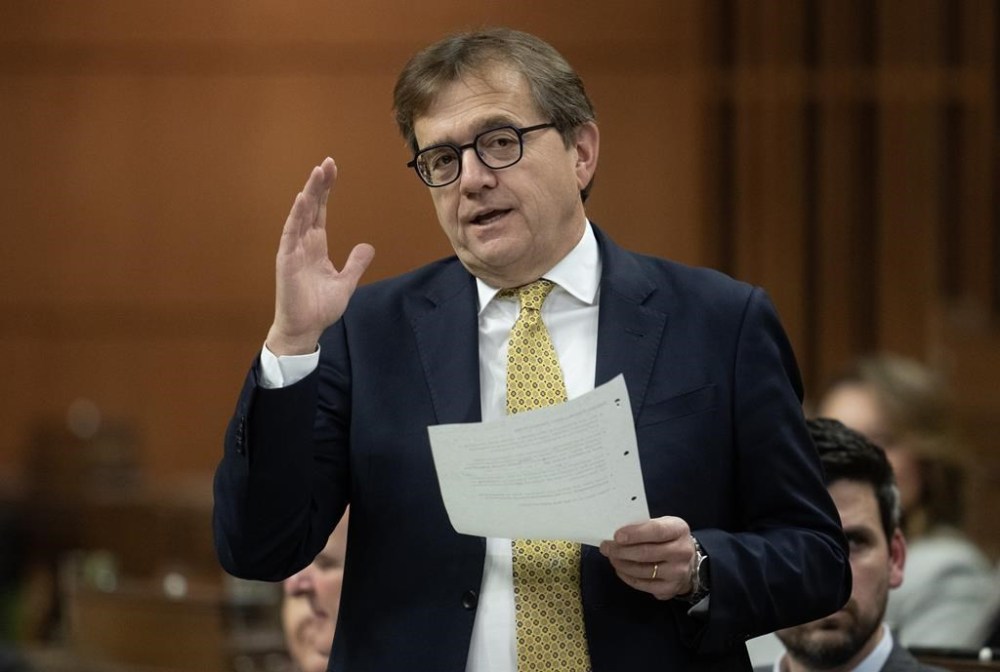
The agreement signed in the northern German city of Hamburg by federal Energy Minister Jonathan Wilkinson and German Vice-Chancellor Robert Habeck is aimed at securing early access to the German market for Canadian hydrogen producers.
“Hydrogen represents a multi-billion-dollar opportunity for Atlantic Canada,” Wilkinson told reporters during a conference call from Hamburg. “These actions underline that Canada intends to be a key supplier to provide Germany and Europe with the clean energy it needs to achieve its climate and energy security goals.”
The minister said the agreement builds on the Canada-Germany Hydrogen Alliance that was signed in Stephenville, N.L., in August 2022, with the intention of permitting the export of Canadian hydrogen by 2025. That alliance was signed several months after Russia invaded Ukraine, which forced German leaders to rethink their energy dependence on Russia and search for new sources of cleaner fuel.
As things stand, World Energy GH2’s proposed wind-to-hydrogen project on Newfoundland’s Port au Port Peninsula is awaiting approval under a provincial environmental assessment. In Nova Scotia, EverWind Fuels and Bear Head Energy have plans, which have received provincial approval, for hydrogen plants in Point Tupper.
The projects in both provinces would use wind power to create hydrogen and ammonia. That ammonia would be shipped to Germany, where it can be used as fuel to replace natural gas, or converted back into hydrogen.
The new agreement commits both countries to finalize terms and conditions for an early access trade window no later than June 30. Wilkinson said the goal is to eventually run hydrogen auctions that will establish the price.
“In the next 90 days we are trying to establish greater certainty around the price … which should then lead to deals that will actually allow the projects to begin to move forward rapidly,” he said.
Wilkinson said the steps announced Monday are needed to meet Germany’s plans in 2025 to begin converting its industry to run on hydrogen — yet no facilities in Canada have been built yet.
“Canada wants to make sure it is leading the way and benefiting from an economic perspective,” he said.
The minister added that the agreement will not undermine Newfoundland and Labrador’s environmental assessment protocols nor the federal environmental process for offshore wind projects, which would help supply some of the energy.
“This does not in any way mean that projects get a free pass on that,” he said.
Wilkinson was joined in Germany by John Horgan, who is Canada’s ambassador to Germany, along with Indigenous and industry leaders.
Newfoundland and Labrador Premier Andrew Furey and Nova Scotia’s Tim Houston did not make the trip, although Houston had originally been scheduled to go.
Houston told reporters at the provincial legislature that he decided over the weekend against travelling because of labour disputes that have resulted in roaming strikes at various airports in Europe.
“I was just worried about the ability to get back,” he said.
This report by The Canadian Press was first published March 18, 2024.