Driven by wildfire smoke, Canada’s air quality worse than U.S.: report
Advertisement
Read this article for free:
or
Already have an account? Log in here »
To continue reading, please subscribe:
Digital Subscription
One year of digital access for only $1.44 a week*
- Enjoy unlimited reading on winnipegfreepress.com
- Read the E-Edition, our digital replica newspaper
- Access News Break, our award-winning app
- Play interactive puzzles
*Billed as $5.77 plus GST every four weeks. After 52 weeks, price increases to the regular rate of $19.95 plus GST every four weeks. Offer available to new and qualified returning subscribers only. Cancel any time.
To continue reading, please subscribe:
Add Free Press access to your Brandon Sun subscription for only an additional
$1 for the first 4 weeks*
- Enjoy unlimited reading on winnipegfreepress.com
- Read the E-Edition, our digital replica newspaper
- Access News Break, our award-winning app
- Play interactive puzzles
*Your next Brandon Sun subscription payment will increase by $1.00 and you will be charged $17.95 plus GST for four weeks. After four weeks, your payment will increase to $24.95 plus GST every four weeks.
Read unlimited articles for free today:
or
Already have an account? Log in here »
Hey there, time traveller!
This article was published 19/03/2024 (944 days ago), so information in it may no longer be current.
Canada’s air pollution levels last year were worse than those in the United States for the first time since an air-quality firm started publishing its assessments in 2018.
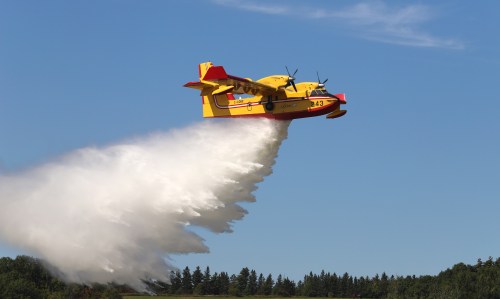
The sixth World Air Quality report published Tuesday by Swiss firm IQAir says raging wildfires were a major influence on Canada’s drop in air quality in 2023.
While the report found Canada on average still has some of the least polluted air, public-health experts have repeatedly warned about the health dangers of more intense wildfire seasons, fuelled by human-caused climate change.

“Air pollution is a silent killer,” said Dr. Samantha Green, a family physician with Unity Health Toronto and associate professor at the University of Toronto who was not involved with the report.
“It’s a problem that I think we’re not used to thinking about, but that we need to be thinking about more.”
Health Canada estimates air pollution contributes to 15,300 premature deaths every year in Canada. Wildfire smoke exposure is also strongly linked to chronic conditions, such as asthma, and increases in respiratory emergency room visits.
The U.S. typically dominates the World Air Quality report’s list of 15 most polluted cities in both the U.S. and Canada, with Canadian cities appearing on the list just three times since the first assessment was published in 2018.
But roles reversed last year as thick clouds of wildfire smoke descended over the country. The report says Canada made up 14 of the 15 cities on the list, dominated by Alberta and British Columbia, and topped by Fort McMurray, Alta., and Peace River, Alta.
Peace River’s pollution concentration, below the national average in April, shot up to levels in May worse than the annual average reported in India, the third-most polluted country in the world.
The report aggregates monitoring data from sources around the world, including governmental and non-profit, on pollution known as PM2.5, fine particulate matter so small it can travel deep into lungs and pose a risk to human health. The data is then reported in units of micrograms per cubic metre, and held up against World Health Organization guidelines to keep concentration levels below 5.
Canada was less polluted than 92 of the 134 countries, regions or territories surveyed in the report, with annual concentration levels of 10.3, or about twice as high as the WHO guideline. Most polluted was Bangaldesh, with 79.9, followed by Pakistan and India.
Only seven countries reported average annual pollution concentrations within the World Health Organization’s guideline, including Mauritius, Iceland and Australia.

The least polluted regional city in Canada, the report said, was Prince Rupert, B.C., with annual average concentration levels of 2.7, while the most polluted was Fort McMurray, with an average of 22.8 – almost five times higher than the WHO guideline.
As Canada steels itself for a wildfire season some experts have suggested could be comparable with last year’s record-breaking year, Green said there needs to be mass public-health awareness about air-quality health risks.
She also pointed to a greater need for air filters and clean air shelters.
“I think we need all hands on deck,” she said.
This report by The Canadian Press was first published March 19, 2024.