Biden administration restores threatened species protections dropped by Trump

Advertisement

Advertise with us

BILLINGS, Mont. (AP) — The Biden administration on Thursday restored rules to protect imperiled species and shield their habitat from destruction after the measures were rolled back under former President Donald Trump.

Read this article for free:


or

Already have an account? Log in here »

To continue reading, please subscribe:

Subscribe and receive a limited-edition Free Press branded hat or tote.

Digital Subscription

One year of digital access for only $205*

  • Enjoy unlimited reading on winnipegfreepress.com
  • Read the E-Edition, our digital replica newspaper
  • Access News Break, our award-winning app
  • Play interactive puzzles

*First annual payment billed as $205.00 + GST for one year. This annual subscription will automatically renew at $233.00 + GST every 52 weeks (10% off the regular annual price of $259.35). Offer available to new and qualified returning subscribers only. Cancel any time.

To continue reading, please subscribe:

Add Free Press access to your Brandon Sun subscription for only an additional

$1 for the first 4 weeks*

  • Enjoy unlimited reading on winnipegfreepress.com
  • Read the E-Edition, our digital replica newspaper
  • Access News Break, our award-winning app
  • Play interactive puzzles
Start now

*Your next Brandon Sun subscription payment will increase by $1.00 and you will be charged $17.95 plus GST for four weeks. After four weeks, your payment will increase to $24.95 plus GST every four weeks.

Hey there, time traveller!
This article was published 28/03/2024 (931 days ago), so information in it may no longer be current.

BILLINGS, Mont. (AP) — The Biden administration on Thursday restored rules to protect imperiled species and shield their habitat from destruction after the measures were rolled back under former President Donald Trump.

Among the changes, the U.S. Fish and Wildlife Service will reinstate a decades-old regulation that mandates blanket protections for animals and plants newly classified as threatened. That means officials won’t have to craft specific plans to shield each individual species while protections are pending, as has been done recently with North American wolverines in the Rocky Mountains, alligator snapping turtles in the Southeast and spotted owls in California.

The restoration of more protective regulations rankled Republicans who said the Endangered Species Act was being wielded too broadly and to the detriment of economic growth. Meanwhile, wildlife advocates were only partially satisfied, saying some potentially harmful changes under Trump were untouched.
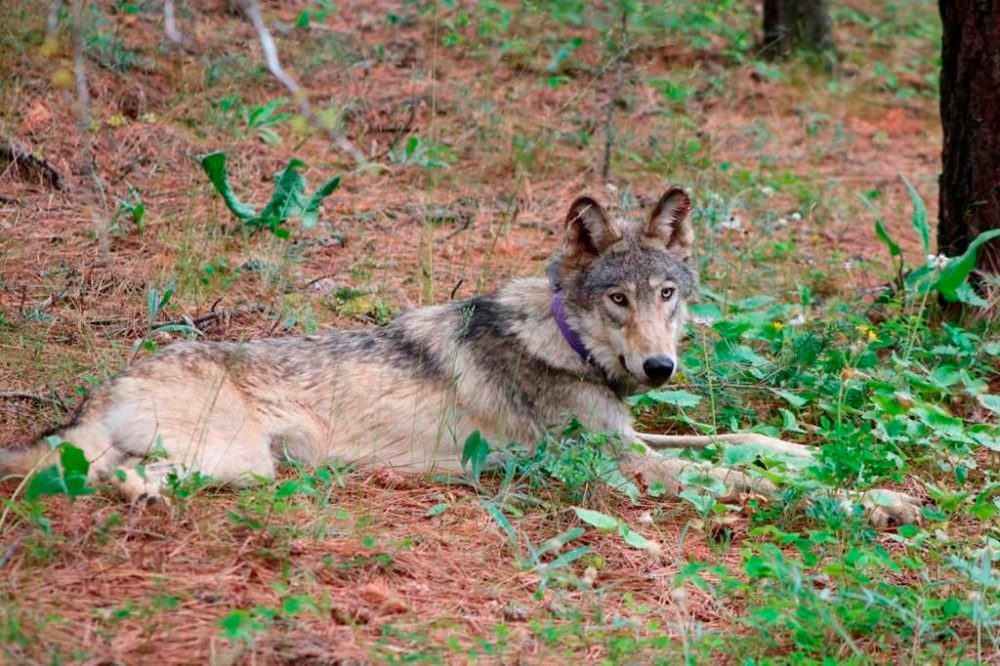
FILE - In this Feb. 2021, file photo released by California Department of Fish and Wildlife shows a protected gray wolf (OR-93), seen near Yosemite, Calif., shared by the state's Department of Fish and Wildlife. The Biden on Thursday finalized rules for protecting imperiled species that reverse changes under former President Donald Trump that weakened the Endangered Species Act. (California Department of Fish and Wildlife via AP, File)

The blanket protections rule had been dropped in 2019 as part of a suite of changes to the application of the species law under Trump that were encouraged by industry. Those changes came as extinctions accelerate globally due to habitat loss and other pressures.

Another rule issued Thursday clarifies that officials must decide if species merit threatened or endangered designations regardless of the potential economic costs of bestowing protections. That’s already government practice, but the 2019 Trump rules caused confusion because they removed an explicit directive to ignore economic impacts, said Fish and Wildlife Service Deputy Assistant Director Gina Shultz.

The rules from the wildlife service and National Marine Fisheries Service also make it easier to designate areas as critical for a species’ survival, even if it is no longer found in those locations.

That could benefit imperiled fish and freshwater mussels in the Southeast, where the aquatic animals in many cases are absent from portions of their historical range, officials have said.

Fish and Wildlife Service Director Martha Williams said in a statement that the rule changes underscored the agency’s commitment to using the best available science to halt population declines as “climate change, degraded and fragmented habitat, invasive species, and wildlife disease” threaten many species.

Details on the rules were obtained by The Associated Press in advance of their public release. Officials said almost a half-million public comments were submitted on the three proposals.

Environmentalists expressed frustration that it took years for Democratic President Joe Biden to act on some of the Trump-era rollbacks. Stoking their urgency is the prospect of a new Republican administration following the 2024 election that could yet again ease protections.
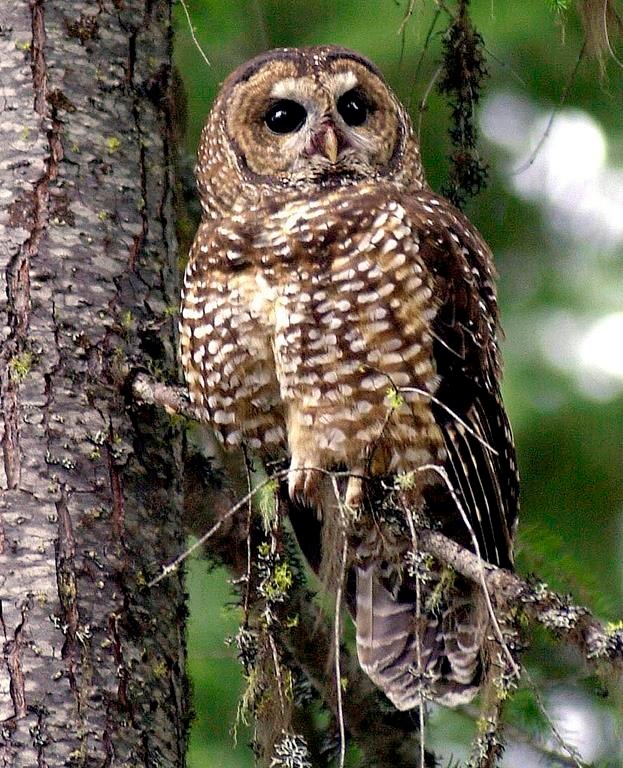
FILE - In this May 8, 2003, file photo, a Northern Spotted Owl sits on a tree in the Deschutes National Forest near Camp Sherman, Ore. The Biden administration on Thursday restored rules to protect imperiled plants and animals that had been rolled back under former President Donald Trump.(AP Photo/Don Ryan, File)

Jamie Rappaport Clark, a former Fish and Wildlife Service director and now president at Defenders of Wildlife, characterized Thursday’s announcement as a “marginal win” that restores essential protections for wildlife, but leaves in place some of the changes made in 2019 under Trump. The environmental group said the retained provisions would open the door to the destruction of habitat critical for some species to survive.

The rules have gotten strong pushback from Republican lawmakers, who say Biden’s Democratic administration has hampered oil, gas and coal development, and favors conservation over development.

“We know the Endangered Species Act is an outdated piece of legislation that has repeatedly failed its primary goal of recovering listed species, yet Biden is now undoing crucial reforms and issuing new regulations that will not benefit listed species,” said House Natural Resources Committee Chairman Bruce Westerman, a Republican from Arkansas.

Property rights attorney Jonathan Wood said the Biden administration’s changes reduce the incentive for private landowners to take voluntary conservation measures.

With blanket protections, species designated as “threatened” automatically qualify for the same protections as those with the more severe designation of “endangered.” That means landowners could become indifferent to a species’ fate, Wood said, because even if they work to get an endangered species downgraded to threatened, there might not be a lessening of government restrictions.

Shultz, with the Fish and Wildlife Service, said blanket protections would be used primarily for threatened plants, which are generally protected under federal law on federal lands but not private property. She said agency officials expect to continue crafting species-specific rules for threatened animals.

Many energy companies, ranchers, developers and representatives of other industries have long viewed the 1973 Endangered Species Act as an impediment. Under Trump, they successfully lobbied to weaken the law’s regulations as part of a broad dismantling of environmental safeguards.
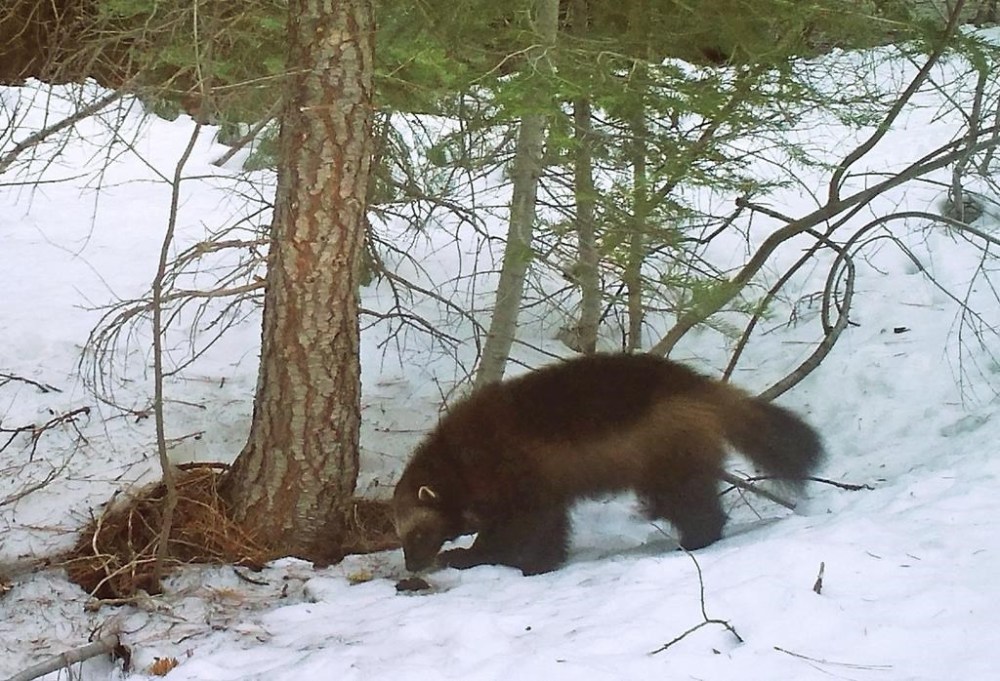
FILE - This photo provided by the California Department of Fish and Wildlife, from a remote camera set by biologist Chris Stermer, shows a wolverine on Feb. 27, 2016, in the Tahoe National Forest near Truckee, Calif., a rare sighting of the predator in the state. Wolverines recently received federal protection as a threatened species. The Biden administration on Thursday, March 28, 2024, restored a rule that gives blanket protections to threatened species. (Chris Stermer/California Department of Fish and Wildlife via AP, File)

The Biden administration two years ago withdrew a Trump rule that limited which lands and waters could be designated as places where imperiled animals and plants could receive federal protection. It also reversed Trump’s decision to weaken enforcement of the century-old Migratory Bird Treaty Act, which made it harder to prosecute bird deaths due to toxic oil industry waste pits, collisions with wind turbines and other causes.

Trump officials also rolled back protections for individual species including the northern spotted owl and gray wolf.

The spotted owl decision was reversed in 2021 after officials said Trump’s political appointees used faulty science to justify opening millions of acres of West Coast forest to potential logging. Protections for wolves across most of the U.S. were restored by a federal court in 2021.

The Endangered Species Act is credited with helping save the bald eagle, California condor and scores more animals and plants from extinction since President Richard Nixon signed it into law. It currently protects more than 1,600 species in the United States and its territories.


Report Error Submit a Tip

More Stories

Chief says minister offered money to remove highway checkstop

Kelly-Anne Riess 5 minute read Preview

Chief says minister offered money to remove highway checkstop

Kelly-Anne Riess 5 minute read Yesterday at 5:53 PM CDT

The chief of the Bloodvein River First Nation says a Manitoba cabinet minister offered up to $250,000 for economic development as he was trying to persuade her to remove a highway checkstop that has outraged hunters.

Read
Yesterday at 5:53 PM CDT

MPI leadership not fooling anyone by forcing PUB’s hand

Dan Lett 5 minute read Preview

MPI leadership not fooling anyone by forcing PUB’s hand

Dan Lett 5 minute read Yesterday at 1:33 PM CDT

It is not a question you will hear raised at Public Utilities Board hearings into Autopac rates, but you can bet it’s the one on most people’s minds.

When will the NDP government step in and repair leadership at Manitoba Public Insurance? For the third year in a row, MPI has limped into PUB hearings like a badly damaged vehicle that should have been written off years ago.

This week, the Crown corporation’s chief actuary admitted the 2.38-per-cent increase requested for the 2027-28 fiscal year was too low, in part because of the impact of last summer’s multiple hailstorms and the premiums MPI pays for re-insurance that protects the public insurer from surges in claims costs.

Chief actuary Cara Low said the rate application was not updated because of “uncertainty.” That is sort of like a firefighter complaining about not being able to do the job because there was too much smoke and flame.

Read
Yesterday at 1:33 PM CDT

Jets top line powers win over Wild

Ken Wiebe 7 minute read Preview

Jets top line powers win over Wild

Ken Wiebe 7 minute read Tuesday, Oct. 13, 2026

Cole Perfetti has made it clear he doesn’t want to get ahead of himself.

The Winnipeg Jets winger has first-hand knowledge on how humbling the NHL can be, coming off a quiet campaign as he worked his way back from a high ankle sprain.

But with the benefit of a full summer of training and a return to health, Perfetti has taken advantage of his promotion to the top line and quickly shown he belongs.

The latest proof came Tuesday, with Perfetti scoring a pair of goals — including the game-winner — in a 5-2 victory over the Minnesota Wild at Canada Life Centre.

Read
Tuesday, Oct. 13, 2026

MPI still lacking brain injury expert

Nicole Buffie 5 minute read Preview

MPI still lacking brain injury expert

Nicole Buffie 5 minute read 2:00 AM CDT

Manitoba Public Insurance has failed to hire an independent brain injury expert to probe how personal injury claims are handled, nearly two years after it was recommended.

Read
2:00 AM CDT

Convicted harasser accused of targeting old, new victims, including judge

Dean Pritchard 6 minute read Preview

Convicted harasser accused of targeting old, new victims, including judge

Dean Pritchard 6 minute read Yesterday at 5:53 PM CDT

Agnieszka Ciochon-Newton, who was sentenced to six years in prison for mercilessly harassing two people she believed had wronged her, as well as other crimes, wasted no time when her sentence ended to launch fresh attacks on victims new and old, including the judge who convicted her, court documents allege.

The 58-year-old former nurse was arrested last month after Winnipeg police “became aware that (Ciochon-Newton) was engaging in aggressive and harassing behaviours again, starting almost immediately upon the expiry of her parole conditions” on May 13, Det. Sgt Kylie Case wrote in search warrant documents obtained by the Free Press.

Ciochon-Newton is charged with seven counts of criminal harassment, two counts of uttering threats and one count each of fraud, breaking and entering, attempting to obstruct justice, intimidation of a justice official, mischief and defamatory libel. She remains in custody.

Search warrant documents say provincial court Judge Keith Eyrikson learned in late August that Ciochon-Newton had emailed CBC Manitoba days earlier and threatened him.

Read
Yesterday at 5:53 PM CDT

What's Up: Clara Hughes, Moving / Still: Animation, Rumble in the Burt, Send+Receive, Lotai as Chappell Roan, Scream & Halloween

7 minute read Preview

What's Up: Clara Hughes, Moving / Still: Animation, Rumble in the Burt, Send+Receive, Lotai as Chappell Roan, Scream & Halloween

7 minute read 6:00 AM CDT

Clara Hughes book launchMcNally Robinson Booksellers, Grant Park (1120 Grant Ave.)Tonight, 7 p.m.FreeOne of Canada’s most decorated Olympians returns to her hometown tonight to launch a new memoir about her healing journey, the roadblocks along the way and the search for new beginnings.Clara Hughes, who was born in Winnipeg and now lives on Vancouver Island, launches her new memoir Learning to Breathe at 7 p.m., when she’ll be joined in conversation by Shelagh Rogers, the former host of CBC Radio’s The Next Chapter.

Learning to Breathe is Hughes’s second memoir, following the publication of 2017’s Open Heart, Open Mind. Her latest sees the six-time Olympic medallist detail her use of psychedelic-assisted therapy to deal with physical and emotional ailments, navigating menopause, forging new relationships and more.

Hughes is the only athlete to win multiple medals in both the Summer and Winter Games (in cycling and speed skating, respectively), and is a member of both the Order of Manitoba and the Order of Canada. She’ll discuss Learning to Breathe with Rogers before signing copies at the store. The free event is also available to stream on McNally Robinson’s YouTube page.

— Ben Sigurdson

Read
6:00 AM CDT