B.C. doesn’t know where all its groundwater is going. Experts worry as drought looms
Advertisement
Read this article for free:
or
Already have an account? Log in here »
To continue reading, please subscribe:

Digital Subscription
One year of digital access for only $205*
- Enjoy unlimited reading on winnipegfreepress.com
- Read the E-Edition, our digital replica newspaper
- Access News Break, our award-winning app
- Play interactive puzzles
*First annual payment billed as $205.00 + GST for one year. This annual subscription will automatically renew at $233.00 + GST every 52 weeks (10% off the regular annual price of $259.35). Offer available to new and qualified returning subscribers only. Cancel any time.
To continue reading, please subscribe:
Add Free Press access to your Brandon Sun subscription for only an additional
$1 for the first 4 weeks*
- Enjoy unlimited reading on winnipegfreepress.com
- Read the E-Edition, our digital replica newspaper
- Access News Break, our award-winning app
- Play interactive puzzles
*Your next Brandon Sun subscription payment will increase by $1.00 and you will be charged $17.95 plus GST for four weeks. After four weeks, your payment will increase to $24.95 plus GST every four weeks.
Read unlimited articles for free today:
or
Already have an account? Log in here »
Hey there, time traveller!
This article was published 10/04/2024 (888 days ago), so information in it may no longer be current.
VANCOUVER – Growing up on a ranch in the Columbia River Valley, water has always been part of Kat Hartwig’s life, and over the years, she’s noticed changes.
Marshy areas her family used for irrigation or watering cattle are dry, wetlands are becoming “crunchy” rather than spongy underfoot, and snowmelt is disappearing more quickly each spring, ushering in the dry summer months, Hartwig says.
Climate science supports her observations, showing that global heating is causing warmer temperatures and increasingly severe droughts in British Columbia.
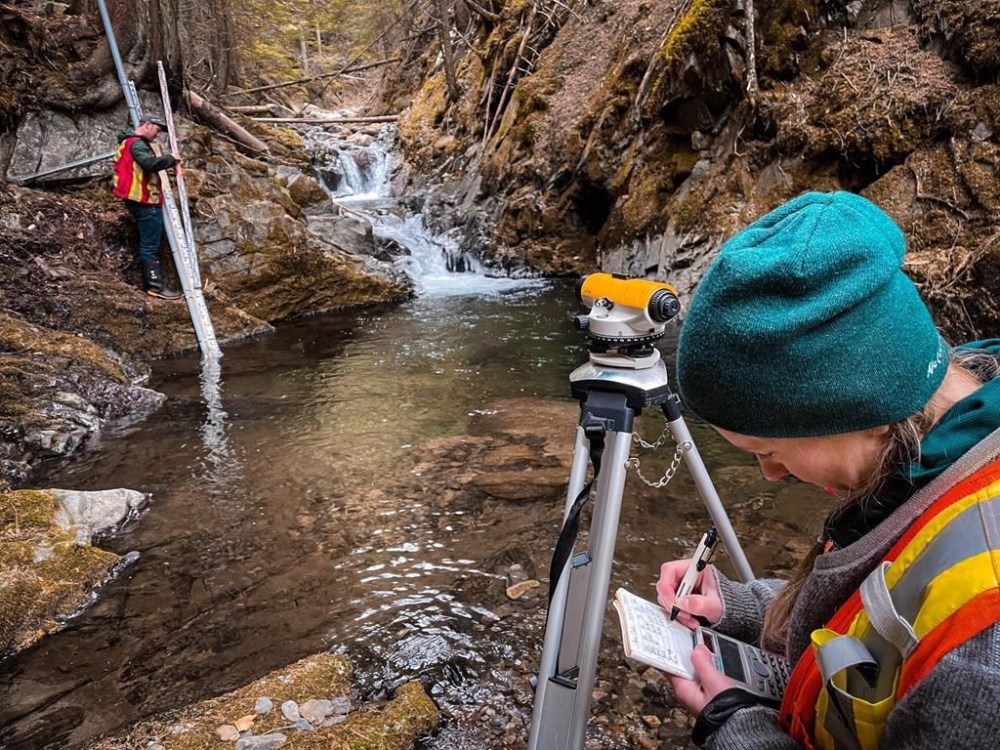
Hartwig, who advocates for better water policy, and others say drought is exposing cracks in how the province manages water.
Officials don’t always know who is using groundwater, how much they’re using, or where they’re drawing it from, experts say. There are gaps in mapping and other data that officials need to effectively manage water during times of scarcity.
The province doesn’t keep track of exact usage by most groundwater licence holders, the Ministry of Land, Water and Resource Stewardship confirmed. Rather, the licence sets the maximum amount of water each user can extract.
That’s the case for both domestic and some commercial users,including companies in the forestry, mining, and agricultural sectors, the ministry says.
At the same time, about two-thirds of pre-existing users have yet to even apply for licences since B.C. first began regulating groundwater in 2016.
The B.C. Energy Regulator publishes quarterly water-use reports for the oil and gas sector, and some other licensees may be required to report how much they use. Groundwater users may also be asked to complete a “beneficial use” declaration to show they’re meeting licence terms.
But it’s an incomplete picture of water use throughout the province at a time when signs point to deepening drought.
Hartwig, as well as Oliver Brandes, a water policy expert at the University of Victoria, and hydrogeologist Mike Wei, who retired from working for the province in 2018, say B.C. lacks sufficient mapping and details on groundwater sources.
B.C.’s minister for land, water and resource stewardship, Nathan Cullen, says drought wasn’t always front of mind for B.C. governments and the public.
“If there were worries (about) water, historically, there was often too much, right?”
Cullen’s fledgling ministry is now tasked with catching up to today’s climate reality and delivering the province’s watershed security strategy, expected sometime this year.
An intentions paper shows priority areas include enhancing monitoring and addressing data gaps.
The B.C.-First Nations Water Table is co-developing the strategy, and Cullen says the province is working to establish additional community-based groups this spring.
Many of those tables involve members of the agricultural sector, he says, pointing to the recent announcement of $80 million in additional funding for the province’s agricultural water infrastructure program to help farmers weather times of drought.
“The scope and scale of the challenges is real to my mind,” Cullen says.
But “standing up what may be dozens and dozens of these community water tables in short order … is very much in the government’s interest,” he says.
“This costs us one way or the other,” the minister adds. “Better water management is a lot cheaper than the management of crisis, similar to forest fire mitigation.”
As executive director of Living Lakes Canada, Hartwig works to build capacity for community-based water monitoring and fill the gaps in provincial data.
“We’re also helping to educate and build a water-literate constituency, so people understand that groundwater is a treasure and not to be wasted,” she says.
There were just two groundwater observation wells in the Columbia Basin when Living Lakes began monitoring in 2017, she says. Today, there are more than 30. Last year they registered some of the lowest water levels, Hartwig adds.
In 2021, Living Lakes launched an open-access hub to bring water-related data from the Columbia region together in one place from sources including local governments, First Nations, community groups and the private sector.
But the experts say it’s just scratching the surface of what’s needed.
‘HALF A CENTURY OF NEGLECT’
B.C. has regulated surface water for more than a century, but before the Water Sustainability Act came into force in 2016, that wasn’t the case for groundwater, says Wei, who helped the province develop the legislation.
Before 2016, he says, landowners could drill next to a stream and pump groundwater, potentially depleting surface water, without provincial knowledge.
That’s changing, but Wei says B.C. is “dealing with half a century of neglect.”
He says B.C. has mapped 1,200 aquifers with about 240 observation wells, most on the South Coast and in the southern Interior.
But much of the mapping is “rudimentary” and monitoring infrastructure inadequate, Wei says. It often doesn’t tell officials how much water is being used, which direction it’s flowing, and what the sustainable supply from an aquifer might be.
Cullen says he “always (wants) more data,” and the province is expanding monitoring sites.
“I think increasingly, there’s an understanding from water users and the general public that we’re into an era where we’re going to have to be a lot more precise and inclusive when we make decisions around water, especially groundwater use.”
B.C. has been working to bring people who use groundwater into the licensing system introduced with the 2016 legislation. The province offered existing users a six-year transition period to obtain a licence with the date recognizing their first use of the groundwater.
The date is crucial because licences showing newer usage are the first to be cut off during water scarcity under the “first in time, first in right” system, says Brandes,who leads the POLIS Water Sustainability Project at the University of Victoria.
Yet the province received just 7,700 applications from some 20,000 existing non-domestic users by the time the transition ended.
Those who didn’t register may face a “rude awakening,” Brandes says.
“In a few places, there is basically not enough water,” he says. “The people who … weren’t signed up in the transition period are going to be in a tough spot.”
They can still apply for a licence moving forward, but it would no longer reflect when they first began using groundwater, Brandes says.
Cullen says sign-ups came in “dramatically” below what officials had hoped for and what the province needs to manage water.
“It’s difficult to manage if you’re not properly measuring,” the minister says.
“We’re trying to broadly understand the resistance to people getting licensed and to lower (it),” he says, adding things are “trending in the right direction.”
“We’re understanding the full actual nature of it in a much better way than we did, say, five years ago,” he says.
But Brandes says the slow progress and general lack of “vital signs” about water in B.C. led to a “disaster” last summer, when critically low flows in several waterways prompted the province to issue fish protection orders that restricted the irrigation of forage crops in parts of the southern Interior.
The orders cut off several hundred surface and groundwater users and some ranchers resorted to selling livestock as they grappled with the shortage of feed.
Brandes says the province’s handling of the situation contributed to uncertainty, social conflict, and a loss of public trust.
Wei, too, says the orders lacked transparency. “People didn’t know why they were being shut off. Science wasn’t necessarily getting out there.”
He says a lack of proactive investment in understanding water and building capacity to respond to drought leads to “scrambling” in the face of urgent situations, and scrambling is costly, financially and democratically.
“When you don’t have information, it’s not transparent, you erode public confidence in what you, the administrator for the resource, can do.” he says.
“And when you start eroding it, you’re eroding your democratic foundation.”
The conversation in the Interior last summer “went badly,” Cullen says, adding that restrictions are “the last thing” the government wants.
“Coming together is the path forward, and that’s what we’re doing. That’s why we’re having those conversations in 20-plus communities already.”
Hartwig says the work in the Columbia Basin serves as a template and underscores the importance of community-led water monitoring and governance.
The project has uncovered streams that were “over-allocated” with licences, she says, as well as dry areas where government maps indicated high-elevation wetlands.
Yet she says three dozen community-based groups in the Columbia region have been forced to stop their work due to funding cuts in recent years.
“We have a huge amount of attrition of these small, volunteer-based water monitoring groups who are very concerned about their own watersheds,” she says.
“We need those boots on the ground. We need that level of water literacy, and we need them to participate in civil society, right? We can’t have that eroded.
“And that’s not being fortified by the province.”
This report by The Canadian Press was first published April 9, 2024.