Wind, solar operators urged to invest now to protect against extreme weather risks

Advertisement

Advertise with us

CALGARY - Wind and solar operators in Canada are being urged to reduce the likelihood of catastrophic grid outages by making their infrastructure more resilient to climate change.

Read this article for free:


or

Already have an account? Log in here »

To continue reading, please subscribe:

Subscribe and receive a limited-edition Free Press branded hat or tote.

Digital Subscription

One year of digital access for only $205*

  • Enjoy unlimited reading on winnipegfreepress.com
  • Read the E-Edition, our digital replica newspaper
  • Access News Break, our award-winning app
  • Play interactive puzzles

*First annual payment billed as $205.00 + GST for one year. This annual subscription will automatically renew at $233.00 + GST every 52 weeks (10% off the regular annual price of $259.35). Offer available to new and qualified returning subscribers only. Cancel any time.

To continue reading, please subscribe:

Add Free Press access to your Brandon Sun subscription for only an additional

$1 for the first 4 weeks*

  • Enjoy unlimited reading on winnipegfreepress.com
  • Read the E-Edition, our digital replica newspaper
  • Access News Break, our award-winning app
  • Play interactive puzzles
Start now

*Your next Brandon Sun subscription payment will increase by $1.00 and you will be charged $17.95 plus GST for four weeks. After four weeks, your payment will increase to $24.95 plus GST every four weeks.

Hey there, time traveller!
This article was published 10/04/2024 (910 days ago), so information in it may no longer be current.

CALGARY – Wind and solar operators in Canada are being urged to reduce the likelihood of catastrophic grid outages by making their infrastructure more resilient to climate change.

Renewable energy operators from across the country gathered at a conference in Calgary this week to discuss the growing risk that climate change-related extreme weather poses to their industry.

Vittoria Bellissimo, president and CEO of the Canadian Renewable Energy Association, said all types of power generation, including those using fossil fuels, are vulnerable to damage or outages in the event of natural disasters such as wildfire, flooding and severe storms.
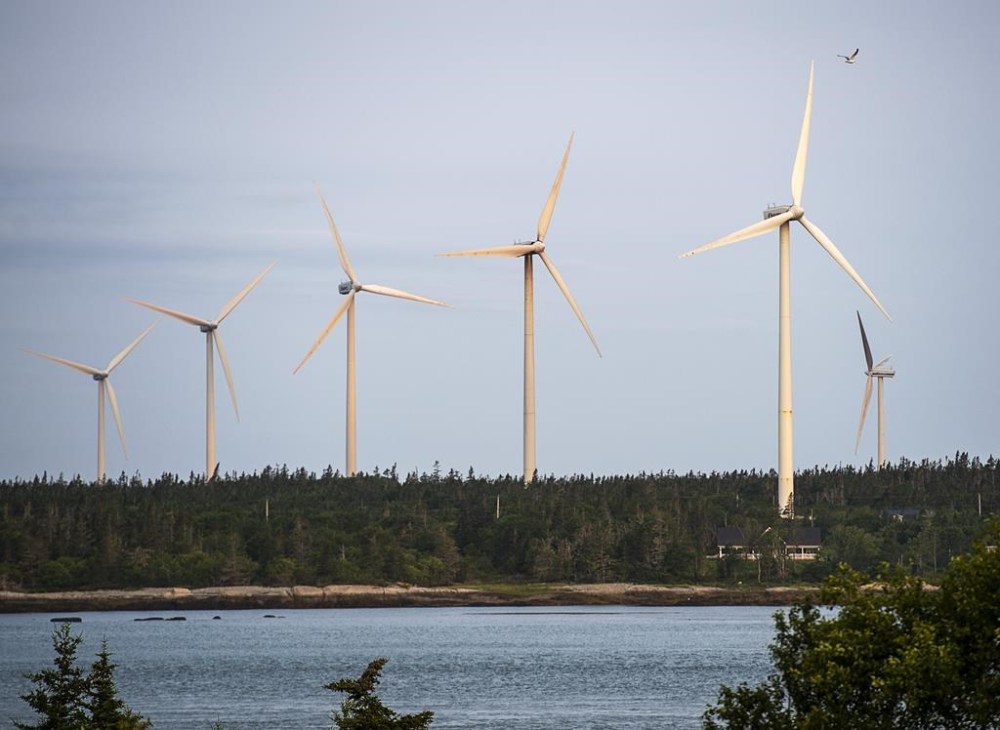
The West Pubnico Point Wind Farm is seen in Lower West Pubnico, N.S. on Monday, Aug. 9, 2021. Wind and solar operators in Canada are being urged to reduce the likelihood of future catastrophic grid outages by making their infrastructure more resilient to climate change. THE CANADIAN PRESS/Andrew Vaughan

But she said as renewable power grows to make up a greater proportion of this country’s overall electricity generation, the industry will need to consider whether their infrastructure is prepared for a changing climate.

“There is a worst-case scenario, but we’d be speculating to guess at what it is, because we don’t know yet,” Bellissimo said in an interview on the sidelines of Wednesday’s conference.

“If you look back at the major events that we’ve seen in the past decade and a half, even just in Alberta, we had floods in 2013 — that was something people weren’t expecting. Fires in Slave Lake and Fort McMurray, people weren’t expecting those … So we are going to have to manage in uncertain conditions going forward.”

In an extreme example of what severe weather can do to renewable energy infrastructure, a 2019 hailstorm that hit a solar farm in Texas damaged 400,000 of the site’s 685,000 panels, resulting in losses estimated at more than US$70 million.

Just last month, another major hailstorm damaged a 3,000-acre solar farm near Houston, shattering hundreds of panels.

George Fan, national natural catastrophe and climate leader for insurance company Marsh Canada, said the 2019 Texas storm was a wake-up call for the industry.

“For (solar farm) operators and asset owners, it resulted in significant rises in insurance premiums,” Fan told conference delegates Wednesday.

“Insurance is the canary in the coal mine when it comes to climate change.”

For its part, the renewable energy sector knows it will be more vulnerable to extreme weather in years to come. For the fast-growing solar sector, it is worrisome that climate models show Western Canada will likely see a significant increase in the number of large hailstone-producing storms as the planet warms.

Wildfire, which is also expected to become more common, poses a direct threat to renewable energy infrastructure in its path, but it can also reduce the generating capacity of solar facilities when smoke in the atmosphere obscures sunlight.

Fan said there are many things renewable energy operators can do to make their assets more climate-resilient, from investing in thicker, less breakable solar panels to creating fire buffer zones by clearing nearby vegetation.

Avoiding building renewable energy infrastructure in areas particularly prone to natural disasters is also important, he said.

The conversation comes as debate rages across the country about how quickly the shift to renewable energy can be accomplished without jeopardizing the stability of the grid.

In Alberta in particular, an explosion of growth in the renewable electricity sector together with the rapid phaseout of coal power has put pressure on grid reliability. During a deep freeze in January of this year, the province was forced to declare an emergency grid alert when its power system — under pressure from a number of natural gas plant outages as well as wind that was not blowing — came close to buckling.

The province also saw electricity shortages last week, with a brief period of rolling blackouts due to multiple fossil fuel generators being offline, as well as low wind and solar generation.

Matt Côté, operations program director for the Canadian Renewable Energy Association, acknowledged that grid reliability is a growing concern, and climate change risks only exacerbate that. But he said one form of generation is not more vulnerable than any other to severe weather.

“Hail is worse for solar than it is for wind. Icing is worse for wind than it is for solar,” Côté said in an interview.

“And then things like that (Alberta) cold snap — it was the intakes on gas plants that had problems … It’s the system as a whole that is vulnerable, for different reasons.”

Making Canada’s grid more resilient in the face of climate change requires financial investment by developers and utilities, and ultimately those costs will be borne by consumers in the form of higher power bills, Côté said.

But he said resiliency investments across the entire grid are what will ultimately guard against costly system outages in the face of Mother Nature’s wrath.

“You can pay up front, or pay when your power’s out and it’s minus 40. I’d rather pay up front, personally,” Côté said.

This report by The Canadian Press was first published April 10, 2024.

Report Error Submit a Tip

More Stories

MPI lowers speed limit on tech upgrade with ‘IT roadmap’ following Project Nova debacle

Carol Sanders 5 minute read Preview

MPI lowers speed limit on tech upgrade with ‘IT roadmap’ following Project Nova debacle

Carol Sanders 5 minute read Monday, Oct. 5, 2026

Manitoba Public Insurance is now using an “IT road map” and phasing in new technology and systems after pulling the plug last year on its failed $164-million overhaul known as Project Nova, its annual report says.

Read
Monday, Oct. 5, 2026

Wind, solar operators urged to invest now to protect against extreme weather risks

Amanda Stephenson, The Canadian Press 5 minute read Preview

Wind, solar operators urged to invest now to protect against extreme weather risks

Amanda Stephenson, The Canadian Press 5 minute read Wednesday, Apr. 10, 2024

CALGARY - Wind and solar operators in Canada are being urged to reduce the likelihood of catastrophic grid outages by making their infrastructure more resilient to climate change.

Renewable energy operators from across the country gathered at a conference in Calgary this week to discuss the growing risk that climate change-related extreme weather poses to their industry.

Vittoria Bellissimo, president and CEO of the Canadian Renewable Energy Association, said all types of power generation, including those using fossil fuels, are vulnerable to damage or outages in the event of natural disasters such as wildfire, flooding and severe storms.

But she said as renewable power grows to make up a greater proportion of this country's overall electricity generation, the industry will need to consider whether their infrastructure is prepared for a changing climate.

Read
Wednesday, Apr. 10, 2024

AI governance: Canada’s next structural test

Anne Thompson 4 minute read 2:00 AM CDT

Artificial intelligence is accelerating faster than the governance structures meant to contain it. Canada now faces a structural test — whether our institutions can protect autonomy, dignity, and continuity in an era when decision-making is increasingly mediated by systems we did not design, cannot fully audit, and do not yet constitutionally constrain.

This is not a technological problem. It is a governance problem.

AI systems influence how information flows, how institutions behave, and how decisions are made. They shape the conditions under which harm becomes predictable. They amplify both the strengths and weaknesses of the systems into which they are deployed. And they do all of this at a scale and speed that outpaces traditional regulatory tools.

Canada’s current approach to AI governance relies heavily on policy, guidelines, and sector-specific regulation. These are important, but they are not sufficient. What is missing is structural clarity — a constitutional-grade framework that defines authority, responsibility, accountability, and the minimum conditions under which AI systems may operate without undermining human dignity or institutional credibility.

Youth centre library cancellation baffles

Editorial 4 minute read Preview

Youth centre library cancellation baffles

Editorial 4 minute read 2:00 AM CDT

It’s difficult to understand why Manitoba Corrections would shut down a library program that cost taxpayers nothing, was popular with young inmates and was designed to help them learn.

Read
2:00 AM CDT

Gov. Gen. Arbour embarks on first official visit to Manitoba

Chris Kitching 2 minute read Preview

Gov. Gen. Arbour embarks on first official visit to Manitoba

Chris Kitching 2 minute read Updated: 1:04 PM CDT

Gov. Gen. Louise Arbour began her first official visit to Manitoba on Wednesday with a welcoming ceremony before private meetings with Premier Wab Kinew, Indigenous leaders and others.

Arbour’s three-day stop in Winnipeg and Gimli will focus on activities related to civil engagement, youth and reconciliation while she also spends time meeting with cadets and members of the Royal Canadian Air Force, an official itinerary said.

Arbour was greeted by Lt.-Gov. Anita Neville, Premier Wab Kinew, Chief Justice Marianne Rivolan, Speaker Tom Lindsey and Mayor Scott Gillingham as she entered the Manitoba Legislative Building at 12:15 p.m., after meeting privately with Neville at Government House, the official residence of the lieutenant governor.

“Bienvenue au Manitoba,” Kinew said while welcoming Arbour.

Read
Updated: 1:04 PM CDT

Duo accused in random Osborne Village attacks no strangers to police

Dean Pritchard and Chris Kitching 5 minute read Preview

Duo accused in random Osborne Village attacks no strangers to police

Dean Pritchard and Chris Kitching 5 minute read Updated: Yesterday at 6:48 PM CDT

A man arrested following a violent, random attack on two men in Osborne Village late Sunday night was released from jail a week earlier after a dozen charges, including crimes of violence, were stayed against him, court records show.

A man in his 40s was sent to hospital in critical condition and another man in his 20s in stable condition following separate attacks shortly before midnight in the vicinity of River Avenue and Osborne Street.

Police have charged Reginald Owen, 26, and Meaghan Owen, 32, both from Little Grand Rapids, with assault with a weapon and aggravated assault. They both remain in custody.

Court records show Reginald Owen was sentenced Sept. 24 to 30 days time served after pleading guilty to simple possession of magic mushrooms. Owen remained in custody until the following day when he was set to apply for bail on charges including assault, sexual assault, choking to overcome resistance, pointing a firearm, and carrying a concealed weapon.

Read
Updated: Yesterday at 6:48 PM CDT