Urban firefighters to get additional training to also battle wildfire blazes
Advertisement
Read this article for free:
or
Already have an account? Log in here »
To continue reading, please subscribe:

Digital Subscription
One year of digital access for only $205*
- Enjoy unlimited reading on winnipegfreepress.com
- Read the E-Edition, our digital replica newspaper
- Access News Break, our award-winning app
- Play interactive puzzles
*First annual payment billed as $205.00 + GST for one year. This annual subscription will automatically renew at $233.00 + GST every 52 weeks (10% off the regular annual price of $259.35). Offer available to new and qualified returning subscribers only. Cancel any time.
To continue reading, please subscribe:
Add Free Press access to your Brandon Sun subscription for only an additional
$1 for the first 4 weeks*
- Enjoy unlimited reading on winnipegfreepress.com
- Read the E-Edition, our digital replica newspaper
- Access News Break, our award-winning app
- Play interactive puzzles
*Your next Brandon Sun subscription payment will increase by $1.00 and you will be charged $17.95 plus GST for four weeks. After four weeks, your payment will increase to $24.95 plus GST every four weeks.
Read unlimited articles for free today:
or
Already have an account? Log in here »
Hey there, time traveller!
This article was published 15/04/2024 (881 days ago), so information in it may no longer be current.
OTTAWA – The federal government is doubling its investment to train urban firefighters to battle wildfires — a growing threat to Canada’s cities and towns.
Natural Resources Minister Jonathan Wilkinson says the government is giving $800,000 to the International Association of Fire Fighters to conduct additional training.
That’s twice the sum spent last year on 25 instructors who then trained more than 300 firefighters in Chilliwack and Kamloops, B.C, and Grand Prairie, Alta.
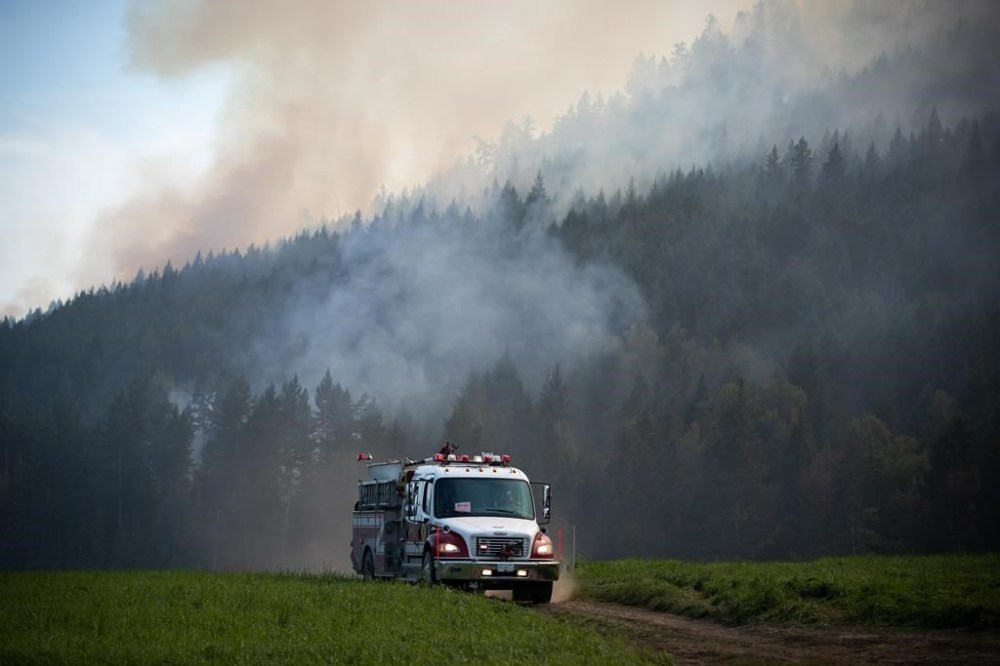
The impacts of climate change and population growth are combining to increase the risk that wildfires happen in or near urban areas.
Wilkinson says nearly four million Canadians — roughly one in 10 — now live in areas where combustible forests are prevalent.
In 2021 a wildfire razed the village of Lytton, B.C. and in 2023 wildfires tore through neighbourhoods in Halifax and Kelowna, B.C., and forced the evacuation of the entire city of Yellowknife.

The latest spring fire forecast suggests there could be significant risk of a repeat of last year’s record-breaking wildfire season.
Above-average temperatures and limited rain and snow have left drought-like conditions across much of the country, with tinder-dry forests and grasslands.
The forecast is not a prediction, Wilkinson said, because precipitation levels are difficult to assess this early in the season.
But the plan is to prepare for the worst and hope for the best, he added.
This report by The Canadian Press was first published April 15, 2024.