

Europe is the fastest-warming continent, at nearly twice the average global rate, report says
Advertisement
Read this article for free:
or
Already have an account? Log in here »
To continue reading, please subscribe:
Monthly Digital Subscription
$0 for the first 4 weeks*
- Enjoy unlimited reading on winnipegfreepress.com
- Read the E-Edition, our digital replica newspaper
- Access News Break, our award-winning app
- Play interactive puzzles
*No charge for 4 weeks then price increases to the regular rate of $19.00 plus GST every four weeks. Offer available to new and qualified returning subscribers only. Cancel any time.
Monthly Digital Subscription
$4.75/week*
- Enjoy unlimited reading on winnipegfreepress.com
- Read the E-Edition, our digital replica newspaper
- Access News Break, our award-winning app
- Play interactive puzzles
*Billed as $19 plus GST every four weeks. Cancel any time.
To continue reading, please subscribe:
Add Free Press access to your Brandon Sun subscription for only an additional
$1 for the first 4 weeks*
*Your next subscription payment will increase by $1.00 and you will be charged $16.99 plus GST for four weeks. After four weeks, your payment will increase to $23.99 plus GST every four weeks.
Read unlimited articles for free today:
or
Already have an account? Log in here »
Hey there, time traveller!
This article was published 21/04/2024 (593 days ago), so information in it may no longer be current.
NAPLES, Italy (AP) — Europe is the fastest-warming continent and its temperatures are rising at roughly twice the global average, two top climate monitoring organizations reported Monday, warning of the consequences for human health, glacier melt and economic activity.
The U.N.’s World Meteorological Organization and the European Union’s climate agency, Copernicus, said in a joint report that the continent has the opportunity to develop targeted strategies to speed up the transition to renewable resources like wind, solar and hydroelectric power in response to the effects of climate change.
The continent generated 43% of its electricity from renewable resources last year, up from 36% the year before, the agencies say in their European State of the Climate report for last year. More energy in Europe was generated from renewables than from fossil fuels for the second year running.

The latest five-year averages show that temperatures in Europe are now running 2.3 degrees Celsius (4.1 Fahrenheit) above pre-industrial levels, compared to 1.3 degrees Celsius higher globally, the report says — just shy of the targets under the 2015 Paris climate accord to limit global warming to 1.5 degrees Celsius.
“Europe saw yet another year of increasing temperatures and intensifying climate extremes — including heat stress with record temperatures, wildfires, heat waves, glacier ice loss and lack of snowfall,” said Elisabeth Hamdouch, the deputy head of unit for Copernicus at the EU’s executive commission.
The report serves up a continental complement for WMO’s flagship state of the global climate report, which has been published annually for three decades, and this year came with a “red alert” warning that the world isn’t doing enough to fight the consequences of global warming.
Copernicus has reported that March marked the 10th straight month of record monthly temperatures. The average sea-surface temperature for the ocean across Europe hit its highest annual level in 2023, the Europe report said.

The European report focuses this year on the impact of high temperatures on human health, noting that deaths related to heat have risen across the continent. It said more than 150 lives were lost directly last year in connection with storms, floods and wildfires.
The cost of weather- and climate-related economic losses in 2023 were estimated at more than 13.4 billion euros (about $14.3 billion).
“Hundreds of thousands of people were affected by extreme climate events in 2023, which have been responsible for large losses at continental level, estimated to be at least in the tens of billions of euros,” said Copernicus director Carlo Buontempo.
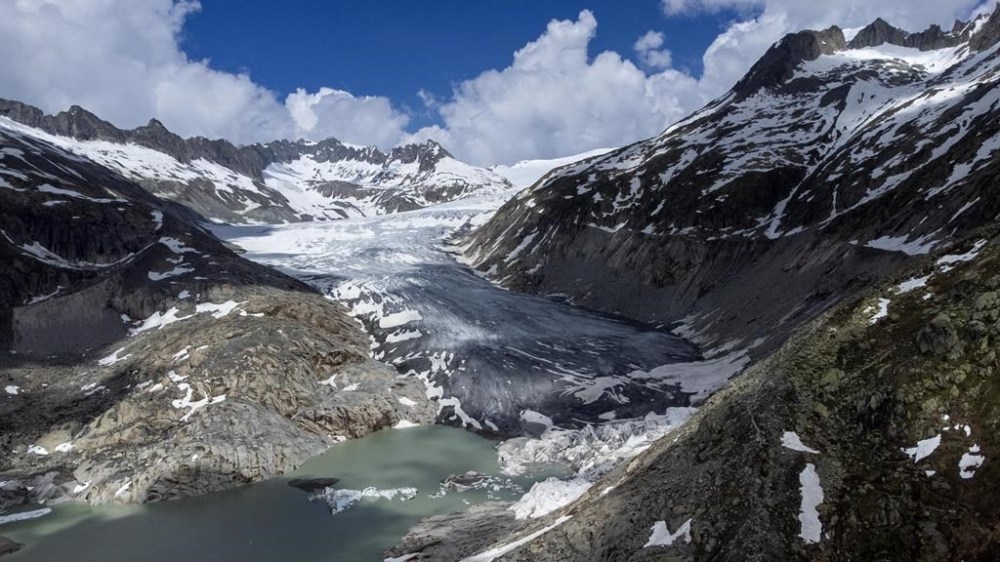
Extreme weather fanned heat waves, wildfires, droughts and flooding, the report said. High temperatures have contributed to a loss of glacier ice on the continent, including in the Alps — which have lost about 10% of their remaining glacier ice over the last two years.
Still, the report’s authors pointed to some exceptions, such as how temperatures were below average in Scandinavia and Iceland even if the mercury was higher than average across much of the continent as a whole.