US House votes to remove wolves from endangered list in 48 states
Advertisement
Read this article for free:
or
Already have an account? Log in here »
To continue reading, please subscribe:

Digital Subscription
One year of digital access for only $205*
- Enjoy unlimited reading on winnipegfreepress.com
- Read the E-Edition, our digital replica newspaper
- Access News Break, our award-winning app
- Play interactive puzzles
*First annual payment billed as $205.00 + GST for one year. This annual subscription will automatically renew at $233.00 + GST every 52 weeks (10% off the regular annual price of $259.35). Offer available to new and qualified returning subscribers only. Cancel any time.
To continue reading, please subscribe:
Add Free Press access to your Brandon Sun subscription for only an additional
$1 for the first 4 weeks*
- Enjoy unlimited reading on winnipegfreepress.com
- Read the E-Edition, our digital replica newspaper
- Access News Break, our award-winning app
- Play interactive puzzles
*Your next Brandon Sun subscription payment will increase by $1.00 and you will be charged $17.95 plus GST for four weeks. After four weeks, your payment will increase to $24.95 plus GST every four weeks.
Read unlimited articles for free today:
or
Already have an account? Log in here »
Hey there, time traveller!
This article was published 30/04/2024 (867 days ago), so information in it may no longer be current.
The U.S. House voted Tuesday to end federal protection for gray wolves, approving a bill that would remove them from the endangered species list across the lower 48 states.
A handful of Democrats joined with Republicans in passing the bill. The measure now goes to the Senate, but it appears doomed after the White House issued a statement Monday warning that the Biden administration opposes it. Congress shouldn’t play a role in determining whether a species has recovered, the statement said.
The Republican-authored bill comes amid national debate on the wolves’ future. Hunters and farmers across the country maintain the species is stable and have been complaining for years about wolf attacks on game species and livestock. They want to be allowed to legally kill the animals.
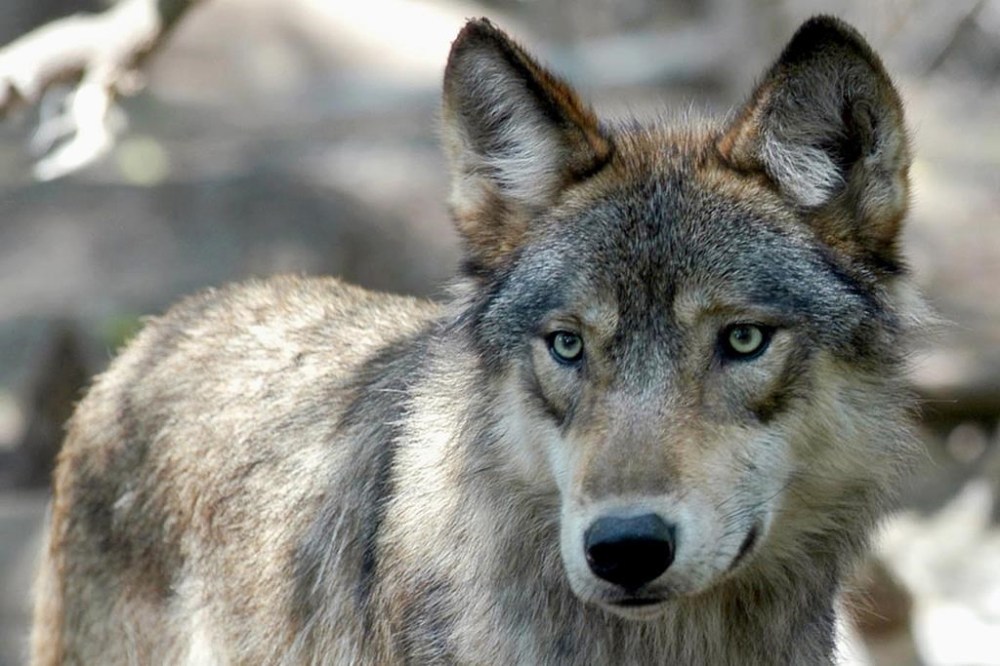
Conservationists insist the population remains fragile after being hunted to near-extinction by the 1960s.
In 2011 Congress stripped Endangered Species Act protection from gray wolves in the northern Rocky Mountains and the Trump administration removed protections across the rest of the continental U.S. in 2020. However, a federal judge blocked the change except in the northern Rocky Mountains. The U.S. Fish and Wildlife Service this past February rejected requests from conservation groups to restore protections in that six-state Rockies region, allowing Idaho, Montana and Wyoming’s state-sponsored wolf hunts to continue. The agency estimated the wolf population in the region at almost 3,000 animals at the end of 2022.
Wolves aren’t considered threatened in Alaska — the population there stands at between 7,000 and 11,000 animals — and they aren’t found in Hawaii. There were an estimated about 8,000 animals across the lower 48 states in 2022, according to a compilation of wildlife agency data by the Wolf Conservation Center.

Republicans argued wolves have clearly recovered and ending protections should be celebrated as a conservation success.
Democrats countered that the species still needs help. They said if protections are lifted, hunters will again push wolves to near extinction.
“Passing this bill would simply call the wolves recovered, but that does not make it so,” said Rep. Jared Huffman, a California Democrat.
Rep. Cliff Bentz, an Oregon Republican, said wolves are “natural born killers” and that conservationists have no idea what it’s like for farmers and ranchers to get up in the middle of the night to deal with wolf attacks on their livestock.
The House approved the bill 209-205. Four Democrats sided with Republicans voting for the bill, including Yadira Caraveo of Colorado, Henry Cueller of Texas, Jared Golden of Maine and Marie Gluesenkamp Perez of Washington state.