

Over 500 baby sea turtles washed ashore in a big storm off South Africa. Here’s the rescue effort
Advertisement
Read this article for free:
or
Already have an account? Log in here »
To continue reading, please subscribe:
Monthly Digital Subscription
$0 for the first 4 weeks*
- Enjoy unlimited reading on winnipegfreepress.com
- Read the E-Edition, our digital replica newspaper
- Access News Break, our award-winning app
- Play interactive puzzles
*No charge for 4 weeks then price increases to the regular rate of $19.00 plus GST every four weeks. Offer available to new and qualified returning subscribers only. Cancel any time.
Monthly Digital Subscription
$4.75/week*
- Enjoy unlimited reading on winnipegfreepress.com
- Read the E-Edition, our digital replica newspaper
- Access News Break, our award-winning app
- Play interactive puzzles
*Billed as $19 plus GST every four weeks. Cancel any time.
To continue reading, please subscribe:
Add Free Press access to your Brandon Sun subscription for only an additional
$1 for the first 4 weeks*
*Your next subscription payment will increase by $1.00 and you will be charged $16.99 plus GST for four weeks. After four weeks, your payment will increase to $23.99 plus GST every four weeks.
Read unlimited articles for free today:
or
Already have an account? Log in here »
Hey there, time traveller!
This article was published 01/05/2024 (586 days ago), so information in it may no longer be current.
CAPE TOWN, South Africa (AP) — An aquarium in South Africa is stretched beyond capacity after more than 500 baby sea turtles were washed up on beaches by a rare and powerful storm and rescued by members of the public.
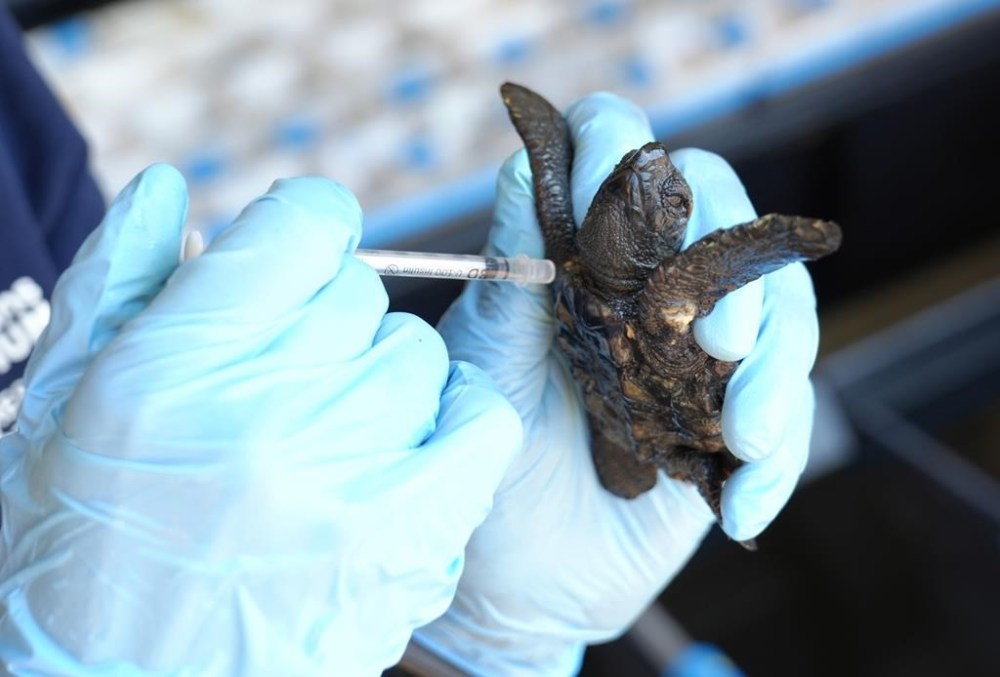
The little turtles are mostly endangered loggerheads and should be cruising the ocean. Most of them instead will spend the first few months of their lives in newly built plastic tanks at the Turtle Conservation Center at the Two Oceans Aquarium in Cape Town. The aquarium is rehabilitating around 400 of the roughly 530 sick and injured turtles that were brought in, while sending the rest to two other aquariums to spread the load.
Baby turtles have to fend for themselves from the moment they hatch on beaches and make their way to the ocean.
In South Africa, loggerheads hatch on the northeast coast on the far side of the country from Cape Town. These turtles were likely sucked in by the warm Indian Ocean Agulhas Current, carried around the tip of South Africa and spat out in the cold waters of the Atlantic Ocean near Cape Town.
That’s fairly common, said Talitha Noble-Trull, the head of the Turtle Conservation Center. She’s in charge of treating the new arrivals.
What isn’t normal is the powerful storm that recently hit the Cape Town area, leaving hundreds of baby turtles needing help.
The conservation center usually receives a few to maybe 100 stranded young turtles in the three to four months after hatching season. It has a normal capacity of 150 turtles.
“What we haven’t seen before is over 500 turtles in two weeks, which is what the last little bit of time has brought us,” Noble-Trull said. “My budgeting plans for the year have really gone out the window.”
She estimated that each turtle will cost $500 to get back to full strength before being released into the warmer Indian Ocean in a few months. The Turtle Conservation Center has brought in a small army of volunteers to help the aquarium’s full-time staff care for them.
The turtles are ranked according to how sick they are, with some needing intensive care due to injuries, malnutrition or infection. A number is written on each shell to identify them.
While the storm was a major shock to the turtles, who are vulnerable to extreme weather and climate change, it has given Noble-Trull and other conservationists a valuable insight into another increasingly common danger.
Many of the turtles had ingested small pieces of plastic, which exited their systems after they arrived at the aquarium. Noble-Trull has a tray of plastic pieces collected in just one day, some as big as a fingernail.
The conservation team normally wouldn’t see that amount of evidence of plastic pollution in the ocean.
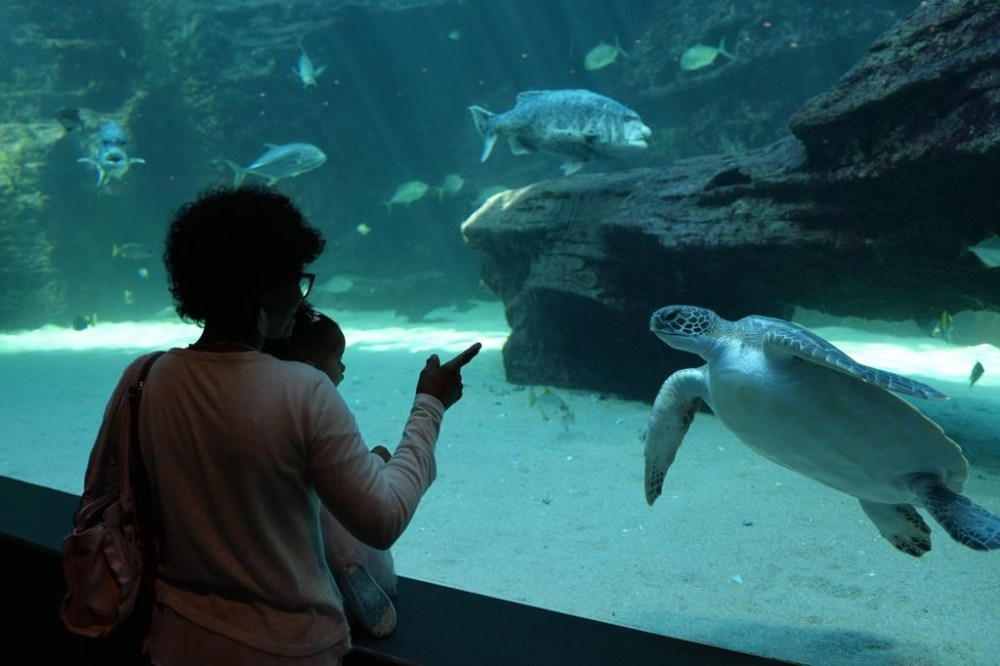
Turtles spend almost all their lives in the ocean, apart from when they’re born and when females return to shore to lay eggs. Because of that, they’re “ocean indicators,” Noble-Trull said.
“Little bits of soft plastic, little bits of hard plastic are floating all along the oceans and turtles are eating them. So, for us it’s very important to be collecting and capturing this data. Because these turtles are coming at us with a message. They’re not telling us. They’re shouting it at us. That our oceans are not a safe place for turtles.”
___
AP Africa news: https://apnews.com/hub/africa