Study says aquaculture likely driving wild salmon extinction in Newfoundland
Advertisement
Read this article for free:
or
Already have an account? Log in here »
To continue reading, please subscribe:
Digital Subscription
One year of digital access for only $1.44 a week*
- Enjoy unlimited reading on winnipegfreepress.com
- Read the E-Edition, our digital replica newspaper
- Access News Break, our award-winning app
- Play interactive puzzles
*Billed as $5.77 plus GST every four weeks. After 52 weeks, price increases to the regular rate of $19.95 plus GST every four weeks. Offer available to new and qualified returning subscribers only. Cancel any time.
To continue reading, please subscribe:
Add Free Press access to your Brandon Sun subscription for only an additional
$1 for the first 4 weeks*
- Enjoy unlimited reading on winnipegfreepress.com
- Read the E-Edition, our digital replica newspaper
- Access News Break, our award-winning app
- Play interactive puzzles
*Your next Brandon Sun subscription payment will increase by $1.00 and you will be charged $17.95 plus GST for four weeks. After four weeks, your payment will increase to $24.95 plus GST every four weeks.
Read unlimited articles for free today:
or
Already have an account? Log in here »
Hey there, time traveller!
This article was published 15/05/2024 (888 days ago), so information in it may no longer be current.
ST. JOHN’S, N.L. – A new study shows an Atlantic salmon population in southern Newfoundland is disappearing, and it says nearby aquaculture operations are likely to blame.
The report published last month in the journal Reviews in Fisheries Science and Aquaculture concludes that though climate change and predation also have negative impacts, the effects of aquaculture operations near the Conne River are the most significant probable factor pushing the local wild salmon population toward extinction.
“These impacts will likely increase as populations decline toward local extirpation,” the study said.
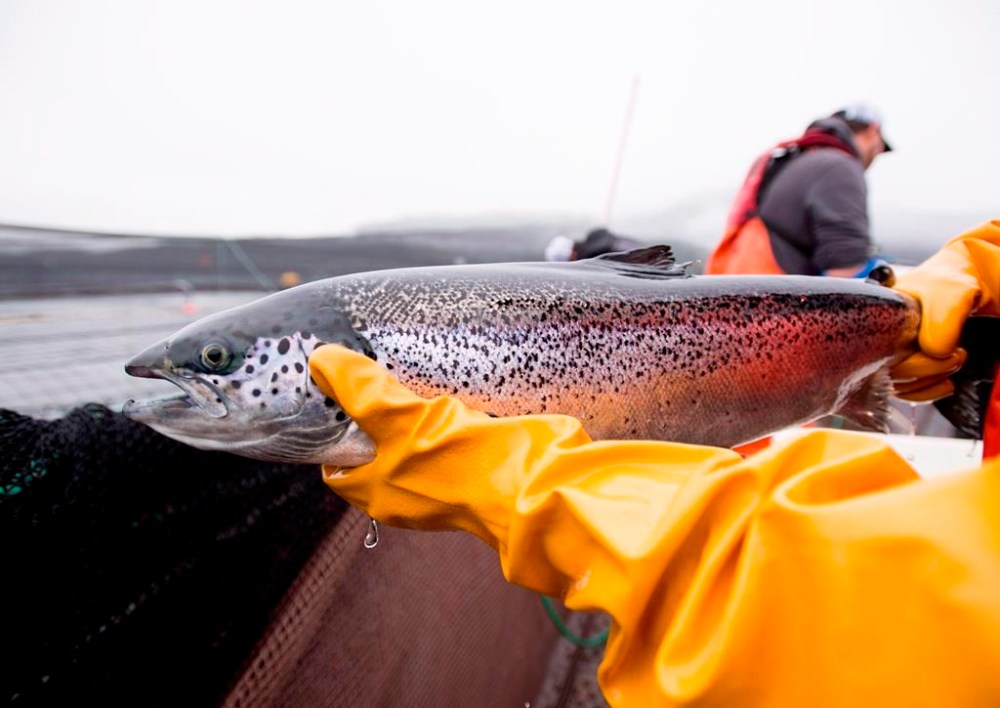
The authors — eight researchers from the federal Fisheries Department — say that as Newfoundland and Labrador plans to expand its aquaculture industry, more studies are needed to determine how climate change, sea lice and disease will impact threatened or endangered wild salmon.
The Conne River feeds into the Bay d’Espoir, along Newfoundland’s south coast. Salmon farming in the Bay d’ Espoir began in the 1980s. The industry is often celebrated by the provincial government for restoring the economy in the remote area after the commercial cod fishery was shut down in 1992 because of species collapse.
The local wild salmon population shrank by 92 per cent between 1986 and 2022, according to figures in the report.
Conne River salmon was once an important food source for the Miawpukek First Nation, but it halted its food, social and ceremonial fisheries there in 1998 because of conservation concerns, the report said.
The study uses past reports and data, as well as input from scientists who regularly work in the area, to narrow down a list of more than a dozen possible contributors to the salmon’s demise. It then uses statistical modelling to determine which of those are most likely driving the decline.
Aquaculture comes out on top, with the report noting that there is ample documentation of wild salmon breeding with escaped farm salmon in the area. Offspring from such hybrids tend to be weaker and to carry genetic mutations that make it harder for the fish to survive. They’re also more likely to spread disease, the study said.
It notes that though there is little data on sea lice in the local wild salmon population, the spread of the tiny marine parasites from aquaculture operations has led to documented declines in wild salmon in Norway, Ireland and Scotland.
Neville Crabbe, with the Atlantic Salmon Federation, said the report provides conclusive evidence that aquaculture is harming wild salmon.
“It pushes the issue from correlation, where we have all of this evidence of declining populations in proximity to the salmon farms, and this is demonstrating direct causation, that those industrial installations are affecting wild salmon and causing very, very significant declines,” he said in an interview.
“It’s a study of one river in one place, but it can be extrapolated out to all of the other places where the industry is occurring in Atlantic Canada.”
Jamie Baker, executive director of the Newfoundland Aquaculture Industry Association, said in an email that the report is based on old data and contributes “nothing new in terms of actual research.”
“It’s an accepted fact that salmon populations across the Atlantic have been in decline for decades, well before salmon farming started,” Baker wrote. “The majority of rivers in Newfoundland and Labrador have seen concerning declines, and they’re nowhere near any farming activity.”
He said he believes climate change and warming oceans are the largest driver of those changes.
The study calls on fisheries managers, the local First Nation and the aquaculture industry to “actively pursue evidence-based research” to figure out how to protect the wild salmon, and to put those measures in place.
This report by The Canadian Press was first published May 15, 2024.