In Mexico heat wave monkeys still dying, birds are getting air-conditioning, lions get popsicles
Advertisement
Read this article for free:
or
Already have an account? Log in here »
To continue reading, please subscribe:

Digital Subscription
One year of digital access for only $205*
- Enjoy unlimited reading on winnipegfreepress.com
- Read the E-Edition, our digital replica newspaper
- Access News Break, our award-winning app
- Play interactive puzzles
*First annual payment billed as $205.00 + GST for one year. This annual subscription will automatically renew at $233.00 + GST every 52 weeks (10% off the regular annual price of $259.35). Offer available to new and qualified returning subscribers only. Cancel any time.
To continue reading, please subscribe:
Add Free Press access to your Brandon Sun subscription for only an additional
$1 for the first 4 weeks*
- Enjoy unlimited reading on winnipegfreepress.com
- Read the E-Edition, our digital replica newspaper
- Access News Break, our award-winning app
- Play interactive puzzles
*Your next Brandon Sun subscription payment will increase by $1.00 and you will be charged $17.95 plus GST for four weeks. After four weeks, your payment will increase to $24.95 plus GST every four weeks.
Read unlimited articles for free today:
or
Already have an account? Log in here »
Hey there, time traveller!
This article was published 08/06/2024 (848 days ago), so information in it may no longer be current.
MEXICO CITY (AP) — Amid Mexico’s heat wave and drought, suffering birds are getting air-conditioning and monkeys with heatstroke are being rescued by non-governmental groups.
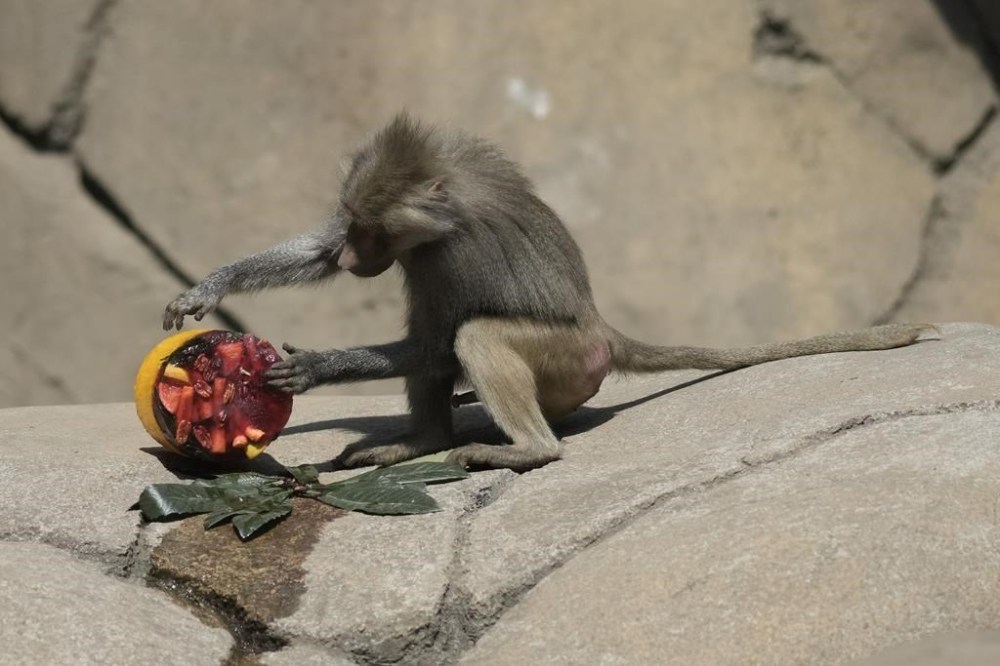
The government, meanwhile, has been more preoccupied with cooling down animals at state-run zoos, giving lions frozen meat popsicles. It’s not the only frosty treat: One rescue group is feeding distressed owls with rat carcasses shipped in frozen from Mexico City.
A heat dome, an area of strong high pressure centered over the southern Gulf of Mexico and northern Central America, has blocked clouds from forming and caused extensive sunshine and hot temperatures all across Mexico, as well as in the United States.
Much of the impact on wildlife is being felt in central and southern Mexico, because while temperatures are also high in the north, it is mostly desert and the animals there have some coping mechanisms for extreme heat and drought.
On the steamy Gulf coast, an animal park has set up air-conditioned rooms for eagles, owls and other birds of prey.
In the south, howler monkeys continue to fall dead out of the trees with heatstroke. Deaths now probably number over 250.
In the southern state of Tabasco, the few monkeys that can be saved from dehydration and heat stroke are mostly being saved by NGOs like the Biodiversity Conservation of The Usumacinta group. Known by its initials as COBIUS, the group has saved and stabilized 18 of the monkeys.
Wildlife biologist Gilberto Pozo, the head of the group, has been accompanying teams of biologists and veterinarians out into the jungle to look for ailing monkeys.
Many times, they get there too late.
“Yesterday we lost three of the animals,” Pozo said as he bounced in a truck along a rural road in the southern Gulf coast state of Tabasco, the worst-hit area. “We went out to rescue them. We couldn’t stabilize them.”
The monkeys — mid-sized primates known for their roaring calls — were too far gone with a kind of severe fluid loss as Mexico grapples with drought along with heat.
As of May 31, the Environment Department acknowledged that a total of 204 howler monkeys had died, 157 of them in Tabasco. Pozo said the number in Tabasco alone has since risen to 198, suggesting the nationwide toll is now near 250.
“The only rescue plan or program is the one our organization is doing,” Pozo said. Amid budget cuts for many environmental agencies, the government now has to rely on NGOs.
In a statement, the Environment Department said, “Federal environmental authorities have attended to reports of these events, in a coordinated approach with civic groups and academics.” It said the government has provided food, lodging and water for the NGO teams and sick animals.
The department says tests indicate the primates are dying of heat stroke, but adds that the drought has caused a “lack of water in the streams and springs in the areas where the monkeys live” and that appears to also play a role.
Some NGOs are struggling to pay for the care and are calling for donations, like the Selva Teenek, a non-profit wildlife park in the jungled region of La Huasteca, farther north.
On May 9, temperatures in that area soared to around 120 degrees (50 Celsius), and rescuers and staff brought in 15 birds of various species that were found lying on the ground.
“This had never happened before,” said Laura Rodríguez, the park’s veterinarian. “One hundred percent of the animals … they needed rehydration. Some were so dehydrated we couldn’t give them water orally.”
Ena Mildred Buenfil, leader of the animal rescue group Selva Teneek, said birds — like the howler monkeys — are simply dropping dead.
“The birds started having problems, and some of them literally started dropping dead in flight,” Buenfil said. “Some of the most affected were the newborns … people sent photos to us of dozens of dead parrots on the ground.”
The birds were suffering from heat stress, dehydration and malnutrition, simultaneously. Rescuers had to get them out of the heat, give them water and feed them.
That included a shipment of frozen dead rats from Mexico City. “The adult (owls) need rats. Fortunately, we have rats,” Buenfil said, but noted the staff has to thaw them a bit to skin them and remove their innards before they can be given to the birds.
Since then, dozens of more birds — and a few bats, lynxes and and coyotes — have been found alive but suffering, and have also been brought in to the Teneek park.
The situation got so crowded in the three rooms that have air-conditioning at the park that the staff had to put up sheets or curtains to separate the birds of prey from other birds that are their prey.
Several birds died, but some species — like the kinkajous that roam the park – only need the air-conditioning during the day, and are let out at night. Others, like the ant eaters, can get by with the breeze from a fan.
The lions at Mexico City’s Chapultepec zoo got a frozen treat of blood and animal bones mixed with water. Alberto Olascoaga, the head of the capital’s zoo, said the animals like it — and it helps hydrate them.
“They play with the popsicle. They lick it, they break it up, they bite it, and they are getting refreshed and drinking this cold water as it melts,” Olascoaga said.
Claudia Sheinbaum, the environmental scientist who won the June 2 presidential election to succeed Andrés Manuel López Obrador, offered some hope that testy relations over how to deal with the plight of wildlife might change when she takes office Oct. 1.
“I have spent my whole life studying the environment, it is part of my cause,” she wrote in her Instagram account Wednesday.
___
Associated Press video journalist Martín Silva in Mexico City contributed to this report.