Landmark EU nature restoration plan gets the green light despite months of protests by farmers
Advertisement
Read this article for free:
or
Already have an account? Log in here »
To continue reading, please subscribe:

Digital Subscription
One year of digital access for only $205*
- Enjoy unlimited reading on winnipegfreepress.com
- Read the E-Edition, our digital replica newspaper
- Access News Break, our award-winning app
- Play interactive puzzles
*First annual payment billed as $205.00 + GST for one year. This annual subscription will automatically renew at $233.00 + GST every 52 weeks (10% off the regular annual price of $259.35). Offer available to new and qualified returning subscribers only. Cancel any time.
To continue reading, please subscribe:
Add Free Press access to your Brandon Sun subscription for only an additional
$1 for the first 4 weeks*
- Enjoy unlimited reading on winnipegfreepress.com
- Read the E-Edition, our digital replica newspaper
- Access News Break, our award-winning app
- Play interactive puzzles
*Your next Brandon Sun subscription payment will increase by $1.00 and you will be charged $17.95 plus GST for four weeks. After four weeks, your payment will increase to $24.95 plus GST every four weeks.
Read unlimited articles for free today:
or
Already have an account? Log in here »
Hey there, time traveller!
This article was published 17/06/2024 (850 days ago), so information in it may no longer be current.
BRUSSELS (AP) — European Union countries on Monday gave final approval to a major and long-awaited plan to better protect nature in the 27-nation bloc, a divisive issue after months of protests by farmers who argued that EU environmental and climate laws were driving them toward bankruptcy.
After surviving a razor-thin vote by lawmakers last summer, the so-called Nature Restoration Plan faced opposition from several member states, leaving the bill deadlocked for months.
The law, which aims at restoring ecosystems, species and habitats in the EU, was finally adopted at a meeting of environment ministers in Luxembourg after rallying the required support from a qualified majority representing 15 of the 27 member states and 65% of the EU population. Austria’s vote in favor of the plan helped to break the stalemate.
“This is the final step before this law can enter into force,” said the Belgian presidency of the EU Council.
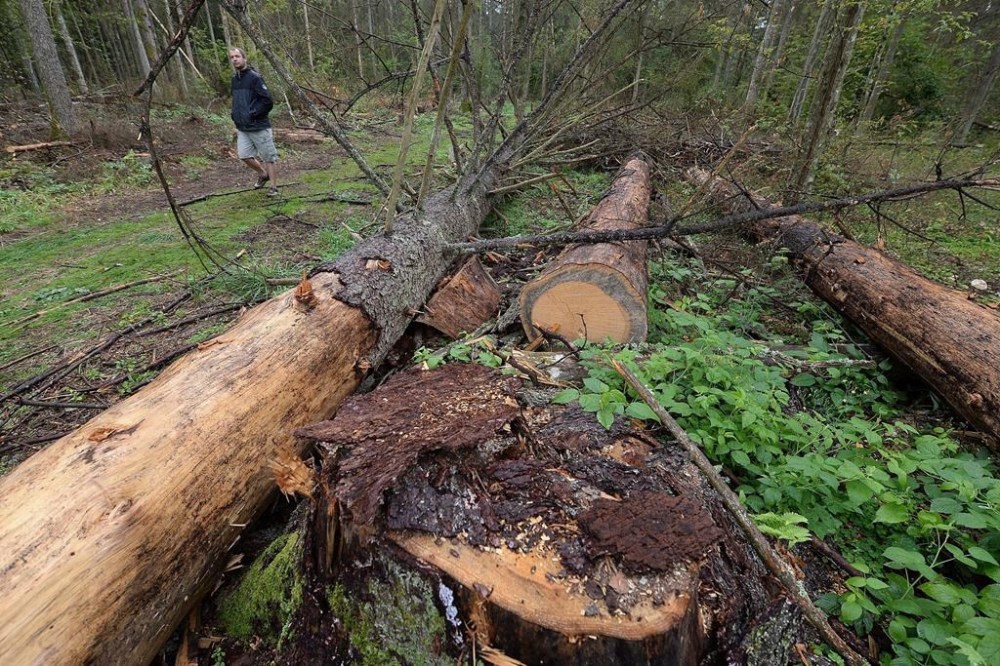
The Nature Restoration plan is part of the EU’s European Green Deal that seeks to establish the world’s most ambitious climate and biodiversity targets and make the bloc the global point of reference on all climate issues.
Under the plan, member states will have to meet restoration targets for specific habitats and species, to cover at least 20% of the region’s land and sea areas by 2030.
“The result of hard work has paid off,” said Belgian Environment Minister Alain Maron. “There can be no pause in protecting our environment. The EU Council makes the choice to restore nature in the EU, protecting its biodiversity and our living environment.”
Austria’s environment minister, Leonore Gewessler, voted for the plan after months of domestic political debate. The move by Gewessler, a member of the Green party, infuriated the senior partner in the coalition government — Chancellor Karl Nehammer’s conservative Austrian People’s Party — ahead of a national election set for Sept. 29.
“My conscience tells me unmistakably (that) when the healthy and happy life of future generations is at stake, courageous decisions are needed,” Gewessler wrote on social network X.
Ahead of the vote, the chancellery said Nehammer informed the Belgian EU presidency that a vote in favor of the plan by Gewessler would be unlawful, the Austria Press Agency reported. Nehammer’s office said after the decision that Austria will file a suit at the European Court of Justice to nullify the vote.
An EU official said Gewessler’s vote was legally binding and that the Council’s legal service had confirmed this point. The person was not authorized to speak publicly in line with EU practices.
In the buildup to the EU elections that saw a shift to the right earlier this month, European farmers complained about the many environmental laws governing the way they work, arguing that the rules were harming their livelihoods and strangling them with red tape.
Under the new law, EU countries will be required to restore at least 30% of habitats such as forests, rivers, grasslands, wetlands, lakes and coral beds deemed in poor condition by 2030. This percentage is set to increase to 60% by 2040 and 90% by 2050. The law also introduces specific requirements for measures to reverse the decline of pollinators.
The EU’s main agricultural group, COPA-COGECA, said the plan lacks clear and consistent funding and that the law cannot be implemented on the ground.
Environmental organizations and a coalition of big companies insisted last year that the legislation was crucial to tackle both climate change and nature loss. But the plan lost some of its progressive edge during negotiations because of fierce opposition from the EU Parliament’s main political group, EPP, which along with other conservatives and the far right has insisted the plans would undermine food security, fuel inflation and hurt farmers.
As a result, the nature restoration plan was weakened. For instance, until 2030 member states can only prioritize sites designated under the Natura 2000 network, which covers Europe’s most valuable species and habitats. There is no obligation to implement the law in other natural areas.
EU countries must restore at least 30% of drained peatlands by 2030, but the target for rewetting is set at national level, meaning that individual farmers and private landowners will not have responsibility for meeting it.

The law also provides for an emergency brake, as requested by Parliament. Targets for agricultural ecosystems can be suspended under exceptional circumstances if they severely reduce the land needed to produce sufficient food for EU consumption.
Environmental lobby group Greenpeace said a failure by EU governments to approve the law would have been embarrassing ahead of the next U.N. biodiversity meeting in Colombia in October.
“Despite the weakening of the law, this deal offers a ray of hope for Europe’s nature, future generations and the livelihoods of rural communities,” said Greenpeace biodiversity campaigner Špela Bandelj Ruiz. “Healthy ecosystems offer protection against extreme weather, water shortages and pollution.”
___
Geir Moulson in Berlin and Raf Casert contributed to this report.