Emissions cap not possible without oil, gas production cuts: Deloitte
Advertisement
Read this article for free:
or
Already have an account? Log in here »
To continue reading, please subscribe:

Digital Subscription
One year of digital access for only $205*
- Enjoy unlimited reading on winnipegfreepress.com
- Read the E-Edition, our digital replica newspaper
- Access News Break, our award-winning app
- Play interactive puzzles
*First annual payment billed as $205.00 + GST for one year. This annual subscription will automatically renew at $233.00 + GST every 52 weeks (10% off the regular annual price of $259.35). Offer available to new and qualified returning subscribers only. Cancel any time.
To continue reading, please subscribe:
Add Free Press access to your Brandon Sun subscription for only an additional
$1 for the first 4 weeks*
- Enjoy unlimited reading on winnipegfreepress.com
- Read the E-Edition, our digital replica newspaper
- Access News Break, our award-winning app
- Play interactive puzzles
*Your next Brandon Sun subscription payment will increase by $1.00 and you will be charged $17.95 plus GST for four weeks. After four weeks, your payment will increase to $24.95 plus GST every four weeks.
Read unlimited articles for free today:
or
Already have an account? Log in here »
Hey there, time traveller!
This article was published 18/06/2024 (843 days ago), so information in it may no longer be current.
CALGARY – Canadian oil and gas companies facing a federally imposed emissions cap will decide to cut their production rather than invest in too-expensive carbon capture and storage technology, a new report by Deloitte says.
The Alberta government-commissioned report — a copy of which was obtained by The Canadian Press — aims to assess the economic impact of the proposed cap.
Its findings contradict the federal government’s stance that its proposed cap on greenhouse gas emissions from the oil and gas sector would be a cap on pollution, not a cap on production. And it supports Alberta’s position that a mandated cap would lead to production curtailments and severe economic consequences.
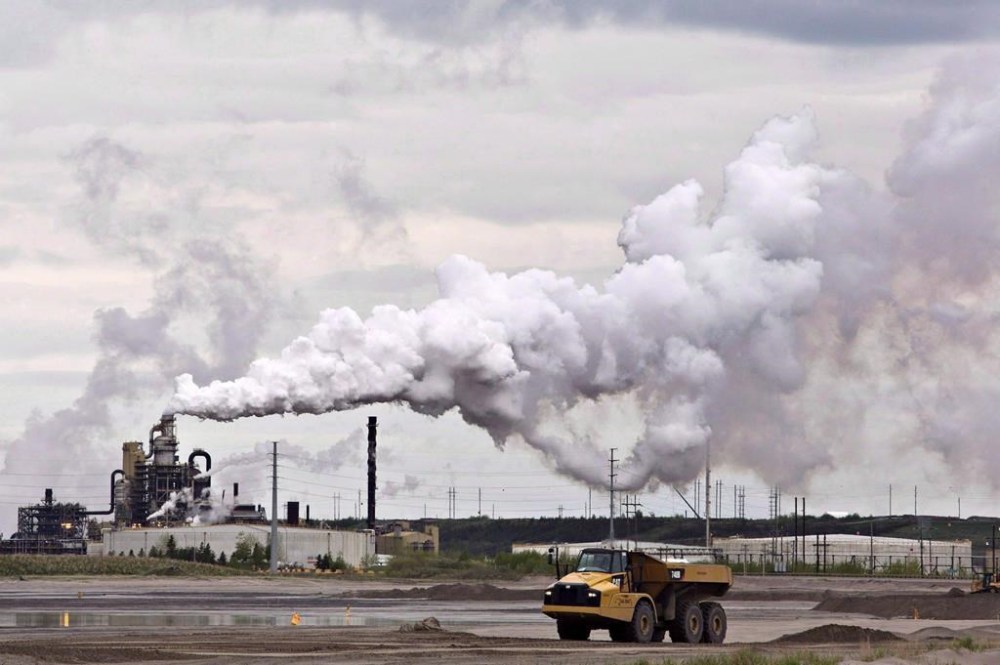
But the Deloitte report also casts doubt on the idea that widespread deployment of carbon capture and storage technology will drive down emissions from the oil and gas sector in the coming years, suggesting that scenario doesn’t make financial sense.
“We expect that the cap (will impose) 20 megatonnes in emissions reduction on producers by 2030, which will need to be achieved by CCS (carbon capture and storage) investments, or through production curtailment,” the Deloitte report states.
“Curtailing production would be a more cost-effective option compared to investing in CCS.”
The oil and gas sector is Canada’s heaviest-emitting industry, and rising oilsands production has meant total emissions from the sector are increasing at a time when many other sectors of the economy are successfully reducing overall emissions.
Globally, oil demand is growing, with the International Energy Agency forecasting global oil demand to be 3.2 million barrels per day higher in 2030 than in 2023, though the agency also suggests growing supply will outstrip demand growth sometime this decade.
In a draft framework released last December, the federal government proposed mandating a ceiling on oil and gas emissions in order to help slow climate change. The rules would require the industry to cut greenhouse gas emissions by 35 to 38 per cent from 2019 levels by 2030. Companies would also have the option to buy offset credits or contribute to a decarbonization fund that would lower that requirement to cutting just 20 to 23 per cent.
But the Deloitte report suggests oil production in this country could increase 30 per cent, and gas production over 16 per cent, from 2021 to 2040. Those figures are based on a Canada Energy Regulator forecast and on current government policies.
This means that producers will have two choices to meet the constraints of an emissions cap, Deloitte argues. They can invest heavily in carbon capture and storage — trapping greenhouse gas emissions from oil production at site and storing them safely underground — or cut back on planned production increases.
The oil and gas industry itself has been promoting carbon capture and storage as the key to reducing emissions while still increasing production. The oilsands industry, which is responsible for the bulk of Canada’s overall oil and gas sector emissions, has proposed spending $16.5-billion on a massive carbon capture and storage network for northern Alberta.
But the group of companies behind the proposal, called the Pathways Alliance, has not yet made a final investment decision, saying more certainty about the level of government support and funding for the project is required.
In its report, Deloitte concludes the cost of carbon capture and storage is so high that in many cases, it is “economically unviable.”
It says it is unlikely that many companies would go that route in an effort to comply with an emissions cap, and would instead simply curtail production.
“It is important to note that once implemented, the investment in CCS is irreversible,” the report states.
“However, production curtailment can be reversed. Considering these factors, we do not foresee any oilsands CCS investments being implemented.”
The Deloitte report concludes a mandatory limit on greenhouse gas emissions from the oil and gas sector would result in decreased production, job losses and investment, as well as a “significant” decline in GDP in Alberta and the rest of Canada.
The mining, refinery products and utilities sector will also experience a decrease in real output in the event of an emissions cap, Deloitte says, due to their proximity to the oil and gas sector.
Alberta’s oil production in 2030 would be 10 per cent lower with a cap than without one, the Deloitte report suggests, and its natural gas production would be 16 per cent lower. The cap would also mean decreased fossil fuel production in B.C., Saskatchewan and Newfoundland.
By 2040, Deloitte says, Alberta’s GDP would be 4.5 per cent lower, and Canada’s GDP would be one per cent lower, than if no emissions cap were in place.
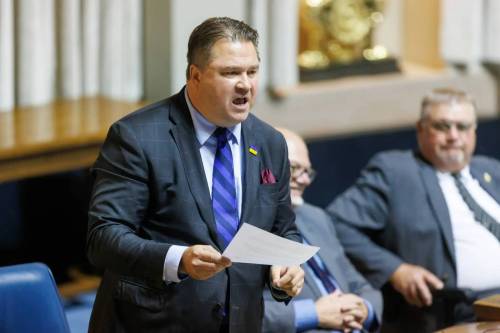
Federal Environment Minister Steven Guilbeault told reporters in Ottawa Tuesday that the findings are “baffling” given the government has not even published draft emission cap regulations yet.
“How can they come up with these scenarios about production cuts when all they have seen is basically a white paper, defining contours of what the regulations could be?” he said.
Guilbeault added that oil and gas companies themselves, including the Pathways Alliance, have committed to getting to net-zero emissions by 2050.
“All we’re doing with the oil and gas emissions cap is taking companies at their word,” he said.
“They said they wanted to be carbon-neutral by 2050, and what we’re doing with these regulations is making sure nobody waits until 2048 to start putting in place the measures that are necessary.”
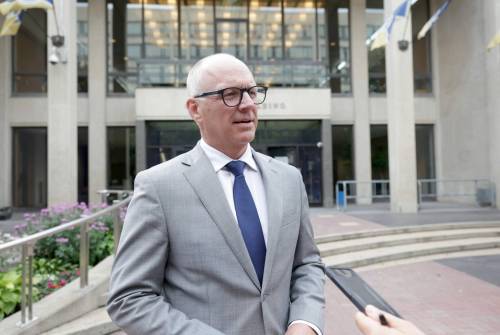
But Alberta Environment Minister Rebecca Shulz said the report supports what the province has been saying all along.
“We have to use common sense. You have to take socio-economic data into perspective when you’re looking at policies like (an emissions cap),” said Shulz in an interview.
“I don’t think Canadians want to see us throw the country into further economic decline.”

Shulz added Alberta recognizes that the economics of carbon capture and storage are challenging. She said heavy-handed government policy that makes companies less profitable will only have the effect of discouraging investment in emissions reduction.
“From a policy perspective, the layering of all of these punitive measures are continuing to drive away the emissions reduction technology that we actually want to see happen here,” she said.
The Deloitte report predicts Alberta would have 54,000 fewer jobs in 2030 with an emissions cap than without one.
This report by The Canadian Press was first published June 18, 2024.
— With files from Mia Rabson in Ottawa