A major power outage hits Balkan region as countries swelter in an early summer heat wave

Advertisement

Advertise with us

PODGORICA, Montenegro (AP) — A major hourslong power outage hit much of the Balkans on Friday as the southern European region sweltered in an early heat wave that sent temperatures soaring to more than 40 degrees Celsius (104 degrees Fahrenheit).

Read this article for free:


By clicking the button above, an account will be created and you will begin to receive some of our recommended newsletters. You may opt out of any newsletter by visiting your Email and Communication Preferences page or by clicking "unsubscribe" at the bottom of any email.

or

Already have an account? Log in here »

To continue reading, please subscribe:

Digital Subscription

One year of digital access for only $1.44 a week*

  • Enjoy unlimited reading on winnipegfreepress.com
  • Read the E-Edition, our digital replica newspaper
  • Access News Break, our award-winning app
  • Play interactive puzzles

*Billed as $5.77 plus GST every four weeks. After 52 weeks, price increases to the regular rate of $19.95 plus GST every four weeks. Offer available to new and qualified returning subscribers only. Cancel any time.

To continue reading, please subscribe:

Add Free Press access to your Brandon Sun subscription for only an additional

$1 for the first 4 weeks*

  • Enjoy unlimited reading on winnipegfreepress.com
  • Read the E-Edition, our digital replica newspaper
  • Access News Break, our award-winning app
  • Play interactive puzzles
Start now

*Your next Brandon Sun subscription payment will increase by $1.00 and you will be charged $17.95 plus GST for four weeks. After four weeks, your payment will increase to $24.95 plus GST every four weeks.

Hey there, time traveller!
This article was published 21/06/2024 (854 days ago), so information in it may no longer be current.

PODGORICA, Montenegro (AP) — A major hourslong power outage hit much of the Balkans on Friday as the southern European region sweltered in an early heat wave that sent temperatures soaring to more than 40 degrees Celsius (104 degrees Fahrenheit).

Montenegrin authorities said that an outage that lasted for several hours in the country’s power distribution system left almost the entire nation without electricity, while similar problems were reported in the coastal part of Croatia, and in Bosnia and Albania.

Nada Pavicevic, a spokeswoman for Montenegro’s state power distribution company, described the outage as a “disturbance of regional proportion,” and said authorities were still working to determine what happened.
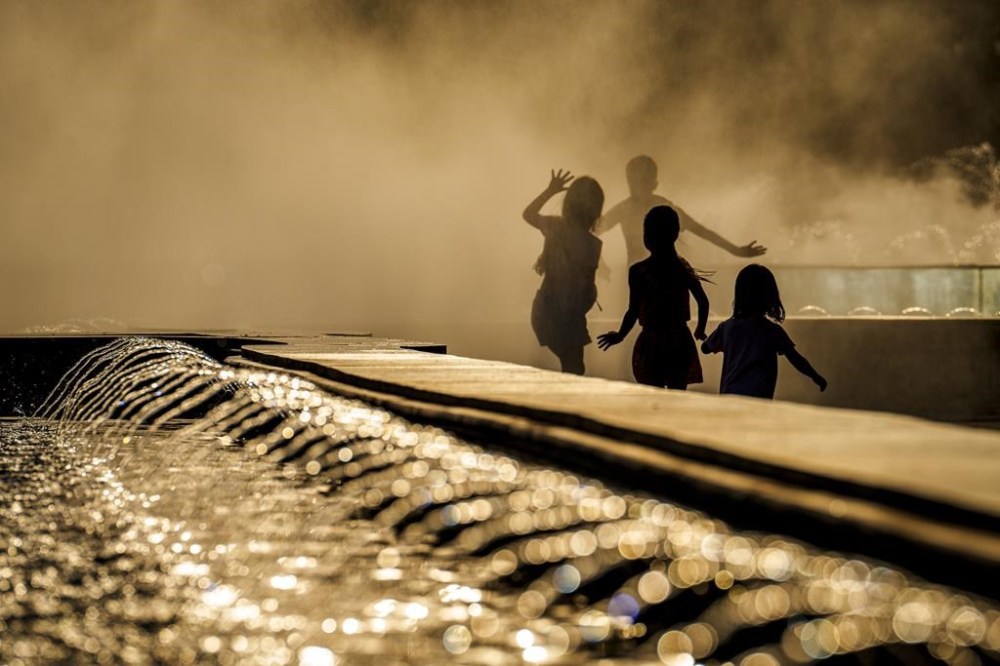
Children enjoy the drizzle from a public fountain before sunset in Bucharest, Romania, Thursday, June 20, 2024 as temperatures exceeded 38 degrees Celsius (100.4 Fahrenheit). The national weather forecaster issued a orange warning for western and southern Romania where temperatures are expected to reach 38 degrees Celsius (100.4 Fahrenheit) in the coming days. (AP Photo/Vadim Ghirda)

The exact cause of the outage was not immediately clear as the regional power grid has been overloaded for days because of overconsumption and the use of air-conditioning in high temperatures.

Bosnia’s state power company said the outage there was caused by problems in a regional distribution line, while Albania’s state power company said the “extreme heat” caused the problem.

Montenegro, Croatia, Bosnia and Albania share the Adriatic Sea coastline and the power grids in the region remain interconnected, decades after the Balkan wars in the 1990s.

“The whole electric grid system of continental Europe is connected together, and that sometimes has its benefits but also has its flaws,” said Danko Blazevic, the head of Croatia’s electric grid networks.

“The advantage is that you can import and export and sell power, but then the flaw is that when there is a failure, its basically passed from one system to another,” he added.

In the Bosnian capital, Sarajevo, the outage also caused traffic jams, with trams stopping and traffic lights not operating. Similar gridlock was reported in the Croatian port city of Split.
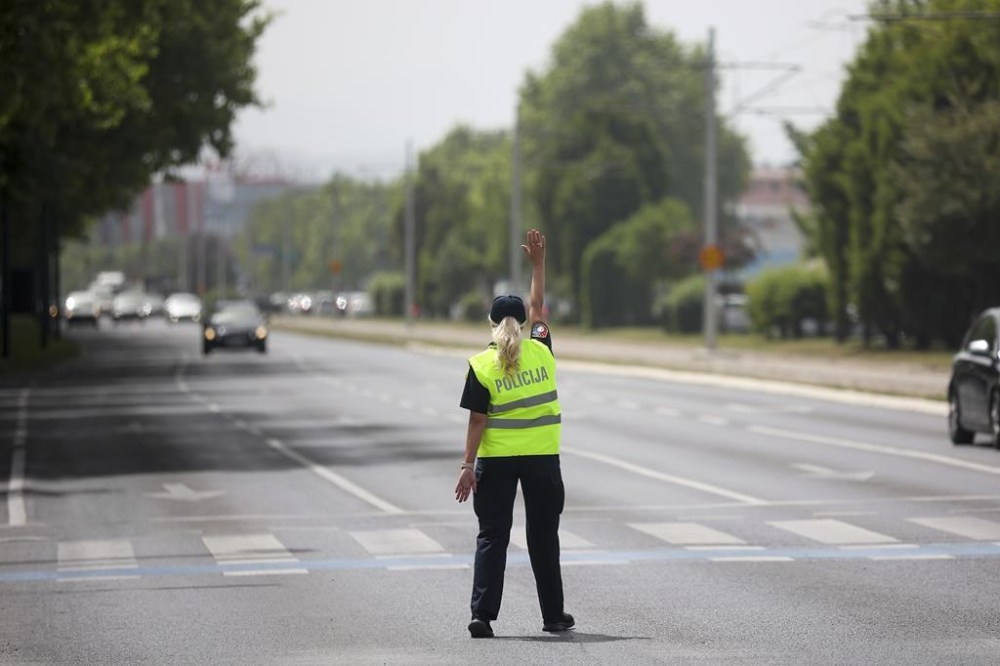
A police officer gestures towards cars as she tries to control traffic during a power outage in Sarajevo, Bosnia, Friday, June 21, 2024.(AP Photo/Armin Durgut)

In Croatia’s resort of Dubrovnik, thousands of tourists were left stranded in the midafternoon, with restaurants, pubs, supermarkets, ice cream parlors and others shutting their doors during the outage. Soccer fans milled around some of the pubs with darkened television screens, unable to watch the games played at the European Championship soccer tournament in Germany.

The collapse, which started just after noon on Friday, came as authorities throughout the region warned citizens to be cautious, drink water and avoid sunshine because of extremely high temperatures.

“Don’t stay in the sun between 11 a.m. and 5 p.m.,” warned Serbia’s Public Health Institute in its instructions to citizens. “If you must go out, please take a bottle of water along.”

Meteorologists say the heat in the region this week came from Africa, carrying sand particles that created a cloud-like layer, dimming the skyline.

The sweltering heat was the worst in big cities, where concrete sizzled even in the evening, and where nights offered no real respite as temperatures remained above 20 C (68 F).
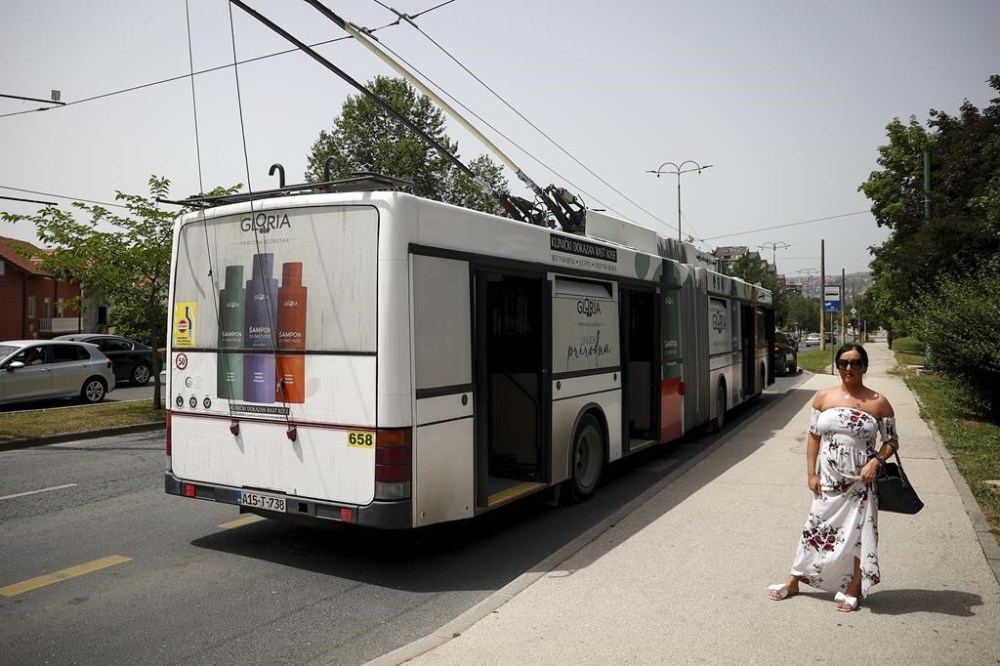
A woman waits next to the trolleybus as the traffic stops due to a power outage in Sarajevo, Bosnia, Friday, June 21, 2024. (AP Photo/Armin Durgut)

While hot summers are normal in the Balkans, temperatures typically do not reach such heights in mid-June, prompting weather alerts and warnings.

Earlier this week, authorities in North Macedonia imposed emergency measures through Sunday, after which the heat is expected to relent. On Friday, authorities in Romania imposed weight limits for vehicles traveling on national roads in some counties to prevent degradation to road surfaces.

Belgrade resident Milos Jeftovic said he is following the instructions and taking every opportunity to stay near the Serbian capital’s two rivers, the Danube and the Sava. Authorities, he said, should have reduced working hours and parked water tankers in the city streets.

“Personally, I don’t have a problem … but this is not OK, temperatures are above acceptable (levels),” Jeftovic said.

Weather warnings were also issued in neighboring Croatia, a tourism hot spot, where the heat wave is set to peak on Friday before an expected change of weather over the weekend that could trigger storms.
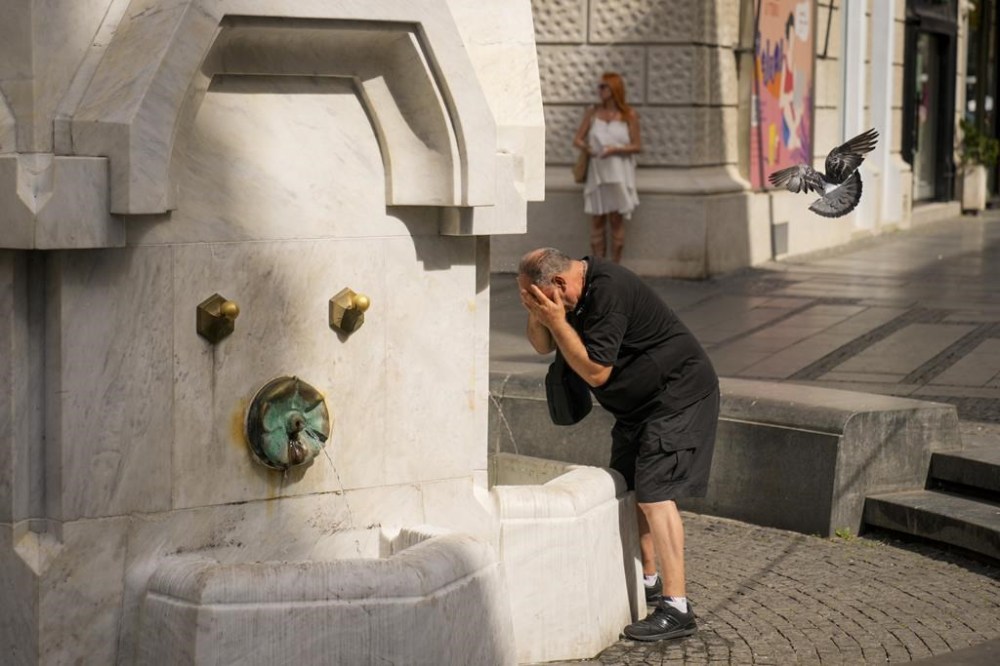
A man cools himself at a public fountain in Belgrade, Serbia, Friday, June 21, 2024. A major hourslong power outage hit much of the Balkans on Friday as the southern European region sweltered in an early heat wave that sent temperatures soaring to more than 40 C (104 F). (AP Photo/Darko Bandic)

Montenegrin state television RTCG said that though the residents in the country’s capital of Podgorica are used to very high temperatures, some complained the heat started too early in the year. One man told the broadcaster: “I really don’t know what we are going to do.”

Experts say that extreme weather conditions are also triggered by climate change.
Report Error Submit a Tip

More Stories

Alberta sees its way through the fog

Editorial 4 minute read Preview

Alberta sees its way through the fog

Editorial 4 minute read 2:01 AM CDT

“The owls are not what they seem.”

It was a confusing line in a confusing television show, back when television watchers had to wait a week, or sometimes more, for a new episode of a show.

What the owls were — or weren’t — was one small element of the astounding panoply of events in Twin Peaks.

In case this is all flying right over your head, Twin Peaks was a surrealist television show, a mystery/horror/something that premiered in 1990. It had an amazing ability to leave viewers both entertained and, well, hanging.

Read
2:01 AM CDT

Police stop sex assault in progress

1 minute read Yesterday at 1:18 PM CDT

Police officers stopped a sexual assault in progress on Stanley Street on Wednesday evening.

A member of the public called 911 after they spotted a suspect assaulting a woman shortly after 7 p.m. on the 300 block of Stanley, the Winnipeg Police Service said.

Patrol officers responded almost immediately and found a suspect in the process of sexually assaulting an unconscious woman just after 7:10 p.m.

Police took the suspect into custody, while paramedics took the woman to hospital in stable condition.

Don’t let good health reforms fade or fossilize

Alan Menkis 5 minute read 2:00 AM CDT

When Canada’s health ministers left Winnipeg on Oct. 16, they took with them a promise to keep talking. The federal health minister did not commit to long-term funding. She offered one-year extensions for programs that were about to run out, and asked officials to begin work on “the next 10 years.”

The provinces, in the words of Manitoba Health Minister Uzoma Asagwara, wanted to avoid “fiscal cliffs” and needed “predictable, stable, sustainable funding.”

Both sides have a point. And both are talking almost entirely about money — how much, for how long, under what formula.

Missing from the conversation is the question that decides whether any of it works — once the money flows, who must answer for what it does, or does not, achieve? We have been here before. In 2002, a Senate committee chaired by Michael Kirby warned that new federal money “must be used to buy change, not merely to support the system as it is presently structured.” It proposed an independent national health care commissioner, reporting every year to the public on how the system and the health of Canadians were faring.

Letters, Oct. 23

7 minute read 2:00 AM CDT

People over cars — always

Re: Researchers: lights at crossing ‘long overdue’ (Oct. 22)

Maggie Macintosh’s article was right on the mark. The biggest problem with pedestrian crossings is the remarkable inconsistency, but there is also the fact that drivers at every traffic light are trained to keep running through amber lights until they turn to red.

I use the pedestrian crossing at Roblin Boulevard and Hunterspoint Road and drive through it every day. Almost every day I see drivers, from a full block away, who will just keep going through the flashing ambers (at the crossing), especially if there is traffic ahead of them doing the same thing.

Rich get richer as NDP policy shifts leave opponents in dust

Dan Lett 5 minute read Preview

Rich get richer as NDP policy shifts leave opponents in dust

Dan Lett 5 minute read Wednesday, Oct. 21, 2026

Last week, Finance Minister Adrien Sala made two announcements that showed why the NDP will remain the party to beat in the next provincial election.

Read
Wednesday, Oct. 21, 2026

Exchange welcomes new gallery

Jen Zoratti 4 minute read Preview

Exchange welcomes new gallery

Jen Zoratti 4 minute read Wednesday, Oct. 21, 2026

Co-owned by Laura Porath and Mike Page, Lucent Gallery + Design Studio celebrates its grand opening, Thursday.

Read
Wednesday, Oct. 21, 2026