Small wildfire leads to precautionary evacuation of climate change research facility in Colorado
Advertisement
Read this article for free:
or
Already have an account? Log in here »
To continue reading, please subscribe:

Digital Subscription
One year of digital access for only $205*
- Enjoy unlimited reading on winnipegfreepress.com
- Read the E-Edition, our digital replica newspaper
- Access News Break, our award-winning app
- Play interactive puzzles
*First annual payment billed as $205.00 + GST for one year. This annual subscription will automatically renew at $233.00 + GST every 52 weeks (10% off the regular annual price of $259.35). Offer available to new and qualified returning subscribers only. Cancel any time.
To continue reading, please subscribe:
Add Free Press access to your Brandon Sun subscription for only an additional
$1 for the first 4 weeks*
- Enjoy unlimited reading on winnipegfreepress.com
- Read the E-Edition, our digital replica newspaper
- Access News Break, our award-winning app
- Play interactive puzzles
*Your next Brandon Sun subscription payment will increase by $1.00 and you will be charged $17.95 plus GST for four weeks. After four weeks, your payment will increase to $24.95 plus GST every four weeks.
Read unlimited articles for free today:
or
Already have an account? Log in here »
Hey there, time traveller!
This article was published 12/07/2024 (815 days ago), so information in it may no longer be current.
BOULDER, Colo. (AP) — A small wildfire started Friday on a trail near a Colorado facility where scientists research climate change, including worsening wildfires, leading officials to evacuate the building.
The fire started late Friday morning in the foothills of the Rocky Mountains near Boulder and had burned just a few acres by early afternoon, Boulder police said. The National Center for Atmospheric Research office was closed as a precaution.
The Boulder Office of Disaster Management said that while no evacuation orders were in place, people who might need help evacuating or would have to transport medical equipment should start preparing in case they are asked to leave.
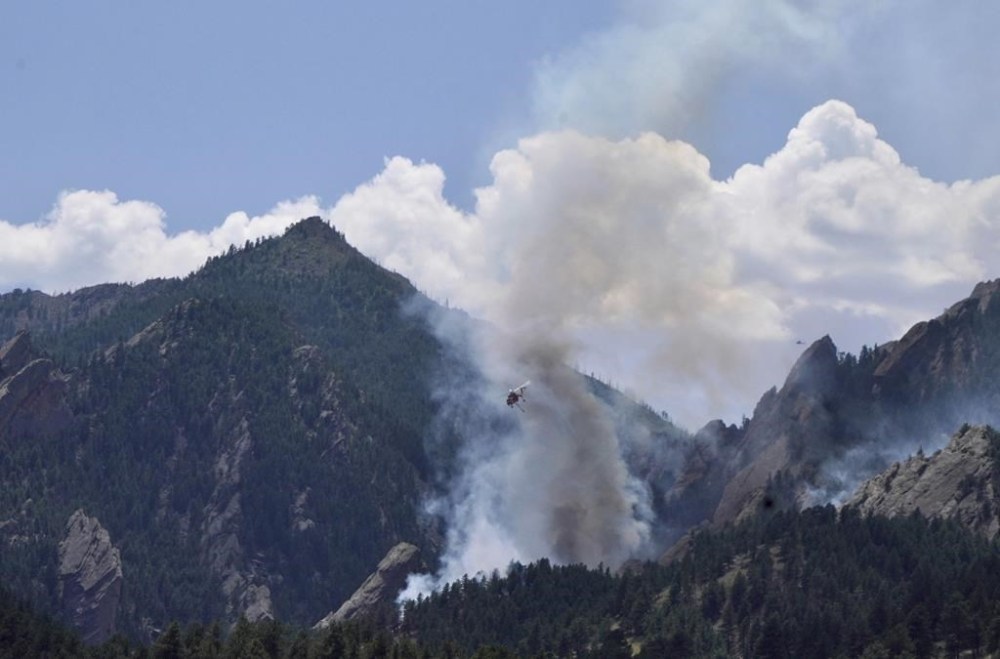
Several hiking trails in the area were also closed.
Fire crews with aerial support were battling the blaze.
Some areas of Colorado, particularly the Front Range mountains and foothills, started the year as the wettest on record, but they have since dried out considerably, said Russell Danielson, meteorologist for the National Weather Service forecast office in Boulder. From his office, he can see smoke from the Dinosaur Fire burning a mile away.
“We are at record highs for this time of year, and we also have very low humidity,” he said, which means dry vegetation can easily catch fire. Fortunately, he said, the wind wasn’t much of a factor on Friday.

The National Weather Service has issued a heat advisory for the Boulder area, forecasting temperatures to rise above 100 degrees Fahrenheit (38 degrees Celsius) on Friday and through the weekend, contributing to the elevated fire risk.
“We want to make sure people aren’t out there creating sparks with anything they do,” he said.