Elephant seals off B.C. coast used sonar equipment as ‘dinner bell’: Researchers
Advertisement
Read this article for free:
or
Already have an account? Log in here »
To continue reading, please subscribe:
Digital Subscription
One year of digital access for only $1.44 a week*
- Enjoy unlimited reading on winnipegfreepress.com
- Read the E-Edition, our digital replica newspaper
- Access News Break, our award-winning app
- Play interactive puzzles
*Billed as $5.77 plus GST every four weeks. After 52 weeks, price increases to the regular rate of $19.95 plus GST every four weeks. Offer available to new and qualified returning subscribers only. Cancel any time.
To continue reading, please subscribe:
Add Free Press access to your Brandon Sun subscription for only an additional
$1 for the first 4 weeks*
- Enjoy unlimited reading on winnipegfreepress.com
- Read the E-Edition, our digital replica newspaper
- Access News Break, our award-winning app
- Play interactive puzzles
*Your next Brandon Sun subscription payment will increase by $1.00 and you will be charged $17.95 plus GST for four weeks. After four weeks, your payment will increase to $24.95 plus GST every four weeks.
Read unlimited articles for free today:
or
Already have an account? Log in here »
Hey there, time traveller!
This article was published 04/09/2024 (775 days ago), so information in it may no longer be current.
VICTORIA – Scientists said new research shows how northern elephant seals used sonar from a deep sea research facility off the British Columbia coast like a “dinner bell” as they hunted for prey.
University of Victoria researchers said their study provides a rare glimpse into the species’ underwater behaviour, as the animals learned to associate sonar noise from the research instruments, 645 metres deep, with the presence of food.
Lead author Heloise Frouin-Mouy said in a University of Victoria news release that the phenomenon is known as the “dinner bell effect,” and the seals appeared to have used the sonar to find an area with prey, particularly their favoured sablefish.
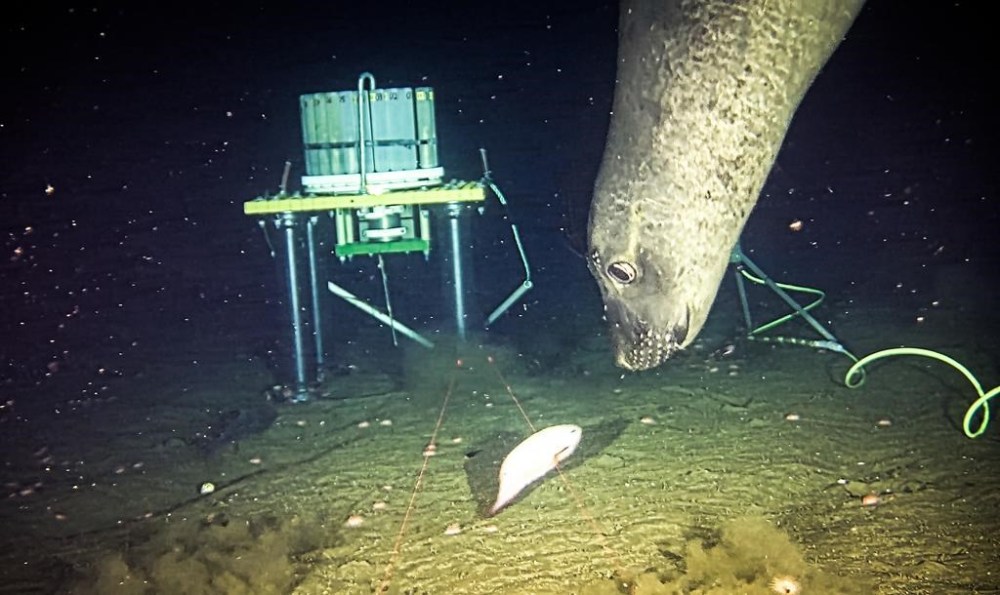
“I was amazed by the videos.” said Frouin-Mouy. “Seeing them chasing the fish is amazing.”
The research observatory operated by Ocean Networks Canada in the Barkley Canyon was conducting unrelated research on the effects of light and bait on fish and invertebrate behaviour.
But when video of the site was reviewed, the surprised researchers saw at least eight elephant seals repeatedly visiting the site to hunt, suggesting they used the sonar to locate the area.
Frouin-Mouy said when scientists turned to her for help after finding some “unusual encounters” with the seals, she was excited about the discovery.
Male adolescent seals were also captured on video “power napping” on the sea floor, “another new and never-before-seen behaviour,” the university statement said.

Frouin-Mouy said the seals were not disturbed by the sonar unit when its light turned on, and one of the animals even napped nearby for more than eight minutes.
Eight male elephant seals were identified between June 2022 and May 2023, and individuals were identified based on body marks or scars as well as their “eyeliner cues,” the study said.
Frouin-Mouy said she named the eight seals after her favourite group, The Beach Boys, and her favourite one is called Mike, who frequents the research site hunting for food.
The study was conducted in 2022 and 2023 and published in the peer-reviewed journal PLOS ONE on Wednesday.
This report by The Canadian Press was first published Sept. 4, 2024.