

Brackish water creeping up the Mississippi River may threaten Louisiana’s drinking supply
Advertisement
Read this article for free:
or
Already have an account? Log in here »
To continue reading, please subscribe:
Monthly Digital Subscription
$0 for the first 4 weeks*
- Enjoy unlimited reading on winnipegfreepress.com
- Read the E-Edition, our digital replica newspaper
- Access News Break, our award-winning app
- Play interactive puzzles
*No charge for 4 weeks then price increases to the regular rate of $19.00 plus GST every four weeks. Offer available to new and qualified returning subscribers only. Cancel any time.
Monthly Digital Subscription
$4.75/week*
- Enjoy unlimited reading on winnipegfreepress.com
- Read the E-Edition, our digital replica newspaper
- Access News Break, our award-winning app
- Play interactive puzzles
*Billed as $19 plus GST every four weeks. Cancel any time.
To continue reading, please subscribe:
Add Free Press access to your Brandon Sun subscription for only an additional
$1 for the first 4 weeks*
*Your next subscription payment will increase by $1.00 and you will be charged $16.99 plus GST for four weeks. After four weeks, your payment will increase to $23.99 plus GST every four weeks.
Read unlimited articles for free today:
or
Already have an account? Log in here »
Hey there, time traveller!
This article was published 17/09/2024 (445 days ago), so information in it may no longer be current.
BATON ROUGE, La. (AP) — An influx of salt water in the Mississippi River, which feeds southeastern Louisiana’s drinking water supplies, is once again creeping up the waterway.
For the third year in a row, an underwater levee is being built to slow the brackish intrusion and prevent it from reaching water intake treatment facilities.
Salt water in southeast Louisiana has become a regular occurrence in recent years, as the mighty flow of the Mississippi River has ebbed under dry conditions. Communities rely on the Mississippi’s volume and current to push salt water from the Gulf of Mexico back out to sea.
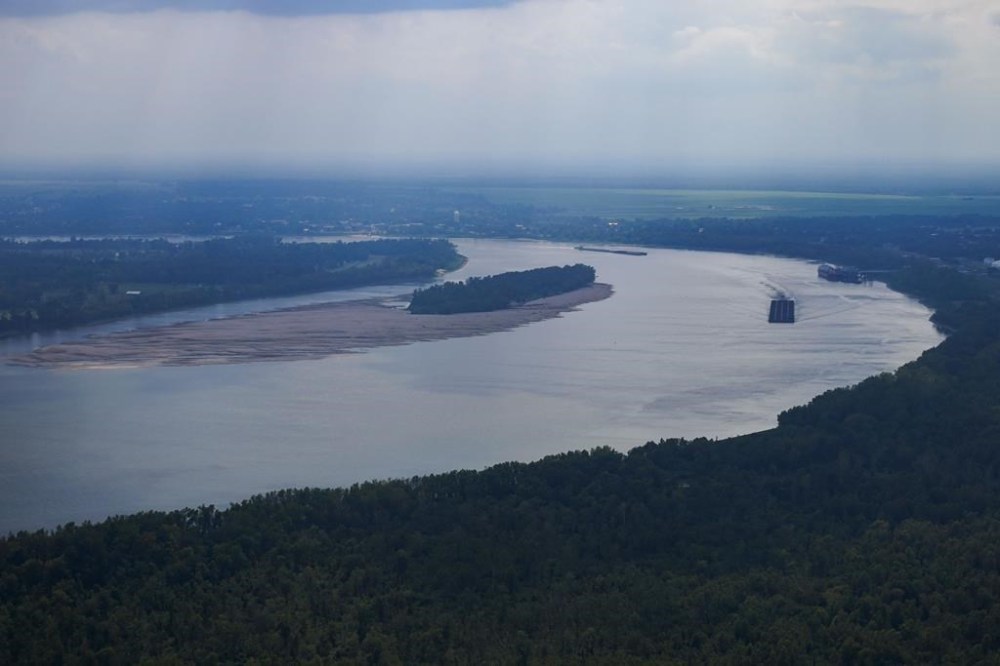
The U.S. Army Corps of Engineers and Governor’s Office of Homeland Security and Emergency Preparedness say they are closely monitoring the influx of salt water.
On Monday, the corps of engineers began building a sill across the river bed in Myrtle Grove, about 30 miles (48 kilometers) south of New Orleans. The sill is meant to slow or halt salt water, which flows along the bottom of the river because it’s more dense than fresh water. Building the sill with river sand is estimated to be completed by October.
Sills have been used in similar situations in the area in 1988, 2012, 2022 and 2023.
While no immediate threats to drinking water have been announced, it’s not yet clear whether additional precautions or countermeasures will have to be implemented. Other options include using barges to carry fresh water downriver or issuing boil advisories.
Ricky Boyett, a spokesperson for the U.S. Army Corps of Engineers in the New Orleans district, said he is hopeful the sill will be enough. But, he added, the main factor determining the salt water’s progression is precipitation further up river, particularly in the Ohio Valley.
“Rain dictates everything,” Boyett told The Associated Press.
Many communities in south Louisiana rely on the Mississippi’s fresh water, having built their water intake treatment facilities right along the river.
Salt water intrusion in Louisiana is not unique to this year. Last year in parts of Plaquemines Parish, the southeast corner of Louisiana that encompasses the final stretch of the Mississippi River before it empties into the Gulf of Mexico, residents were forced to rely on bottled water for cooking and drinking for months.
Some of those communities now have reverse osmosis machines to desalinize water.
The salt water issue stretched further than residents had seen before in 2023. As it neared New Orleans, Louisiana’s most populous city, President Joe Biden granted an emergency declaration and issued federal disaster assistance to the state. The aid included more equipment, resources and federal money to address the problem.
In addition to the sill built last year, millions of gallons of fresh water were taken by barges to treatment facilities that used it to dilute the saltiness to safe levels. While this year’s situation has not reached that level, Boyett said officials are prepared if it does.
“We still have barges ready to go if something happens,” Boyett said. “But right now, it’s not looking like we are going to need to do that — so that’s a positive move in the right direction.”