Why an Alaska island is using peanut butter and black lights to find a rat that might not exist
Advertisement
Read this article for free:
or
Already have an account? Log in here »
To continue reading, please subscribe:
Digital Subscription
One year of digital access for only $1.44 a week*
- Enjoy unlimited reading on winnipegfreepress.com
- Read the E-Edition, our digital replica newspaper
- Access News Break, our award-winning app
- Play interactive puzzles
*Billed as $5.77 plus GST every four weeks. After 52 weeks, price increases to the regular rate of $19.95 plus GST every four weeks. Offer available to new and qualified returning subscribers only. Cancel any time.
To continue reading, please subscribe:
Add Free Press access to your Brandon Sun subscription for only an additional
$1 for the first 4 weeks*
- Enjoy unlimited reading on winnipegfreepress.com
- Read the E-Edition, our digital replica newspaper
- Access News Break, our award-winning app
- Play interactive puzzles
*Your next Brandon Sun subscription payment will increase by $1.00 and you will be charged $17.95 plus GST for four weeks. After four weeks, your payment will increase to $24.95 plus GST every four weeks.
Read unlimited articles for free today:
or
Already have an account? Log in here »
Hey there, time traveller!
This article was published 21/09/2024 (757 days ago), so information in it may no longer be current.
JUNEAU, Alaska (AP) — On an island of windswept tundra in the Bering Sea, hundreds of miles from mainland Alaska, a resident sitting outside their home saw — well, did they see it? They were pretty sure they saw it.
A rat.
The purported sighting would not have gotten attention in many places around the world, but it caused a stir on St. Paul Island, which is part of the Pribilof Islands, a birding haven sometimes called the “Galapagos of the north” for its diversity of life.
That’s because rats that stow away on vessels can quickly populate and overrun remote islands, devastating bird populations by eating eggs, chicks or even adults and upending once-vibrant ecosystems.
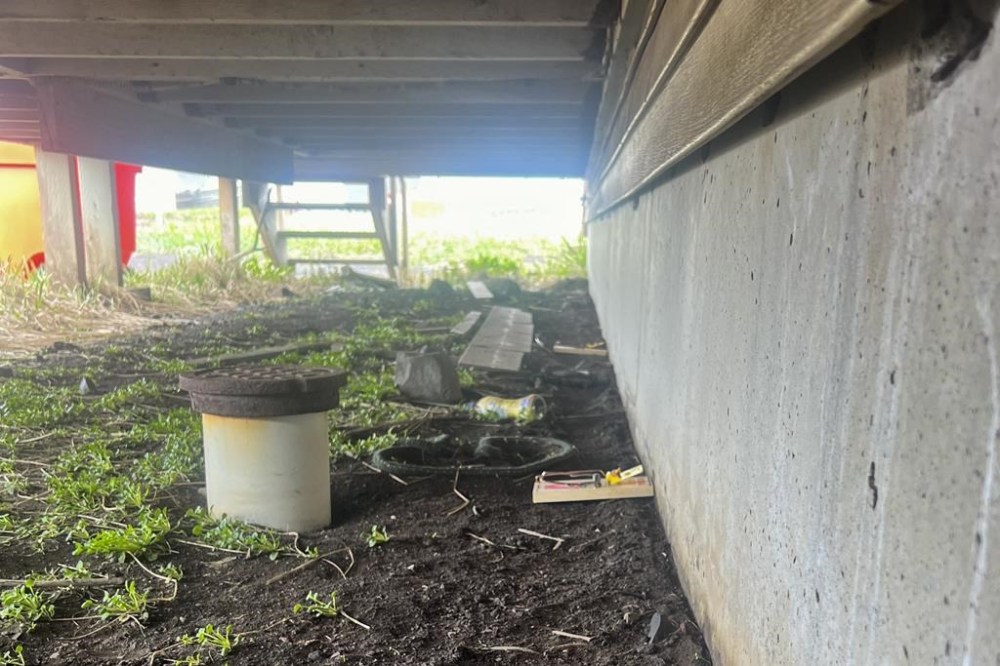
Shortly after receiving the resident’s report in June, wildlife officials arrived at the apartment complex and crawled through nearby grasses, around the building and under the porch, looking for tracks, chew marks or droppings. They baited traps with peanut butter and set up trail cameras to capture any confirmation of the rat’s existence — but so far have found no evidence.
“We know — because we’ve seen this on other islands and in other locations in Alaska and across the world — that rats absolutely decimate seabird colonies, so the threat is never one that the community would take lightly,” said Lauren Divine, director of the Aleut Community of St. Paul Island’s ecosystem conservation office.
The anxiety on St. Paul Island is the latest development amid longstanding efforts to get or keep non-native rats off some of the most remote, but ecologically diverse, islands in Alaska and around the world.
Rodents have been removed successfully from hundreds of islands worldwide — including one in Alaska’s Aleutian chain formerly known as “Rat Island,” according to the U.S. Fish and Wildlife Service. But such efforts can take years and cost millions of dollars, so prevention is considered the best defense.
Around the developed areas of St. Paul, officials have set out blocks of wax — “chew blocks” — designed to record any telltale incisor bites. Some of the blocks are made with ultraviolet material, which allow inspectors armed with black lights to search for glowing droppings.
They also have asked residents to be on the lookout for any rodents and are seeking permission to have the U.S. Department of Agriculture bring a dog to the island to sniff out any rats. Canines are otherwise banned from the Pribilofs to protect fur seals.
There have been no traces of any rats since the reported sighting this summer, but the hunt and heightened state of vigilance is likely to persist for months.
Divine likened the search to trying to find a needle in a haystack “and not knowing if a needle even exists.”
The community of about 350 people — clustered on the southern tip of a treeless island marked by rolling hills, rimmed by cliffs and battered by storms — has long had a rodent surveillance program that includes rat traps near the airport and at developed waterfront areas where vessels arrive, designed to detect or kill any rats that might show up.
Still, it took nearly a year to catch the last known rat on St. Paul, which was believed to have hopped off a barge. It was found dead in 2019 after it evaded the community’s initial defenses. That underscores why even an unsubstantiated sighting is taken so seriously, Divine said.
The U.S. Fish and Wildlife Service is planning an environmental review to analyze eradicating the potentially tens of thousands of rats on four uninhabited islands in the far-flung, volcano-pocked Aleutian chain, hundreds of miles southwest of St. Paul. More than 10 million seabirds of varying species nest in the Aleutians.
The diversity and number of breeding birds on islands with established, non-native rat populations are noticeably low, the agency has said. Carcasses of least auklets and crested auklets, which are known for their noisy nesting colonies in rocky areas, have been found in rat-food caches on Kiska Island, one of the four islands, where rat footprints have been spotted on the wet, sandy shoreline.
If the agency moves ahead, it might take five years for the first of the projects to be launched, and given the intensive planning, testing and research required for each island, it could take decades to complete all of them, said Stacey Buckelew, an island invasive species biologist with Alaska Maritime National Wildlife Refuge.
But such efforts are important steps to help seabirds already challenged by stresses including climate change, Buckelew said.
The success of what was long called Rat Island, a tract in the Aleutians roughly half the size of Manhattan, shows how effective eradication programs can be. Rats are believed to have first arrived with a Japanese shipwreck in the late 18th century. Fur traders introduced arctic foxes there the following century.
The foxes were eradicated in 1984, but it was nearly a quarter century later when wildlife agents and conservation groups killed off the rats by dropping poison pellets from a helicopter. Those involved said that without nesting seabirds, the island was eerily silent compared to the cacophony of other, rat-free islands, and it even smelled different.
Since the eradication of rats, researchers have found native birds benefiting, even documenting species thought to have been wiped out by rats. The island is once again known by the name originally bestowed by the Unangan people native to the Aleutians: Hawadax. Researchers have found tufted puffins, which dig burrows into cliff edges and are defenseless against rats or foxes, as well as eagle and falcon nests.
During surveys before the eradication, researchers heard no song sparrows, but during a 2013 trip their sounds were almost incessant, Buckelew said at that time.
Donald Lyons, director of conservation science with the National Audubon Society’s Seabird Institute, described being in the Pribilof Islands and watching clouds of auklets return to their colonies in the evening — “tens of thousands, hundreds of thousands, perhaps millions of birds in the air at a given time.”
He said officials were right to take the alleged sighting of a rat on St. Paul so seriously. He credited the largely Alaska Native communities in the Pribilofs for their efforts to keep invasive species out.
“It’s just the abundance of wildlife that we hear stories or read historical accounts of, but really seldom see in kind of our modern age,” he said. “And so it really is a place where I’ve felt the wonder, the spectacle of nature.”