Bahamas seeks help to pay off debt brought by huge storms, result of climate change
Advertisement
Read this article for free:
or
Already have an account? Log in here »
To continue reading, please subscribe:

Digital Subscription
One year of digital access for only $205*
- Enjoy unlimited reading on winnipegfreepress.com
- Read the E-Edition, our digital replica newspaper
- Access News Break, our award-winning app
- Play interactive puzzles
*First annual payment billed as $205.00 + GST for one year. This annual subscription will automatically renew at $233.00 + GST every 52 weeks (10% off the regular annual price of $259.35). Offer available to new and qualified returning subscribers only. Cancel any time.
To continue reading, please subscribe:
Add Free Press access to your Brandon Sun subscription for only an additional
$1 for the first 4 weeks*
- Enjoy unlimited reading on winnipegfreepress.com
- Read the E-Edition, our digital replica newspaper
- Access News Break, our award-winning app
- Play interactive puzzles
*Your next Brandon Sun subscription payment will increase by $1.00 and you will be charged $17.95 plus GST for four weeks. After four weeks, your payment will increase to $24.95 plus GST every four weeks.
Read unlimited articles for free today:
or
Already have an account? Log in here »
Hey there, time traveller!
This article was published 25/09/2024 (746 days ago), so information in it may no longer be current.
NEW YORK (AP) — The Bahamas is stuck in a financial pickle, much of it because of the whims of climate change, bureaucracy and the fossil fuel industry, said its prime minister, who adds that he is tired of promises of help but little action.
And he’s not alone.
Like many other countries in the Global South, Bahamas has a lot of debt from warming-connected weather disasters its leaders say it did little to cause.
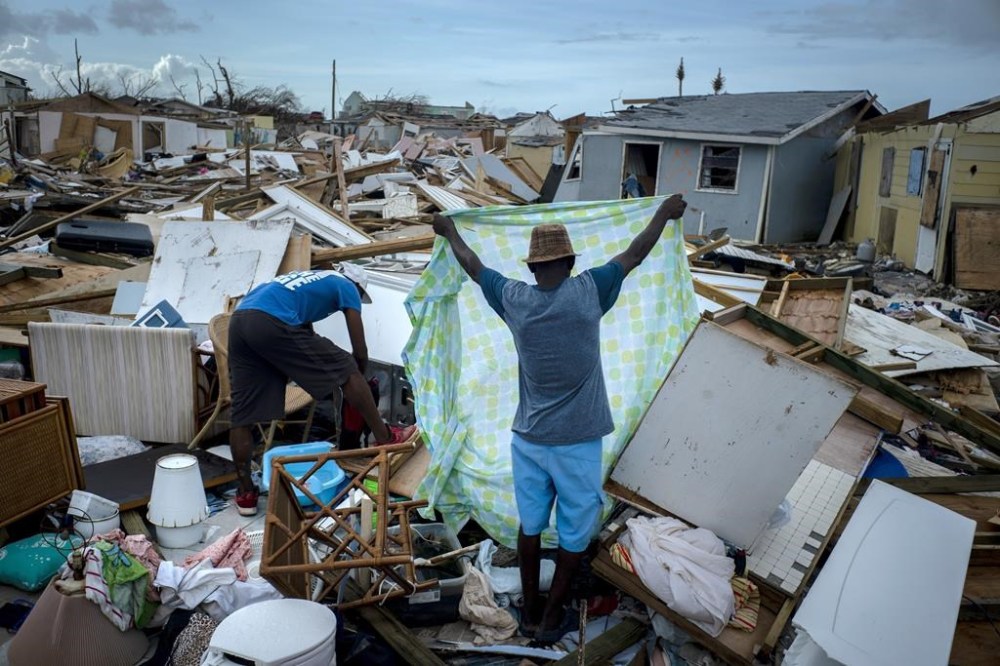
In October 2016, a powerful Category 4 Hurricane Matthew slammed into the Bahamas, causing more than $7 million in damage. Then in 2019 Hurricane Dorian, the strongest storm to hit his country on record, caused $3.4 billion in damage. By comparison the country’s annual revenue is only $2.8 billion to $2.9 billion a year, Davis said. So just four days wiped out more than a year’s worth of revenue.
The country is now in debt by about $10 billion.
Its leaders are seeking more help, more money, from the Global North and oil companies themselves, Bahamas Prime Minister Philip Davis said in an interview with The Associated Press. Climate finance — which is about the annual $2.4 trillion need for developing nations dealing with climate change and shifting to a greener economy — is a key issue this week at the United Nations and in November in international climate negotiations in Azerbaijan.
But when Bahamas tries to get financial aid from already established funds, the country is told it’s too well off. That’s something other countries, especially small island nations, have complained about.
Research shows that, generally, climate change has made the most powerful storms stronger and wetter. The Bahamas produces less heat-trapping carbon dioxide in one year than the United States does in four hours, according to figures from the Global Carbon Project, which tracks national emissions.
Barbados prime minister calls for dramatic changes in debt relief
Barbados Prime Minister Mia Mottley, who has been a leader in the call for changes in the climate financial system, earlier this week told a climate week session that 70% of the world’s poor live in countries considered middle income and the system of financial help doesn’t work for them, calling on dramatic changes in multi-national bank lending and debt relief.
“We have seen some changes. We have seen some initiatives taken, but the problem is that the temperatures are moving faster than we are making changes,” Mottley said. “If that is the case we will have a bigger problem than we anticipated.”
One of the biggest sticking points in international climate finance negotiations is not just how much is paid, but who pays it. Rich nations say the need is so big that all the money can’t be grants from developed nations, and must include investments from private industry, including the banking sector.
Both Davis and Mottley said they understand rich governments don’t have enough money by themselves, so private help will play a role. But they add a catch. It should be as part of a “polluters pay” system that especially targets companies such as the fossil fuel industry that are heavily responsible for the climate change problem.
“Some of the oil producing companies ought to pay at least 2% of their profits into a fund to help us in the global South,” Davis said. But he said he doubts that they’ll do so willingly, so the Bahamas attorney general is pushing later this year to ask an international court to make the firms pay.
Rising water, shrinking land
Bahamas like other island nations is watching its land shrink and sink because of sea level rise, Davis said. There are 700 islands but they are only ten feet (three meters) above sea level.
“We are standing on ground that is quickly disappearing,” Davis said.
Still, Davis said even though many islands will be under water in 50 years or so, he refuses to see parts of his country “wiped off the map,” adding how important sovereignty is for island nations that may get submerged, an issue that will be discussed in a special United Nations General Assembly sea level rise summit Wednesday.
“I’m optimistic because I believe in human ingenuity. I believe that once we come together, you could defeat this existential threat to humanity,” Davis said. “Over the years, humankind has overcome many, many challenges. And this is just another one.”
___
Read more of AP’s climate coverage at http://www.apnews.com/climate-and-environment
___
Follow Seth Borenstein on X at @borenbears
______
The Associated Press’ climate and environmental coverage receives financial support from multiple private foundations. AP is solely responsible for all content. Find AP’s standards for working with philanthropies, a list of supporters and funded coverage areas at AP.org.