Urban communities that lack shade sizzle when it’s hot. Trees are a climate change solution
Advertisement
Read this article for free:
or
Already have an account? Log in here »
To continue reading, please subscribe:

Digital Subscription
One year of digital access for only $205*
- Enjoy unlimited reading on winnipegfreepress.com
- Read the E-Edition, our digital replica newspaper
- Access News Break, our award-winning app
- Play interactive puzzles
*First annual payment billed as $205.00 + GST for one year. This annual subscription will automatically renew at $233.00 + GST every 52 weeks (10% off the regular annual price of $259.35). Offer available to new and qualified returning subscribers only. Cancel any time.
To continue reading, please subscribe:
Add Free Press access to your Brandon Sun subscription for only an additional
$1 for the first 4 weeks*
- Enjoy unlimited reading on winnipegfreepress.com
- Read the E-Edition, our digital replica newspaper
- Access News Break, our award-winning app
- Play interactive puzzles
*Your next Brandon Sun subscription payment will increase by $1.00 and you will be charged $17.95 plus GST for four weeks. After four weeks, your payment will increase to $24.95 plus GST every four weeks.
Read unlimited articles for free today:
or
Already have an account? Log in here »
Hey there, time traveller!
This article was published 28/09/2024 (710 days ago), so information in it may no longer be current.
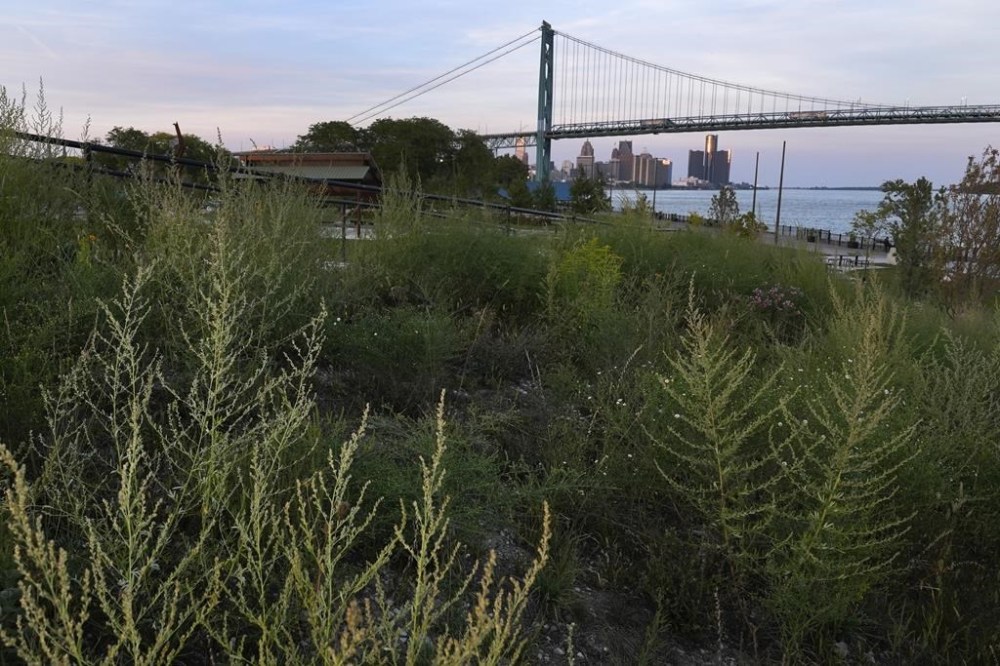
DETROIT (AP) — Along a busy road in west Detroit, there’s little respite from the sun for residents stopping for gasoline, attending places of worship or bringing children to daycare. But a budding canopy of trees planted this year will change the look and feel of this corridor.
Detroit and other cities are adding trees and green spaces as one way to blunt the impact of warmer average temperatures and heat waves that are longer and hotter due to climate change.
The United Nations is urging governments, institutions and investors to prioritize sustainable cooling solutions that don’t further warm the planet, including planting trees for shade and using reflective building materials. The U.N. Environment Programme and the International Finance Corporation issued a report Wednesday on financing these solutions for the developing world during U.N. General Assembly meetings.
It’s the latest U.N. effort to help countries and cities cool buildings without adding air conditioners, raise energy efficiency standards for cooling equipment and phase down highly-polluting refrigerants. The goal is to get to near-zero emissions from cooling by 2050.
“We’re faced with record-breaking temperatures. We need to save people from extreme heat,” said Lily Riahi, global coordinator for the UNEP-led Cool Coalition. “But we have to find a way to cool the planet in a way that doesn’t create more heat.”
Globally, 20% of electricity is used for cooling. If nothing changes, the demand for equipment, such as air conditioners and refrigerators, is projected to triple by 2050, doubling electricity consumption and driving up emissions from fossil fuels, according to UNEP.
At last year’s U.N. climate talks, a Global Cooling Pledge was launched to reduce emissions from cooling. And Riahi says the United States, one of 71 countries to endorse it, is a leader in using nature for cooling to tackle extreme heat.
A historic investment in urban trees is currently underway. The U.S. Forest Service Urban and Community Forestry Program received $1.5 billion through the Inflation Reduction Act in 2022. Grant applications flooded in as heat records were shattered in 2023. Nearly 400 projects were picked for funding.
Typically, the program gets about $40 million annually.
The cost of planting and maintenance is the major obstacle for most greening projects, said Daniel Metzger, a fellow at the Sabin Center for Climate Change Law. Where a project is transforming previously paved space, removing asphalt or concrete is generally the biggest expense, he said.
Urban areas often bear the brunt of harmful health and environmental effects from heat waves. It’s hotter in urban areas than surrounding suburbs — the “urban heat island” effect — because of abundant heat-absorbing surfaces. Trees and vegetation provide shade while lowering surface and air temperatures.
Increasing a city’s tree canopy by 10% lowers the temperature by 1.8 degrees Fahrenheit (1 degree Celsius), according to the Smart Surfaces Coalition. The coalition helps cities integrate cool roofs, green roofs, solar, porous pavement and urban trees.
“We can’t air condition our way out of this problem,” said coalition founder Greg Kats. “The way to solve it is citywide cooling.”
As Detroit grew, the city built tall, concrete buildings, industrial areas, commercial corridors and roadways. What was once called a “city of trees” lost thousands. Some were cut down; others died from disease and pests.
Detroit was awarded $3 million through the urban forestry program to increase tree canopy in neighborhoods with few trees.
Eric Jones, a resident of the Woodbridge neighborhood, said some homeowners don’t want trees because they think squirrels and falling leaves are nuisances. For Jones, 47, cooling in the summer outweighs that when he walks with his wife and daughter or goes running. Trees also improve air and water quality, help prevent stormwater runoff, sequester carbon dioxide, and can increase property values.
“On a day like today where it’s in the 80s or in the 90s and it’s sunny, I mean, it’s just amazing the difference that we feel in our neighborhood versus when we get outside and there isn’t near as much trees,” Jones said.
Crystal Perkins, Detroit’s general services director, said it will take time to feel citywide impacts because immature trees need to grow. Detroit plans to plant 75,000 young trees over five years.
“We know we’ll reap the benefits for generations to come once we make these changes,” Perkins added.
Meadows can help cool an area, too. Grasses and native plants can be a complementary approach to urban cooling because they reflect sunlight and absorb less heat than concrete or asphalt, said Lin Meng, an assistant professor of Earth and environmental sciences at Vanderbilt University.

A meadow planted in Detroit’s Palmer Park in 2020 has grown 6 feet (1.8 meters) tall, with flowering purple asters, yellow goldenrods and Black-eyed Susans.
The Forestry Program prioritized communities that have been historically “marginalized, underserved and overburdened by pollution,” in choosing projects to receive grants. Under Secretary for Natural Resources and Environment Homer Wilkes said extreme heat disproportionately affects minority and low-income communities with little tree cover.
Researchers have found less tree canopy on average in communities mostly inhabited by racial and ethnic minorities in the 1930s, when financial services were withheld due to the discriminatory housing policy known as redlining. A 2021 study in NPJ Urban Sustainability of 37 U.S. cities found nearly twice as much tree canopy in predominantly white communities in the 1930s.
The ranking system used to assess loan risk mirrors tree cover today, lead author Dexter Locke said in an interview.
“The lethality of urban heat may increase with a changing climate,” Locke said. “The people who are least able to cope with it can’t afford air conditioning. So there’s a real double environmental injustice there.”
In Baton Rouge, Louisiana, nonprofits are planting citrus trees around public housing. Supported by a $6 million U.S. Forest Service grant, two community groups are starting an apprenticeship program to teach dozens of youths to plant and care for trees to expand urban canopies, combat food insecurity and increase environmental awareness.
“That’s landscape changing on a grand scale for a zip code,” said Sage Roberts Foley, executive director of Baton Rouge Green.
Baton Roots mobile farm manager Jacquel Curry, 29, appreciates the citrus trees planted in his neighborhood because they offer shade, cooling that can lower electricity bills and fresh fruit once they mature.

“The whole goal is to reverse the bad domino effects due to the lack of trees,” Curry said. “We’re trying to get it to go back in the other direction.”
___
McDermott reported from Providence, R.I. Associated Press Writer Jack Brook in New Orleans contributed to this report.
___
The Associated Press’ climate and environmental coverage receives financial support from multiple private foundations. AP is solely responsible for all content. Find AP’s standards for working with philanthropies, a list of supporters and funded coverage areas at AP.org.