FEMA has faced criticism and praise during Helene. Here’s what it does – and doesn’t do
Advertisement
Read this article for free:
or
Already have an account? Log in here »
To continue reading, please subscribe:

Digital Subscription
One year of digital access for only $205*
- Enjoy unlimited reading on winnipegfreepress.com
- Read the E-Edition, our digital replica newspaper
- Access News Break, our award-winning app
- Play interactive puzzles
*First annual payment billed as $205.00 + GST for one year. This annual subscription will automatically renew at $233.00 + GST every 52 weeks (10% off the regular annual price of $259.35). Offer available to new and qualified returning subscribers only. Cancel any time.
To continue reading, please subscribe:
Add Free Press access to your Brandon Sun subscription for only an additional
$1 for the first 4 weeks*
- Enjoy unlimited reading on winnipegfreepress.com
- Read the E-Edition, our digital replica newspaper
- Access News Break, our award-winning app
- Play interactive puzzles
*Your next Brandon Sun subscription payment will increase by $1.00 and you will be charged $17.95 plus GST for four weeks. After four weeks, your payment will increase to $24.95 plus GST every four weeks.
Read unlimited articles for free today:
or
Already have an account? Log in here »
Hey there, time traveller!
This article was published 04/10/2024 (721 days ago), so information in it may no longer be current.
WASHINGTON (AP) — The Federal Emergency Management Agency is tasked with helping states and communities hit by disasters like Hurricane Helene.
With Helene hitting during the homestretch of an election year, the agency has been criticized by some residents and politicians, like Republican presidential nominee Donald Trump, who have questioned its response and are spreading false information that its funding is going to migrants or foreign wars.
The Biden administration has defended FEMA’s work and says it has the money it needs to help communities right now.
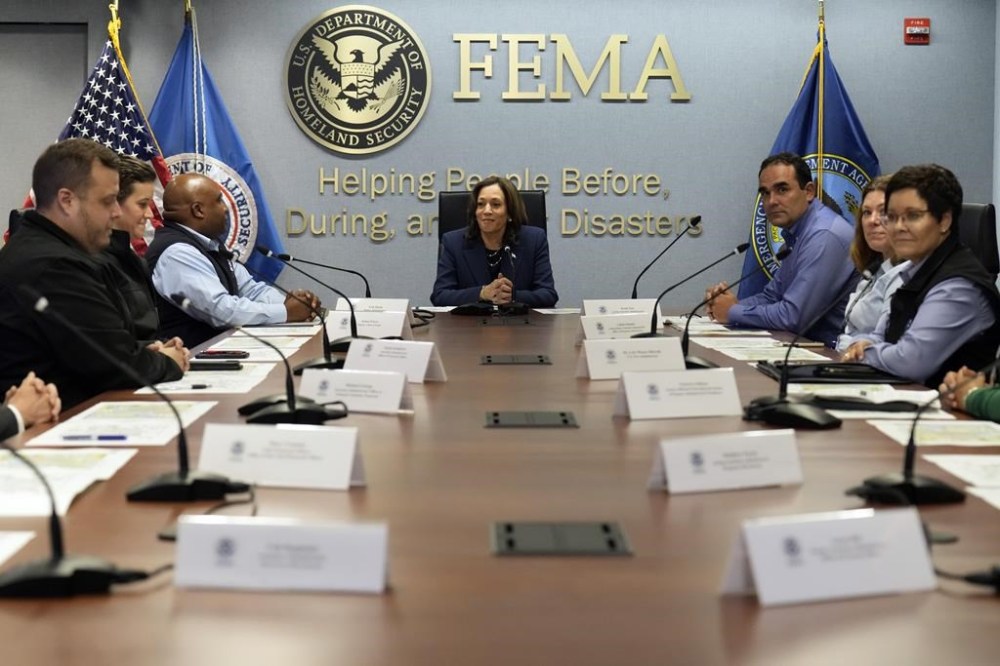
President Joe Biden does say the agency will need more cash in the future. In a letter late Friday to congressional leaders, he wrote that “while FEMA’s Disaster Relief Fund has the resources it requires right now to meet immediate needs, the fund does face a shortfall at the end of the year.” He also called on lawmakers to act quickly to restore funding to the Small Business Administration’s disaster loan program.
There are a lot of misperceptions about FEMA’s role in disaster recovery, what it does — and does not — pay for and what residents in hurricane-hit areas can expect.
Here’s a closer look:
What does FEMA do and where does it get its money?
FEMA has an operating budget and a disaster relief fund. The fund gets replenished every year by Congress and is used to pay for recovery from hurricanes, floods, earthquakes and other disasters. FEMA also pays for rebuilding from past disasters and for projects designed to protect communities against future calamity.
“This is kind of like the emergency account for the country,” said Samantha L. Montano, an assistant professor of emergency management at the Massachusetts Maritime Academy.
Congress recently replenished the fund with $20 billion — the same amount FEMA got last year. About $8 billion of that is set aside for recovery from previous storms and mitigation projects.
The federal government doesn’t help with every disaster — it generally has to be above the ability of a community or state to handle. In that case, the governor or tribal authority asks the president for an emergency declaration.
Once declared, FEMA assistance varies widely. Public assistance — which is a lot of what it pays for — is geared toward reimbursing governments for debris removal or rebuilding roads, public buildings and more.
FEMA also has individual assistance, designed to help residents. This can include one-time payments for emergency needs up to a trailer for someone who lost their house.
When there is warning — like with hurricanes — FEMA coordinates with state and local governments about what they need and can pre-position supplies like tarps or water in areas likely to be most affected. FEMA also has search-and-rescue teams.
But experts stress that the federal agency isn’t in charge of the entire process.
“Everybody thinks that FEMA just comes in right after the disaster and starts managing the entire disaster. And that’s just not the case,” said Brock Long, who was FEMA administrator from 2017 to 2019.
Does FEMA have enough money to respond to Hurricane Helene?
Trump accused FEMA of spending all its money to help immigrants in the country illegally, while other critics assert that the government spends too much on foreign funding for Israel or Ukraine.
“FEMA absolutely has enough money for Helene response right now,” said Keith Turi, acting director of FEMA’s Office of Response and Recovery, noting the $20 billion from Congress.
FEMA called Trump’s accusations “completely false.”
The agency administers the Shelter and Services Program, which gives money to reimburse cities, towns or organizations for immigration-related expenses. But that comes from a separate pot of money funded by Congress for Customs and Border Protection. FEMA gives out the money, but it doesn’t come from the disaster relief fund.
Congress also separately funds foreign military aid.
There are long-term funding concerns for FEMA, however.
Turi said the agency was already working to make what’s called a “supplemental” funding request to Congress before Helene hit. In the storm’s wake, it’s clear they’ll need even more money, he said.
Both Homeland Security Secretary Alejandro Mayorkas, who oversees FEMA, and Biden have sounded the alarm about more money needed in the future.
Speaking from a Georgia pecan farm devastated by Helene, Biden said the supplemental funding could not wait: “People need help now.”
FEMA seeking extra money is not uncommon. Long said he had to go back to Congress three times during his tenure for more cash.
A 2022 Congressional Budget Office report said that most of the money that goes to the disaster relief fund actually comes in these supplemental requests. Extra money that’s needed varies depending on the disaster, but the report noted that “a small number of those disasters account for a disproportionate share of total spending.”
What happens when the disaster fund runs low?
The disaster assistance fund sometimes runs low in late summer before Congress passes a new budget. When that happens, FEMA shifts to what’s called “immediate needs funding.” That means the agency stops paying out for previous disasters and conserves its money for life-saving missions during any new ones.
When the disaster relief fund is replenished — like what just happened last week — then money will flow again to longer-term projects.
“Honestly, there’s a lot of work that needs to be done to streamline it and rethink, ‘How can a disaster relief fund … be set up in a manner where the FEMA administrator is not constantly having to ask for supplemental funding?” Long said.
Will FEMA give me enough to rebuild?
No. It’s important to know not just what FEMA does, but what it doesn’t do, especially for individuals.
One claim floating around after Helene is that disaster survivors only get $750 from FEMA. That figure refers to help that the agency can give someone in an affected area for what they might need immediately, like clothing or food, Turi said.
From there, the agency can provide other things like money for a storage unit, medical bills or rental assistance depending on the situation.
For homeowners, the first line of defense is always insurance. Those who don’t have insurance or not enough can turn to FEMA, but the maximum amount someone can get to rebuild is $42,500. That’s a far cry from what is needed to fix severe damage or rebuild completely.
“This is one of the kind of major problems FEMA has in terms of how the public understands their role and responsibility,” said Montano, the professor. “FEMA does not make anybody whole after a disaster happens. They are not going to give you enough money to completely recover your life.”