How a nearly extinct crocodile species returned from the brink in Cambodia
Advertisement
Read this article for free:
or
Already have an account? Log in here »
To continue reading, please subscribe:

Digital Subscription
One year of digital access for only $205*
- Enjoy unlimited reading on winnipegfreepress.com
- Read the E-Edition, our digital replica newspaper
- Access News Break, our award-winning app
- Play interactive puzzles
*First annual payment billed as $205.00 + GST for one year. This annual subscription will automatically renew at $233.00 + GST every 52 weeks (10% off the regular annual price of $259.35). Offer available to new and qualified returning subscribers only. Cancel any time.
To continue reading, please subscribe:
Add Free Press access to your Brandon Sun subscription for only an additional
$1 for the first 4 weeks*
- Enjoy unlimited reading on winnipegfreepress.com
- Read the E-Edition, our digital replica newspaper
- Access News Break, our award-winning app
- Play interactive puzzles
*Your next Brandon Sun subscription payment will increase by $1.00 and you will be charged $17.95 plus GST for four weeks. After four weeks, your payment will increase to $24.95 plus GST every four weeks.
Read unlimited articles for free today:
or
Already have an account? Log in here »
Hey there, time traveller!
This article was published 22/10/2024 (723 days ago), so information in it may no longer be current.
PHNOM TAMAO, Cambodia (AP) — A tiny snout poked out to widen the crack of the slowly shattering eggshell.
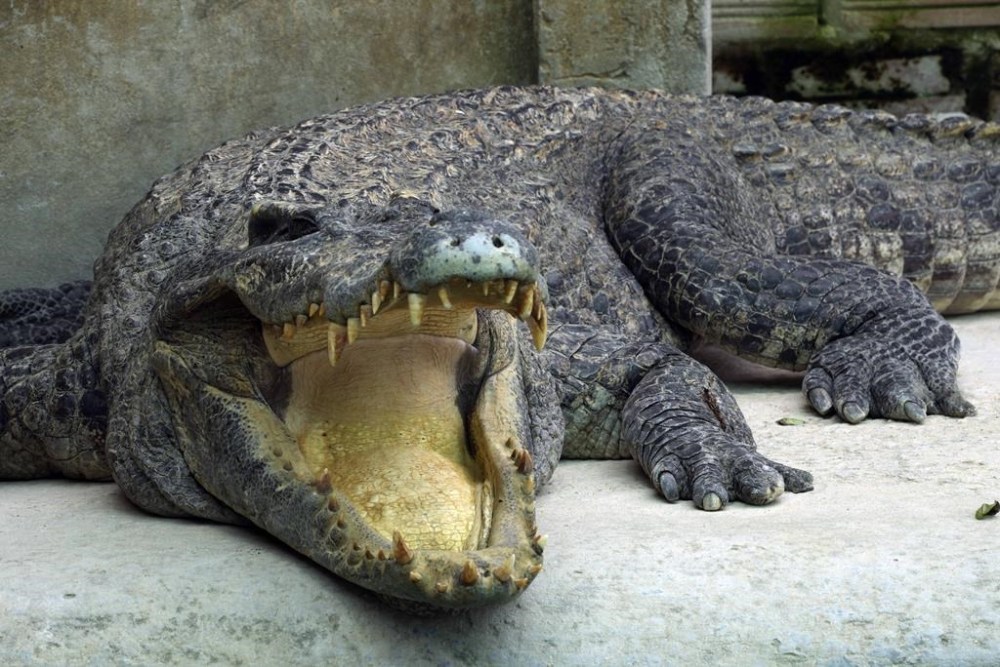
The Siamese crocodile was taking its time, lagging others that had already wriggled out, chirping, into the sand. Adults can be up to 4 meters (13 feet) long and weigh up to 350 kilogram (770 pounds). They have few natural predators. But these hatchlings — each roughly the size of a New York hotdog — are vulnerable and their chorus of shrill calls was a signal for mothers to protect them and for stragglers to catch up.
Hor Vichet, a zookeeper at the nonprofit Fauna and Flora’s breeding center for the critically endangered reptiles in Cambodia’s Phnom Tamao, broke the rest of the shell.
“It’s time to go into the world,” he said.
Siamese crocodiles are making an unlikely comeback. Once widespread across Southeast Asia, demand for leather made from their skins decimated wild populations in the last century. Thousands were hunted or captured for breeding at farms. By the late nineties, they were thought to be extinct.
But a 2000 survey in the Cardamom Mountains in western Cambodia found a vestige of a wild population. These misty rainforests were among the last strongholds of Khmer Rouge guerrillas who fought the government until 1999. That, combined with the reverence of local Indigenous communities saved this lingering enclave of crocodiles. But they were still too few and too scattered to recover the population.
Conservationists realized that saving the species would require captive breeding of purebred, fertile crocodiles. The crocodile farmers who had nearly hunted the species to extinction now play a vital role in that effort.
Today there are about 1,000 Siamese crocodiles in the wild, roughly 400 in Cambodia and the rest scattered in Vietnam, Laos, Thailand and Indonesia. Protecting the reptile also requires safeguarding its habitat in the Cardamom Mountains -– a diverse ecosystem that is one of the last surviving rainforests in Southeast Asia. It stretches over an area larger than Denmark, helping to trap earth-warming greenhouse gases from the atmosphere.
The efforts are finally paying off: The first crocodiles were reintroduced into the wild in 2012 and they have begun breeding in the wild: over a hundred eggs were discovered in the forests in July, the most so far. “We are still far from being able to say the species is in a good place,” admitted Pablo Sinovas of Fauna and Flora. “But it is making progress.”
The conservationists faced big challenges when they began their project in 2011. There were over 1.5 million crocodiles languishing in farms across Cambodia, Thailand and Vietnam, but few were purebreds. Farmers had bred Siamese crocodiles with larger, more aggressive species to get skins with textures demanded by fashion brands. Releasing those hybrids into the wild might hasten the disappearance of the purebred species.
It also could pose a threat to people. Evidence of Cambodian reverence for Siamese crocodiles lives on in toothy carvings on the walls of the Bayon temple in the country’s Angkor Wat temple complex, but the hybrids are not the same animals.
“That would be a problem since some of these species are aggressive to humans. And you don’t want them in the wild,” he said.
So the experts scoured through crocodile farms across Cambodia, working with farmers and scientists to find purebreds. The few that were eventually identified were brought to the wildlife center at Phnom Tamao to breed in captivity. Their eggs were were incubated artificially and the first group of 18 purebred young crocodiles was released in the Cardamom Mountains, laying the foundation for resurrecting the species.
Crocodiles are social species and once together, they “find their own hierarchy,” said Iri Gill, who manages cold-blooded animals at the Chester Zoo in the U.K., which supports the breeding program. After the breeding season, females lay eggs which are then kept in an artificial incubator where humidity and temperatures are monitored carefully to replicate the conditions of a nest in the wild.
“That is the key stage to hatch those juveniles out and raise them to a strong age before their release,” said Gill.
A similar captive breeding program was also instrumental in bringing back crocodile populations in India, after they were nearly wiped out by the early 1970s, said Yashendu Joshi, a crocodile researcher at the Indian nonprofit Centre for Wildlife Studies. In the wild, fewer than 1 in 20 crocodile hatchlings make it to adulthood. Their chances of survival increase exponentially if they’re released after they grow to a meter (3.4 feet) long.
“That’s why these captive breeding programs have been working across the world,” he said.
Today, demand for crocodile leather has diminished and many of the farms had been losing money since the pandemic, said crocodile farmer Ry Lean.
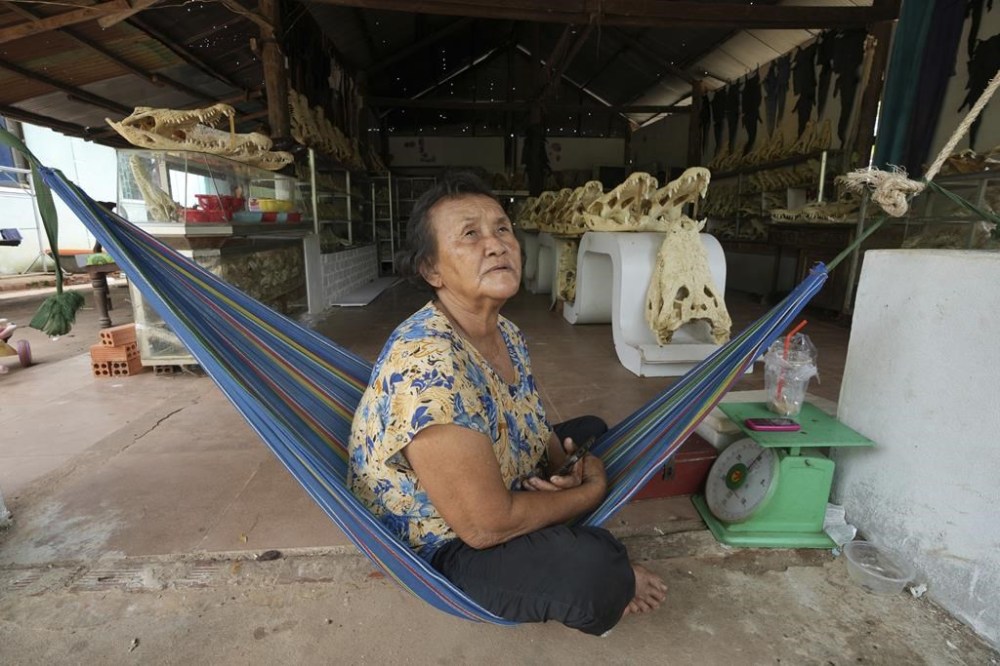
Dozens of large crocodiles bask in pens around the home where the 73-year-old lives with her extended family. Her shop sells souvenirs like crocodile skulls stacked in shelves like books, glass cases overflowing with canines, mounds of crocodile jerky and lacquered bodies of baby crocodiles drying in the sun. But tourism has dwindled since the pandemic and rising fish prices make it harder to feed the reptiles, Lean said.
“I am stuck with this business and the crocodiles,” she said, adding that a large crocodile used to fetch up to $1,500. Now she’d be lucky to get $150.
Conservationists still scout the farms searching for purebred Siamese crocodiles. They are also working to protect the habitats where the purebred juveniles are released. In 2001-23, Cambodia lost nearly a third of its tree cover, according to Global Forest Watch — a platform run by the non-profit World Resources Institute.
The Siamese crocodile’s role as a flagship species — chosen to represent an environmental cause similar to giant pandas in China and tigers in India — helps the cause of protecting the Cardamom Mountains, said Sinovas of Fauna and Flora.
It makes no sense to release crocodiles into habitats that cannot support them, he said.

“Protecting habitat is the most important part of this whole project,” he said.
___
Associated Press journalist Sopheng Cheang contributed to this report.
___
The Associated Press’ climate and environmental coverage receives financial support from multiple private foundations. AP is solely responsible for all content. Find AP’s standards for working with philanthropies, a list of supporters and funded coverage areas at AP.org.