Criminals may be leveraging climate change as record acreage burns in Brazil’s Amazon
Advertisement
Read this article for free:
or
Already have an account? Log in here »
To continue reading, please subscribe:
Digital Subscription
One year of digital access for only $1.44 a week*
- Enjoy unlimited reading on winnipegfreepress.com
- Read the E-Edition, our digital replica newspaper
- Access News Break, our award-winning app
- Play interactive puzzles
*Billed as $5.77 plus GST every four weeks. After 52 weeks, price increases to the regular rate of $19.95 plus GST every four weeks. Offer available to new and qualified returning subscribers only. Cancel any time.
To continue reading, please subscribe:
Add Free Press access to your Brandon Sun subscription for only an additional
$1 for the first 4 weeks*
- Enjoy unlimited reading on winnipegfreepress.com
- Read the E-Edition, our digital replica newspaper
- Access News Break, our award-winning app
- Play interactive puzzles
*Your next Brandon Sun subscription payment will increase by $1.00 and you will be charged $17.95 plus GST for four weeks. After four weeks, your payment will increase to $24.95 plus GST every four weeks.
Read unlimited articles for free today:
or
Already have an account? Log in here »
Hey there, time traveller!
This article was published 25/10/2024 (724 days ago), so information in it may no longer be current.
BRASILIA, Brazil (AP) — Wildfires in Brazil have swept through an area the size of Switzerland, a level of destruction that will take decades to recover, if it ever does, according to a new satellite assessment.
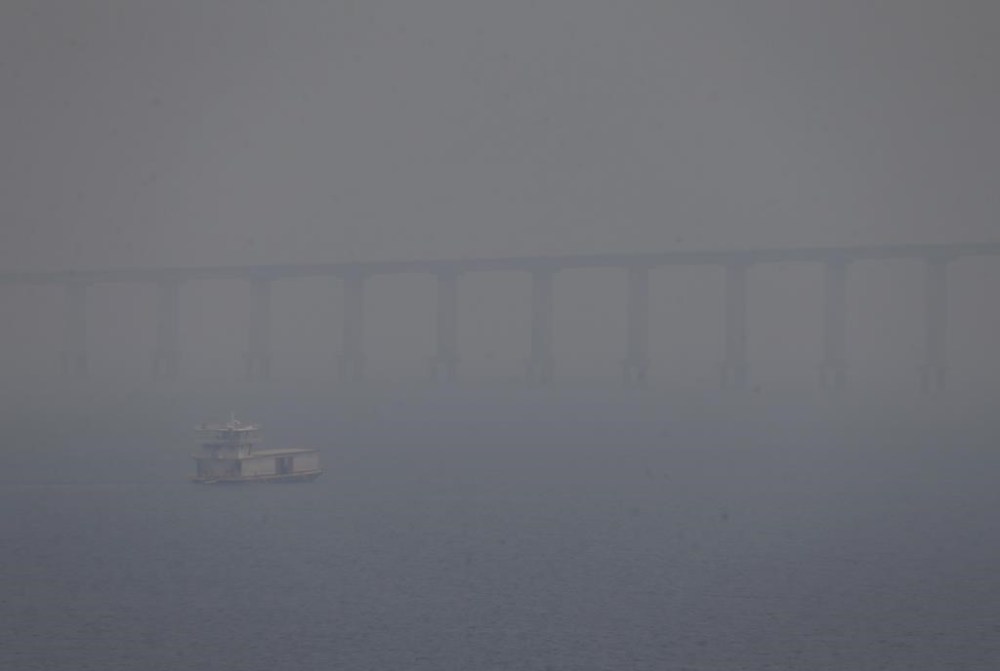
The breadth of forest that has been lost or degraded was revealed as smoke that has blanketed the country cleared, thanks to rains that may be ending the worst drought Brazil has ever recorded.
“The data is exceptionally alarming, it’s a very abrupt surge,” Ane Alencar, science director at the Amazon Environmental Research Institute, a Brazilian nonprofit, told The Associated Press.
The area that burned between January and mid-October 2024 represents an 846% increase over the same period in 2023. That’s five times larger than the forest fires of 2019 when, under far-right President Jair Bolsonaro, rampant destruction of the Amazon made headlines worldwide.
The estimate comes from the National Institute for Space Research, which tracks Brazil’s official deforestation rate.
This surge in fire comes one year before the Amazon city of Belem will host the annual U.N. climate conference, COP30. The level of destruction is raising suspicions among Brazilian officials and experts that criminals are using climate change to their advantage.
Deforestation in the Amazon usually begins with chainsaws. Wet, fallen trees are left lying on the ground until they’re dry enough to set afire. They’re not even used for lumber.
Now with the forest drying out from drought, lawbreakers seeking to create more pasture may be skipping the expensive, labor-intensive step of felling trees. A lighter and a few gallons of gasoline suffice to start a blaze.
“The drought played a major role in fueling the spread, but fire has also been weaponized,” Alencar said.
“The forest’s resilience to a severe drought is proving to be very low,” André Lima, secretary of deforestation control at the Ministry of the Environment and Climate Change, told the AP in an interview in Brasilia. “You don’t need 1 million people setting fires to cause the disaster. One thousand can do it. We recorded 500 large blazes, that all began with a match.”
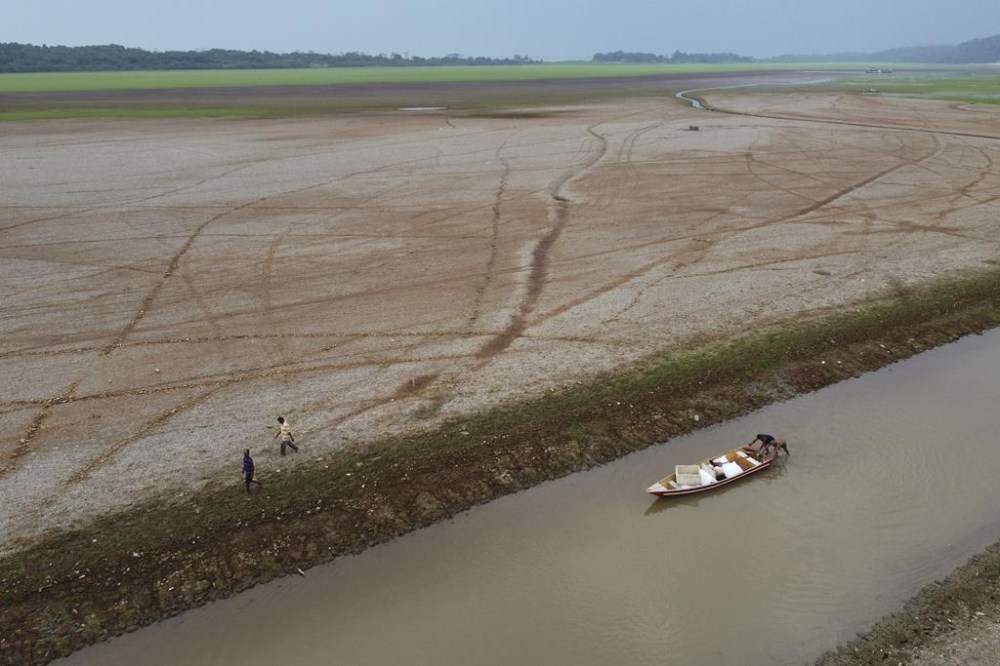
Fueled by human-induced climate change and the El Nino phenomenon, the world’s largest basin is reeling from two years of severe drought. Many rivers fell to record lows in 2023, then broke those records again in 2024. Fish and endangered river dolphins have died in water that is too hot for them. Hundreds of river communities have been stranded without transportation.
Then came fire. In September, wildfires surged through the region, doubling the acreage that had burned so far this year. With more than two months still remaining in 2024, it’s already the largest area burned since the government began using its current methodology a decade ago.
The estimate of forest loss comes as delegates from around the world are meeting in the Colombian city of Cali for COP16, focused on preserving biodiversity.
The hypothesis that criminals are piggybacking on climate change needs more study, Lima said. But there is some evidence for it. One clue is that the conservation area that has suffered the most damage is Jamanxim National Forest. Dozens of landgrabbers have been illegally ranching cattle there, hoping their operations will be legalized.
It is near the city of Novo Progresso, a deforestation hotspot where Bolsonaro, who favors economic development over forest preservation, received 83% of the votes in his failed 2022 re-election bid.
The blazes have swept through 1,900 square kilometers (733 square miles) of Jamanxim this year, mostly in September, a 700% increase over 2023, according to MapBiomas, a network of non-governmental organizations that monitors land use.
The unprecedented rise in fire has prompted Brazil’s government to consider mandating that all burned areas be reforested — a deterrent for landgrabbers who hope to convert public forest into their own private pasture.
Lima thinks local and state governments should act as well, since most fires start on rural private property, which is their jurisdiction. “We need structural changes in policies to address climate change,” he said.
The rise of wildfire in the Amazon is part of a global trend and makes climate change worse. A recent study published in the journal Science estimated that carbon emissions from forest fires increased 60% between 2001 and 2023. The researchers warned that forests, and all the carbon they store, are increasingly vulnerable to fire.
Unlike wildfire in North America, where blazes sometimes reach treetops and expand from there, in the Amazon rainforest, fire spreads mostly through leaves on the ground, causing less harm. The deforestation control agency, known as INPE, tallies these areas as burn scars, not as deforestation.
That is why, despite the surge in fire, this year’s deforestation rate is still slowing under President Luiz Inácio Lula da Silva and could end 2024 with a 60% reduction compared to Bolsonaro’s years. This shows how deforestation is only one metric — and one that does not provide a full picture for damage to the forest in a given year.
“In areas where the fire was very intense, the forest may completely collapse,” Claudio Almeida, a senior officer at INPE, told the AP. “Even regions where the fire was not as intense are now severely degraded and fragile. Another season of intense drought and fires could lead to the breakdown of the forest.”
____
The Associated Press’ climate and environmental coverage receives financial support from multiple private foundations. AP is solely responsible for all content. Find AP’s standards for working with philanthropies, a list of supporters and funded coverage areas at AP.org.