

Southern China suspends ferry services as storm brings winds, high waters to coastal regions
Advertisement
Read this article for free:
or
Already have an account? Log in here »
To continue reading, please subscribe:
Monthly Digital Subscription
$0 for the first 4 weeks*
- Enjoy unlimited reading on winnipegfreepress.com
- Read the E-Edition, our digital replica newspaper
- Access News Break, our award-winning app
- Play interactive puzzles
*No charge for 4 weeks then price increases to the regular rate of $19.00 plus GST every four weeks. Offer available to new and qualified returning subscribers only. Cancel any time.
Monthly Digital Subscription
$4.75/week*
- Enjoy unlimited reading on winnipegfreepress.com
- Read the E-Edition, our digital replica newspaper
- Access News Break, our award-winning app
- Play interactive puzzles
*Billed as $19 plus GST every four weeks. Cancel any time.
To continue reading, please subscribe:
Add Free Press access to your Brandon Sun subscription for only an additional
$1 for the first 4 weeks*
*Your next subscription payment will increase by $1.00 and you will be charged $16.99 plus GST for four weeks. After four weeks, your payment will increase to $23.99 plus GST every four weeks.
Read unlimited articles for free today:
or
Already have an account? Log in here »
Hey there, time traveller!
This article was published 19/11/2024 (381 days ago), so information in it may no longer be current.
TAIPEI, Taiwan (AP) — Parts of coastal southern China suspended ferry services as a major storm passed into the South China Sea, bringing high winds and heavy waves to much of the region.
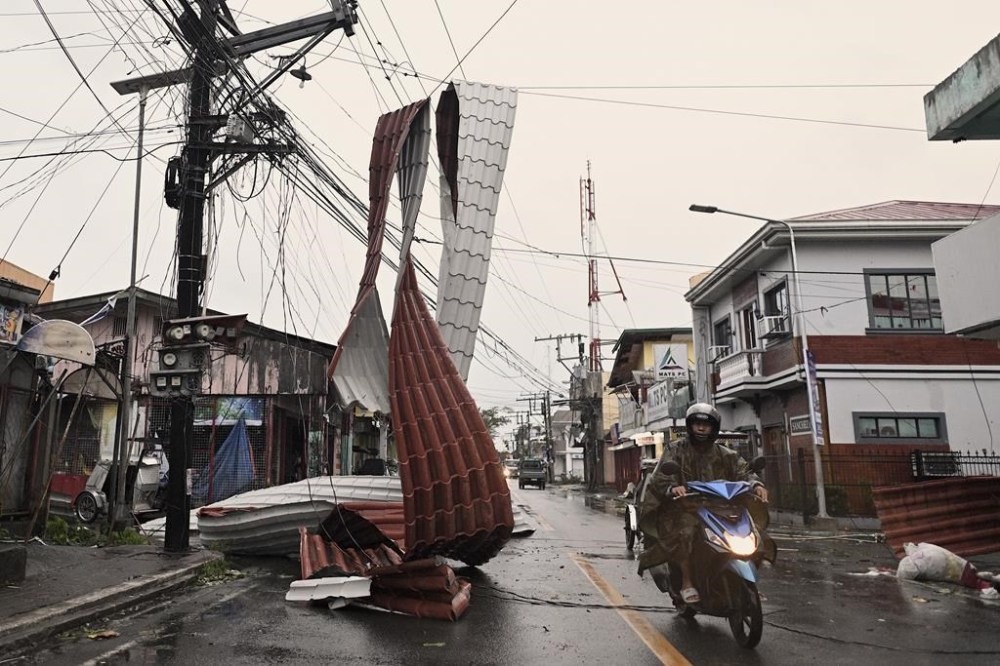
The storm was downgraded Wednesday from Typhoon Man-yi, which left seven dead in the Philippines and worsened the crisis caused by back-to-back storms that battered the disaster-prone nation.
It is now categorized as a low-pressure area lingering south of China’s Hainan Island, according to the Hong Kong Observatory, which said its maximum sustained winds were a relatively mild 40 kilometers (25 miles) per hour.
Climatologists have predicted a greater frequency of such storms, but better preparedness and early warning systems in the Asia Pacific nations most affected have helped mitigate some of the most dire consequences.
Higher sea temperatures caused by a warming climate are increasing the amount of moisture in the air and extending the typhoon season from its usual annual end point of September. Europe, particularly Spain, and the southeastern United States have also experienced devastating storms in recent weeks.