Site of massive B.C. river slide remains unstable, effects on salmon not yet clear
Advertisement
Read this article for free:
or
Already have an account? Log in here »
To continue reading, please subscribe:

Digital Subscription
One year of digital access for only $205*
- Enjoy unlimited reading on winnipegfreepress.com
- Read the E-Edition, our digital replica newspaper
- Access News Break, our award-winning app
- Play interactive puzzles
*First annual payment billed as $205.00 + GST for one year. This annual subscription will automatically renew at $233.00 + GST every 52 weeks (10% off the regular annual price of $259.35). Offer available to new and qualified returning subscribers only. Cancel any time.
To continue reading, please subscribe:
Add Free Press access to your Brandon Sun subscription for only an additional
$1 for the first 4 weeks*
- Enjoy unlimited reading on winnipegfreepress.com
- Read the E-Edition, our digital replica newspaper
- Access News Break, our award-winning app
- Play interactive puzzles
*Your next Brandon Sun subscription payment will increase by $1.00 and you will be charged $17.95 plus GST for four weeks. After four weeks, your payment will increase to $24.95 plus GST every four weeks.
Read unlimited articles for free today:
or
Already have an account? Log in here »
Hey there, time traveller!
This article was published 20/11/2024 (688 days ago), so information in it may no longer be current.
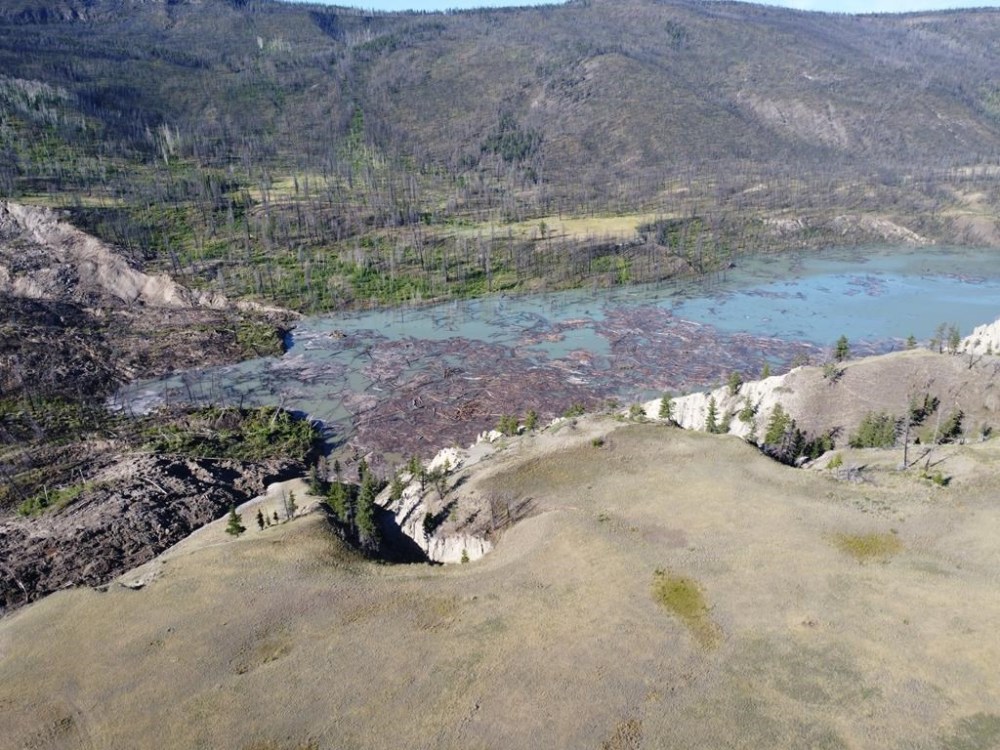
A salmon task force examining the impacts of the massive landslide that temporarily dammed British Columbia’s Chilcotin River last July says there have been three “significant” slope failures since then, and the site remains unstable.
A statement from the Tsilhqot’in National Government, which is part of the task force alongside the federal and provincial governments, says there is still “significant material” that could move, that would result in future blockages.
The update says the latest movement on Nov. 8 blocked the river in B.C.’s central Interior for about three hours, stirring up sediment.
It says the recent slide emphasizes the need for ongoing research, analysis and risk assessment in order to understand the current and future impacts on salmon.
The statement says there is “an extreme conservation concern” for Chilcotin River steelhead and stock assessment information is highly limited.
Still, it says recent fieldwork confirmed the presence of adult steelhead above the slide site, providing “limited evidence” that the fish have been able to pass.
Steelhead typically enter the river system in October, staying until their spawning period between the following May and June, and the Tsilhqot’in National Government says it will conduct additional fieldwork to gather data next spring.
“Given the months-long period that adult steelhead spend in the Chilcotin watershed, water quality and flow impacts from the initial slide and ongoing sloughing may have specific impacts on this population,” the statement says.
The Nov. 14 update adds that Fisheries and Oceans Canada is leading an assessment to quantify the effects of the slide on migrating salmon, and it’s also planning an assessment to evaluate changes to the river’s channel.
The slide in Farwell Canyon, south of Williams Lake, B.C., dammed the river and created a lake about 11 kilometres long behind the mass of earth and debris.

It took nearly a week before the material broke free, sending a torrent of water and broken trees downstream, while prompting numerous flood advisories.
The Tsilhqot’in National Government says aerial monitoring shows the distribution of Interior Fraser coho in the Chilko River, a tributary of the Chilcotin, is “typical” and there is no evidence of unusual spawning behaviour.
It says another flyover this month will inform the final return estimates.
“Information to date shows no red flags regarding significant impacts to (Interior Fraser coho) migration from the Chilcotin landslide,” the statement says.
This report by The Canadian Press was first published Nov. 20, 2024.