National monument proposed for North Dakota Badlands, with tribes’ support
Advertisement
Read this article for free:
or
Already have an account? Log in here »
To continue reading, please subscribe:

Digital Subscription
One year of digital access for only $205*
- Enjoy unlimited reading on winnipegfreepress.com
- Read the E-Edition, our digital replica newspaper
- Access News Break, our award-winning app
- Play interactive puzzles
*First annual payment billed as $205.00 + GST for one year. This annual subscription will automatically renew at $233.00 + GST every 52 weeks (10% off the regular annual price of $259.35). Offer available to new and qualified returning subscribers only. Cancel any time.
To continue reading, please subscribe:
Add Free Press access to your Brandon Sun subscription for only an additional
$1 for the first 4 weeks*
- Enjoy unlimited reading on winnipegfreepress.com
- Read the E-Edition, our digital replica newspaper
- Access News Break, our award-winning app
- Play interactive puzzles
*Your next Brandon Sun subscription payment will increase by $1.00 and you will be charged $17.95 plus GST for four weeks. After four weeks, your payment will increase to $24.95 plus GST every four weeks.
Read unlimited articles for free today:
or
Already have an account? Log in here »
Hey there, time traveller!
This article was published 22/11/2024 (692 days ago), so information in it may no longer be current.
BISMARCK, N.D. (AP) — A coalition of conservation groups and Native American tribal citizens on Friday called on President Joe Biden to designate nearly 140,000 acres of rugged, scenic Badlands as North Dakota’s first national monument, a proposal several tribal nations say would preserve the area’s indigenous and cultural heritage.
The proposed Maah Daah Hey National Monument would encompass 11 noncontiguous, newly designated units totaling 139,729 acres (56,546 hectares) in the Little Missouri National Grassland. The proposed units would hug the popular recreation trail of the same name and neighbor Theodore Roosevelt National Park, named for the 26th president who ranched and roamed in the Badlands as a young man in the 1880s.
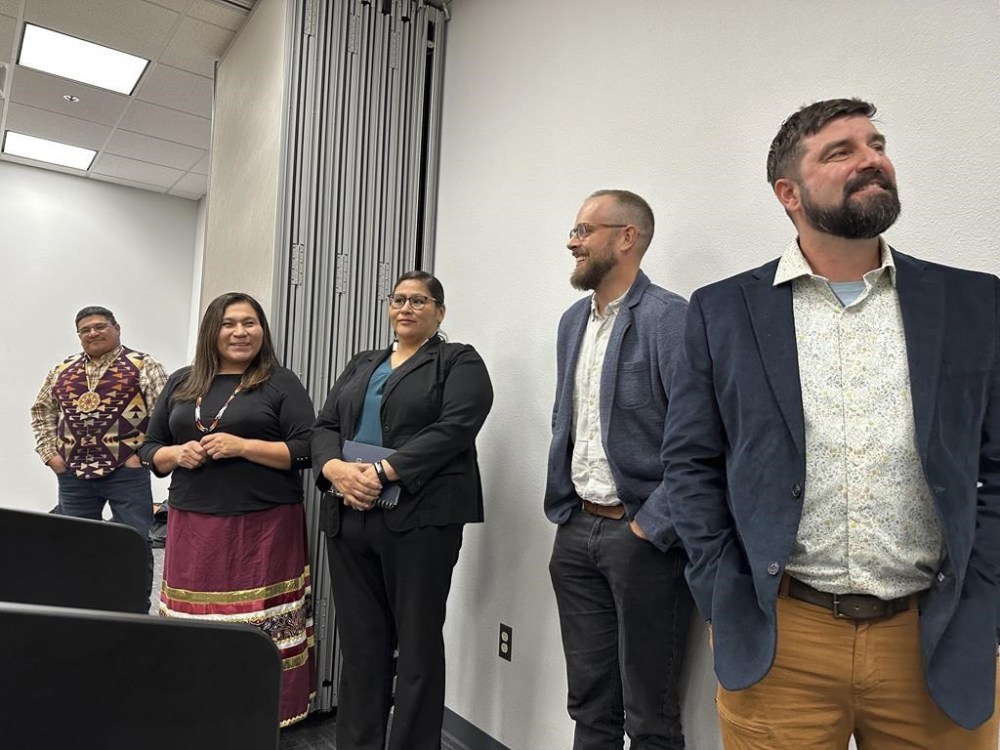
“When you tell the story of landscape, you have to tell the story of people,” said Michael Barthelemy, an enrolled member of the Mandan, Hidatsa and Arikara Nation and director of Native American studies at Nueta Hidatsa Sahnish College. “You have to tell the story of the people that first inhabited those places and the symbiotic relationship between the people and the landscape, how the people worked to shape the land and how the land worked to shape the people.”
The U.S. Forest Service would manage the proposed monument. The National Park Service oversees many national monuments, which are similar to national parks and usually designated by the president to protect the landscape’s features.
Supporters have traveled twice to Washington to meet with White House, Interior Department, Forest Service and Department of Agriculture officials. But the effort faces an uphill battle with less than two months remaining in Biden’s term and potential headwinds in President-elect Donald Trump ‘s incoming administration.
If unsuccessful, the group would turn to the Trump administration “because we believe this is a good idea regardless of who’s president,” Dakota Resource Council Executive Director Scott Skokos said.
Dozens if not hundreds of oil and natural gas wells dot the landscape where the proposed monument would span, according to the supporters’ map. But the proposed units have no oil and gas leases, private inholdings or surface occupancy, and no grazing leases would be removed, said North Dakota Wildlife Federation Executive Director John Bradley.
The proposal is supported by the MHA Nation, the Spirit Lake Tribe and the Standing Rock Sioux Tribe through council resolutions.

If created, the monument would help tribal citizens stay connected to their identity, said Democratic state Rep. Lisa Finley-DeVille, an MHA Nation enrolled member.
North Dakota Gov. Doug Burgum is Trump’s pick to lead the Interior Department, which oversees the National Park Service. In a written statement, Burgum said: “North Dakota is proof that we can protect our precious parks, cultural heritage and natural resources AND responsibly develop our vast energy resources.”
North Dakota Sen. John Hoeven’s office said Friday was the first they had heard of the proposal, “but any effort that would make it harder for ranchers to operate and that could restrict multiple use, including energy development, is going to raise concerns with Senator Hoeven.”
___
This story was first published on Nov. 22, 2024. It was updated on Nov. 23, 2024 to correct that the U.S. Forest Service would manage the proposed monument, not the National Park Service.