Takeaways from AP’s report on Chinese gold mining threatening endangered protected site in Congo
Advertisement
Read this article for free:
or
Already have an account? Log in here »
To continue reading, please subscribe:

Digital Subscription
One year of digital access for only $205*
- Enjoy unlimited reading on winnipegfreepress.com
- Read the E-Edition, our digital replica newspaper
- Access News Break, our award-winning app
- Play interactive puzzles
*First annual payment billed as $205.00 + GST for one year. This annual subscription will automatically renew at $233.00 + GST every 52 weeks (10% off the regular annual price of $259.35). Offer available to new and qualified returning subscribers only. Cancel any time.
To continue reading, please subscribe:
Add Free Press access to your Brandon Sun subscription for only an additional
$1 for the first 4 weeks*
- Enjoy unlimited reading on winnipegfreepress.com
- Read the E-Edition, our digital replica newspaper
- Access News Break, our award-winning app
- Play interactive puzzles
*Your next Brandon Sun subscription payment will increase by $1.00 and you will be charged $17.95 plus GST for four weeks. After four weeks, your payment will increase to $24.95 plus GST every four weeks.
Read unlimited articles for free today:
or
Already have an account? Log in here »
Hey there, time traveller!
This article was published 09/12/2024 (645 days ago), so information in it may no longer be current.
OKAPI WILDLIFE RESERVE, Congo (AP) — For eight years, a Chinese mining company has been vastly expanding inside an endangered World Heritage Site, accused by locals and conservationists of decimating the environment.
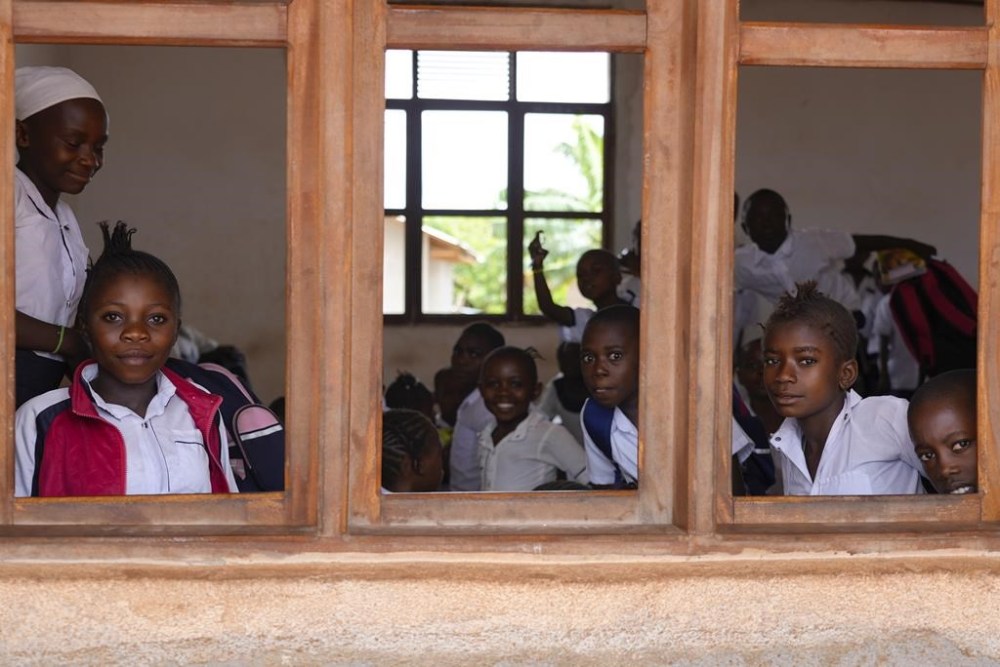
The Okapi Wildlife Reserve became a protected site in 1996, due to its unique biodiversity and large number of threatened species, including its namesake, the okapi, a forest giraffe, of which it holds some 15% of the world’s remaining 30,000. It’s part of the Congo Basin rainforest — the world’s second-biggest — and a vital carbon sink that helps mitigate climate change. It also has vast mineral wealth such as gold and diamonds.
The original boundaries of the reserve were established three decades ago, by Congo’s government and encompassed the area where the Chinese company now mines. But over the years under opaque circumstances, the boundaries shrunk, allowing the company to operate inside the plush forest.
Mining is prohibited in protected areas, which includes the reserve, according to Congo’s mining code.
Issa Aboubacar, a spokesperson for the Chinese company, Kimia Mining Investment, said the group is operating legally. It recently renewed its permits until 2048, according to government records.
Congo’s mining registry said the map they’re using came from files from the ICCN, the body responsible for managing Congo’s protected areas, and it’s currently working with the ICCN on updating the boundaries and protecting the park.
The ICCN told The Associated Press that in meetings this year with the mining registry the misunderstandings around the boundaries were clarified and the original ones should be used. An internal government memo from August, seen by AP, said all companies in the Reserve will be closed down, including Kimia Mining. However, it was unclear when that would happen or how.
The document has not previously been reported and is the first acknowledging that the current boundaries are wrong, according to environmentalists working in Congo.
Rights groups in Congo have long called on the government to revoke the Chinese permits, saying the mining ministry illegally awarded them based on inaccurate maps.
Here are some takeaways from AP’s report on the issue:
Contested boundaries
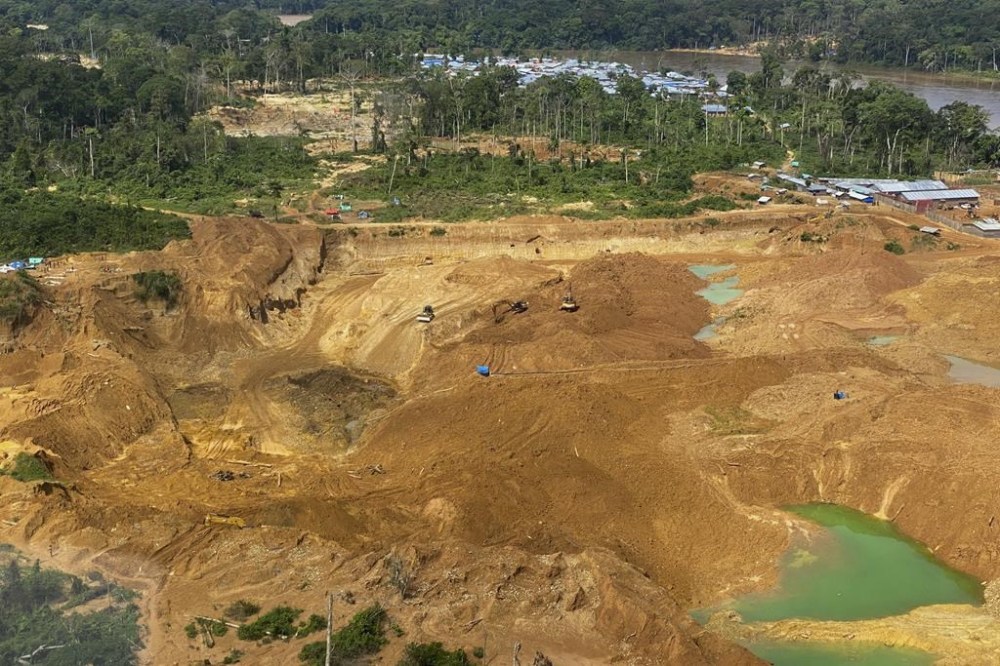
The Muchacha mine — the biggest in the reserve and one of the largest small and medium scale gold mines in the country — spans approximately 12 miles (19 kilometers) along the Ituri River and consists of several semi-industrial sites. Satellite images analyzed by AP show consistent development along the southwestern section of the Reserve, since it began operating in 2016, with a boom in recent years.
Joel Masselink, a geographer specializing in satellite imagery, who previously worked on conservation projects in the forest, said the mining cadastral — the agency responsible for allocating mineral licenses — is using a version of the reserve’s maps in which the area’s been shrunk by nearly a third. This has allowed it to award and renew exploration and extraction concessions, he said.
Changing World Heritage Site boundaries needs to be approved by UNESCO experts and the World Heritage Committee, which analyze the impact of the modification, a spokesperson for the World Heritage Center told AP. The Center said no request to modify the Reserve’s boundaries had been made and that cases of boundary modifications to facilitate development were rare.
Civil society groups in Congo accuse some government officials of intentionally moving the boundaries for personal gain.

The U.N. report said mines are controlled by the military, and some members are under the protection of powerful business and political interests, with soldiers at times denying local officials access to the sites.
Environment and communities impacted
Nearly two dozen residents, as well as former and current Kimia Mining employees from villages in and around the Reserve, told AP the mining was decimating the forests and the wildlife and contaminating the water and land.
Five people who had worked inside Kimia’s mines, none of whom wanted to be named for fear of reprisal, said when the Chinese finished in one area, they leave exposed, toxic water sources. Sometimes people would fall into uncovered pits and when it rains, water seeps into the soil.
Employees and mining experts say the Chinese companies use mercury in their operations, used to separate gold from ore. Mercury is considered one of the top ten chemicals of major public health concern by the U.N. and can have toxic effects on the nervous and immune systems.
Assana, a fisher who worked in the mines and only wanted to use his first name, said it now takes four days to catch the same amount of fish he used to get in a day. While doing odd jobs for the company last year, the 38-year-old saw the Chinese repeatedly chop swaths of forest, making the heat unbearable, he said.
Between last January and May, the reserve lost more than 480 hectares (1,186 acres) of forest cover — the size of nearly 900 American football fields — according to a joint statement from the Wildlife Conservation Society and government agencies, which said it was concerned at the findings.
Double standards
Residents, who once mined in the reserve, are infuriated by the double standard.
Despite being a protected forest, people still mined there until authorities cracked down, largely after the Chinese arrived. Kimia Mining grants limited access to locals to mine areas for leftovers, but for a fee that many can’t afford, say locals.
Muvunga Kakule used to do artisanal mining in the reserve while also selling food from his farm to other miners. The 44-year-old said he’s now unable to mine or sell produce as the Chinese don’t buy locally. He’s lost 95% of his earnings and can no longer send his children to private school.
Some residents told The AP there are no other options for work and have been forced to mine secretly and risk being jailed.
Resolution efforts
Conservation groups are trying to protect the reserve, but say it’s hard to enforce when there’s ambiguity on the legalities.
“On the one hand, Congo’s law clearly states that mining is illegal in protected areas. On the other hand, if a mine is operating with an official permit, then that creates confusion, and that becomes hard to enforce on the ground,” said Emma Stokes, Vice President of field conservation for The Wildlife Conservation Society.
The internal memo, seen by the AP, outlines discussions by a joint task force between the ICCN — the body responsible for managing protected areas — and Congo’s mining registry, which was created to try and resolve the boundary issue.
The document said it will it will trigger the process of stopping all mining within the Reserve and integrate the agreed upon map from the joint commission into the mining registry’s system.
UNESCO’s requested a report from Congo by February, to provide clarity on what will be done to resolve the problem.
___
The Associated Press’ climate and environmental coverage receives financial support from multiple private foundations, including for global health and development coverage in Africa from the Gates Foundation. AP is solely responsible for all content. Find AP’s standards for working with philanthropies, a list of supporters and funded coverage areas at AP.org.