

One of four lynx captured in the Scottish Highlands dies
Advertisement
Read this article for free:
or
Already have an account? Log in here »
To continue reading, please subscribe:
Monthly Digital Subscription
$1 per week for 24 weeks*
- Enjoy unlimited reading on winnipegfreepress.com
- Read the E-Edition, our digital replica newspaper
- Access News Break, our award-winning app
- Play interactive puzzles
*Billed as $4.00 plus GST every four weeks. After 24 weeks, price increases to the regular rate of $19.95 plus GST every four weeks. Offer available to new and qualified returning subscribers only. Cancel any time.
Monthly Digital Subscription
$4.99/week*
- Enjoy unlimited reading on winnipegfreepress.com
- Read the E-Edition, our digital replica newspaper
- Access News Break, our award-winning app
- Play interactive puzzles
*Billed as $19.95 plus GST every four weeks. Cancel any time.
To continue reading, please subscribe:
Add Free Press access to your Brandon Sun subscription for only an additional
$1 for the first 4 weeks*
*Your next subscription payment will increase by $1.00 and you will be charged $16.99 plus GST for four weeks. After four weeks, your payment will increase to $23.99 plus GST every four weeks.
Read unlimited articles for free today:
or
Already have an account? Log in here »
Hey there, time traveller!
This article was published 11/01/2025 (440 days ago), so information in it may no longer be current.
LONDON (AP) — One of four lynx thought to have been released illegally in the Scottish Highlands has died within hours after it was captured, wildlife authorities said Saturday.
The medium-sized wildcats extinct in Scotland for hundreds of years were spotted in the snowy Cairngorms National Park this week, raising concerns that a private breeder had illegally released the predators into the wild. The lynx that died was one of a pair captured Friday.
“This unfortunate development just serves to further demonstrate the folly of abandoning these amazing animals in the wild, with no preparation or real concern for their welfare,’’ said Helen Senn, head of conservation at the Royal Zoological Society of Scotland. “We can only imagine the stress that all four of the recovered lynx must have experienced after being thrust into an entirely new and extremely harsh environment to fend for themselves.”
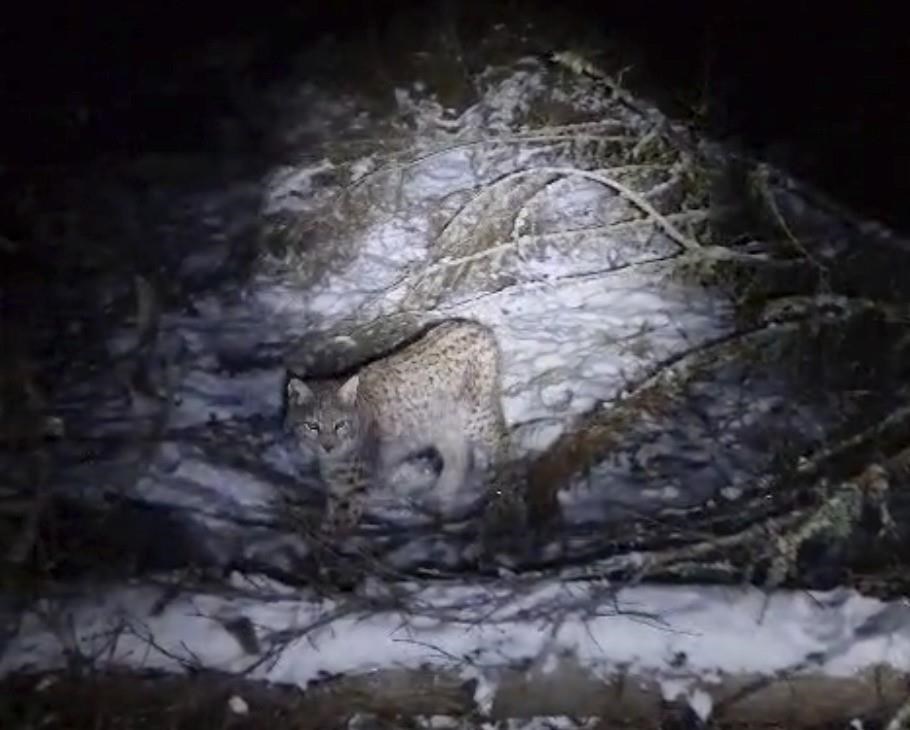
The sighting and capture of the lynx comes as some environmental activists seek to reintroduce lynx as a way to control the burgeoning deer population and highlight Scotland’s commitment to wildlife diversity.
Police are still investigating the incident and have released no information about possible suspects. Wildlife experts have speculated that the cats were released either by someone who took matters into their own hands because they were frustrated by the slow process of securing government approval or an opponent who wanted to create problems that would block the reintroduction effort.
A Conservative lawmaker for the area, Edward Mountain, said the second capture of lynx suggested “a concerted approach to illegally reintroduce lynx.’’
“These animals cannot magically appear, and the authorities should be tackling this wildlife crime with an absolute focus of finding out who is responsible,’’ he said.
Related Articles
Lynx on the loose in Scotland highlight debate over reintroducing species into the wild
Advertisement Advertise With Us