

Rio’s thirsty zoo animals get icy treats to cool down in Brazil’s stifling summer heat
Advertisement
Read this article for free:
or
Already have an account? Log in here »
To continue reading, please subscribe:
Monthly Digital Subscription
$1 per week for 24 weeks*
- Enjoy unlimited reading on winnipegfreepress.com
- Read the E-Edition, our digital replica newspaper
- Access News Break, our award-winning app
- Play interactive puzzles
*Billed as $4.00 plus GST every four weeks. After 24 weeks, price increases to the regular rate of $19.95 plus GST every four weeks. Offer available to new and qualified returning subscribers only. Cancel any time.
Monthly Digital Subscription
$4.99/week*
- Enjoy unlimited reading on winnipegfreepress.com
- Read the E-Edition, our digital replica newspaper
- Access News Break, our award-winning app
- Play interactive puzzles
*Billed as $19.95 plus GST every four weeks. Cancel any time.
To continue reading, please subscribe:
Add Free Press access to your Brandon Sun subscription for only an additional
$1 for the first 4 weeks*
*Your next subscription payment will increase by $1.00 and you will be charged $16.99 plus GST for four weeks. After four weeks, your payment will increase to $23.99 plus GST every four weeks.
Read unlimited articles for free today:
or
Already have an account? Log in here »
Hey there, time traveller!
This article was published 22/01/2025 (428 days ago), so information in it may no longer be current.
RIO DE JANEIRO (AP) — A Rio de Janeiro zoo is giving ice pops to a bear, a jaguar, wolves and monkeys as Brazil swelters.
The cold treats are part of the animals’ well-being program, providing thermal comfort. Some also have access to water tanks or air-conditioning to cool down.
The animals aren’t the only ones sweltering. Temperatures in Brazil have shot to over 40 degrees Celsius (104 Fahrenheit) in recent days, sending locals diving into the ocean for a refreshing dip or to street vendors selling frozen treats.
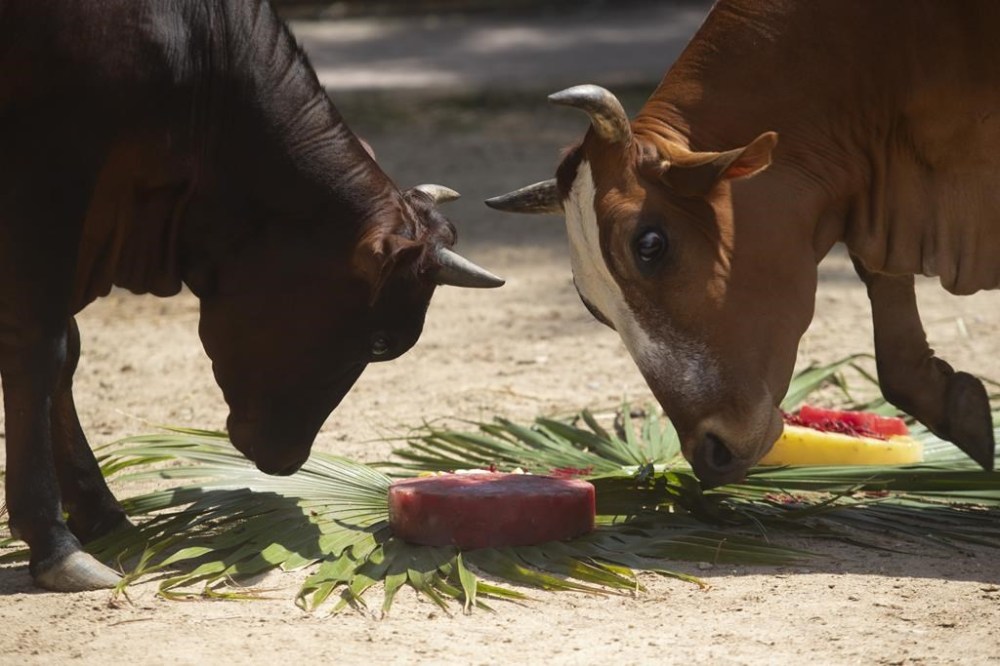
At Rio’s BioParque zoo, some have a different preference.
“For animals that are carnivores, their favorite flavor is blood,” said Letícia Feitosa, a 30-year-old biologist. Herbivores are given fruit or vegetable flavored frozen snacks, she added.
Visitors watched as Poty, a 5-year-old black jaguar, completed laps in a pool of fresh water.
Erminda da Conceição Guerreiro Couto, a university biology professor who was visiting the zoo, said distributing ice pops is part of preventing high temperatures from interfering with the animals’ organisms.

“They get more tired. They become less stimulated. They tend to be very quiet,” Guerreiro Couto said. “As (the treat) melts, they lick it off. In addition to the meat, they have the freshness.”

High temperatures in Brazil’s southeast were set to drop from Thursday, according to the National Institute of Meteorology, while Rio’s town hall said rain was forecast from Wednesday afternoon.