Trump rescinds funding freeze but uncertainty lives on for wide array of environmental programs
Advertisement
Read this article for free:
or
Already have an account? Log in here »
To continue reading, please subscribe:

Digital Subscription
One year of digital access for only $205*
- Enjoy unlimited reading on winnipegfreepress.com
- Read the E-Edition, our digital replica newspaper
- Access News Break, our award-winning app
- Play interactive puzzles
*First annual payment billed as $205.00 + GST for one year. This annual subscription will automatically renew at $233.00 + GST every 52 weeks (10% off the regular annual price of $259.35). Offer available to new and qualified returning subscribers only. Cancel any time.
To continue reading, please subscribe:
Add Free Press access to your Brandon Sun subscription for only an additional
$1 for the first 4 weeks*
- Enjoy unlimited reading on winnipegfreepress.com
- Read the E-Edition, our digital replica newspaper
- Access News Break, our award-winning app
- Play interactive puzzles
*Your next Brandon Sun subscription payment will increase by $1.00 and you will be charged $17.95 plus GST for four weeks. After four weeks, your payment will increase to $24.95 plus GST every four weeks.
Read unlimited articles for free today:
or
Already have an account? Log in here »
Hey there, time traveller!
This article was published 29/01/2025 (624 days ago), so information in it may no longer be current.
A chaotic back-and-forth over President Donald Trump’s freeze on federal grants and loans has farmers, activists, organizations and businesses wondering whether they will receive the funding they rely on.
It’s funding that among many other things is being used to address environmental problems or tackle climate change.
The White House ordered the freeze on Monday evening, naming some 2,600 programs. Then a federal judge temporarily blocked it. Then the Trump administration rescinded the memo on Wednesday afternoon.
Some programs stopped or slowed as administrators grappled with how to react. And even if Trump doesn’t move again with a comprehensive freeze, he’s made clear he plans massive cuts in federal spending.
Officials and advocates said the move threatened vital programs that benefit communities.
“These programs help low-income families reduce their energy costs, enable local governments to fight pollution and put countless Americans to work,” said Zealan Hoover, a former EPA official in Joe Biden’s administration who led implementation of infrastructure and climate laws.
A snapshot of some of the people and programs thrown into uncertainty:
A small town that needs help fixing a decrepit water system
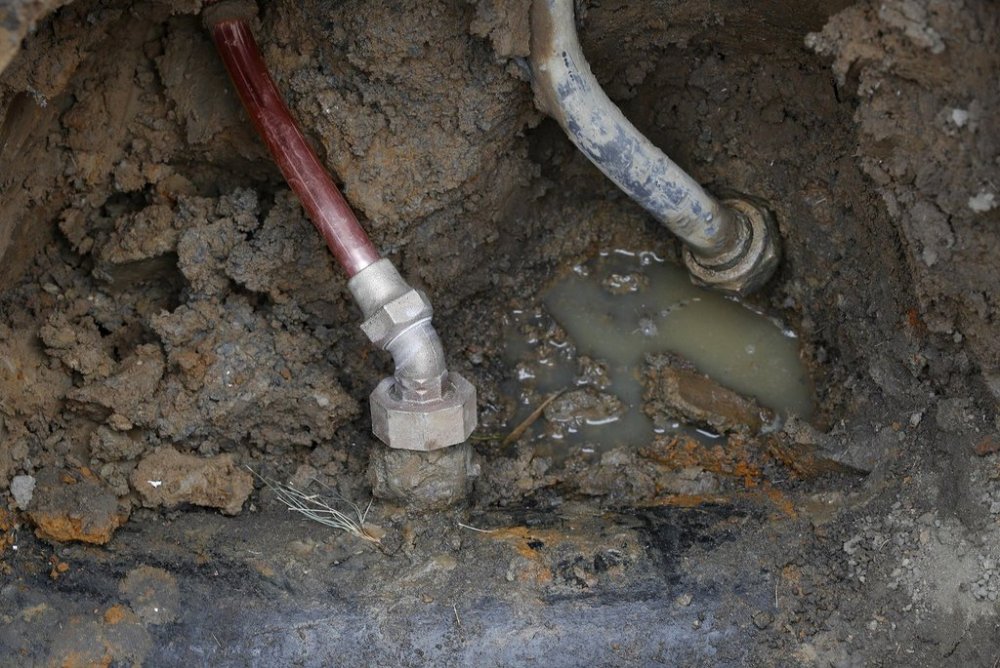
Officials in Prichard, Alabama, where more than 30% of residents live in poverty, are counting on federal grants, including from the Biden-era infrastructure program, to help fix a decrepit drinking water system that often loses more than half its water through cracks, leaks and failing pipes.
“We’re really, really, really counting on grant funds coming both from the state and federal government,” said John C. Young, a former water executive who was appointed to oversee the city’s water and sewer department. Young said Prichard’s water and sewer systems need $400 million in capital investment over the next 20 years, most of which will have to come from federal and state grants because residents cannot pay it. The system has gotten about $6 million in state grants but no federal money so far.
Many other communities — especially those that have lost population — are in the same situation, said Young, who also has helped manage water crises in Flint, Michigan, and other struggling communities. He said they often find it difficult to borrow money and must spend scarce resources on other needs, such as fire and police protection.
The federal government also funds state programs that support drinking water and sewage infrastructure. For example, the Bipartisan Infrastructure Law under the Biden administration provided $15 billion for lead pipe removal spread over five years, and billions of those dollars haven’t been provided to states yet.
Lead pipes can corrode into drinking water, exposing people to the harmful neurotoxin that slows development in children.
A nationwide effort to deploy clean energy
Targeting money aimed at climate change jeopardizes federal funding that states, territories and utilities are using to make the electric grid more reliable, add renewable energy, reduce emissions and lower energy costs.
In Puerto Rico, the U.S. Energy Department is helping finance the construction of solar and battery storage projects. The U.S. territory has faced more than 200 power outages because of insufficient generation since Hurricane Fiona pummeled the island in 2022. Many worry what kind of resources and funding Trump will spend on Puerto Rico’s crumbling power grid.
Under the Biden administration, the DOE was spending billions per year on clean energy research, development and demonstration to speed up a transition away from fossil fuels. Trump’s freeze would leave projects in limbo.
Trump had already paused loans for wind energy projects through an executive order on his first day.
A plan to make school buses and heavy transport cleaner
Trump’s intentions could affect programs such as the Clean School Bus Program.
The program, created under the bipartisan infrastructure law, appropriated $5 billion over five years to help school districts transition away from dirty, diesel-powered school buses to electric or lower-emissions ones for the millions of students who ride them. The pause threatened $939 million of the funding.
Districts across the country have struggled with the switch to cleaner buses because they are more expensive upfront and often require complex electrical upgrades to charge them. The program is seen as especially beneficial for lower-income districts and communities of color that are disproportionately affected by diesel pollution, which studies have shown hurts physical health and learning.
Trump’s freeze included review of Diesel Emissions Reduction Act grants, which could affect $140 million in national funding and $28 million in state funding. DERA money goes toward projects slashing emissions through technologies such as cleaner engines or vehicle retrofitting for everything from buses, to medium- or heavy-duty trucks, to ships, trains, construction vehicles, cargo equipment and more. National grant recipients have included the Missouri Department of Natural Resources, the Houston-Galveston Area Council, Polytechnic University of Puerto Rico, the Northwest Seaport Alliance and many others.
A support system to help Black farmers fight discrimination
John Boyd Jr., founder and president of the National Black Farmers Association, worried about defunding of programs that help farmers with complicated paperwork, give them legal or financial aid or provide education and training to improve their businesses. He said such cuts would be a “huge blow” to many in agriculture, especially Black farmers who have historically faced discrimination.
“I don’t think that those programs are safe,” he said of agricultural programs geared at racial equity. “It’s not a good feeling to have in this country.”
The U.S. had more than 900,000 Black farmers in 1920, according to the USDA. The 2022 agricultural census recorded only about 45,000, or about 1.3% of the nation’s farmers.
According to Boyd’s group, USDA diversity and equity policies that Trump is rolling back have helped ensure that Black farmers aren’t excluded from access to programs like federal crop insurance, disaster relief and farm loans.

“We’re certainly going backwards on race relations in this country. And this is a perfect example of that,” he said.
___
Associated Press reporters Michael Phillis, Tammy Webber, Alexa St. John, Jennifer McDermott, Matthew Daly and Wyatte Grantham-Philips contributed to this report.
___
The Associated Press’ climate and environmental coverage receives financial support from multiple private foundations. AP is solely responsible for all content. Find AP’s standards for working with philanthropies, a list of supporters and funded coverage areas at AP.org.