Scientists hope these tiny froglets can save their species
Advertisement
Read this article for free:
or
Already have an account? Log in here »
To continue reading, please subscribe:
Digital Subscription
One year of digital access for only $1.44 a week*
- Enjoy unlimited reading on winnipegfreepress.com
- Read the E-Edition, our digital replica newspaper
- Access News Break, our award-winning app
- Play interactive puzzles
*Billed as $5.77 plus GST every four weeks. After 52 weeks, price increases to the regular rate of $19.95 plus GST every four weeks. Offer available to new and qualified returning subscribers only. Cancel any time.
To continue reading, please subscribe:
Add Free Press access to your Brandon Sun subscription for only an additional
$1 for the first 4 weeks*
- Enjoy unlimited reading on winnipegfreepress.com
- Read the E-Edition, our digital replica newspaper
- Access News Break, our award-winning app
- Play interactive puzzles
*Your next Brandon Sun subscription payment will increase by $1.00 and you will be charged $17.95 plus GST for four weeks. After four weeks, your payment will increase to $24.95 plus GST every four weeks.
Read unlimited articles for free today:
or
Already have an account? Log in here »
Hey there, time traveller!
This article was published 03/02/2025 (623 days ago), so information in it may no longer be current.
LONDON (AP) — It was quite the journey for such tiny froglets: traveling thousands of miles from the forests of southern Chile to London, carried and brooded inside their fathers’ vocal sacs for safety.
London Zoo said Monday that 33 endangered Darwin’s frogs, named after scientist Charles Darwin who discovered the species, were born in their new home as part of a rescue mission to save the species from extinction.
Known populations of Darwin’s frogs have suffered a 90% decline within a year since a deadly disease known as chytrid fungus arrived in 2023 in their habitat, the Parque Tantauco forests in southern Chile. The fungus has affected hundreds of amphibian species around the world.
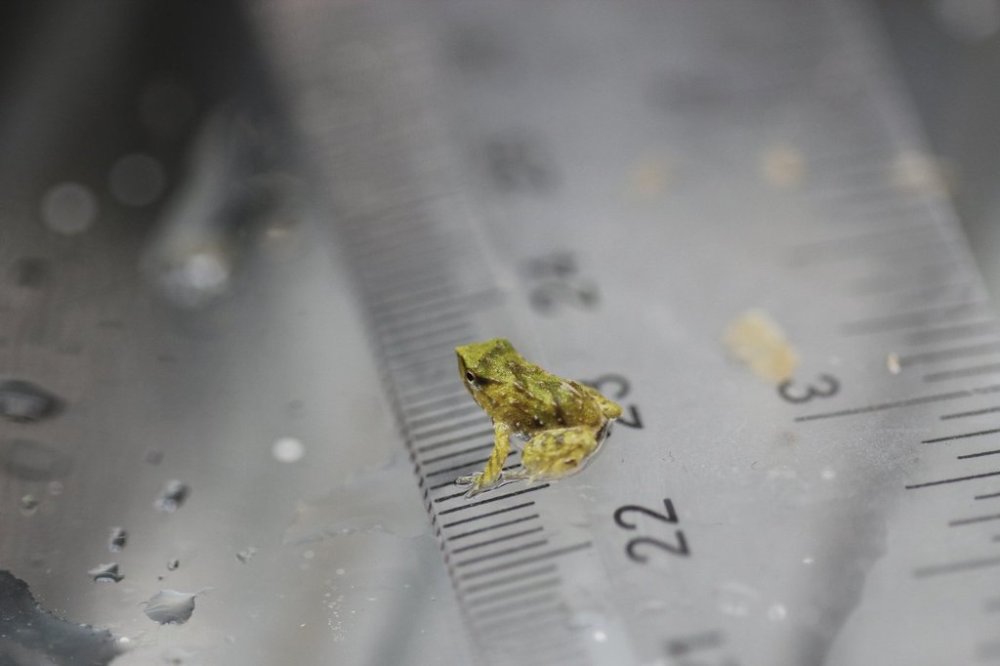
The creatures have a unique reproductive strategy: after the females lay eggs, the male frogs protect and rear the tiny tadpoles inside their distensible vocal sacs for them to develop in safety.
A team of conservationists traveled to Chile’s forests in October in search of healthy Darwin’s frogs free of the infectious disease. They collected 52 frogs, which were then placed in climate-controlled boxes for a 7,000-mile (11,265 kilometers) ride by boat, car and plane to their new home in London.
Of the group, 11 male frogs — each measuring under 3 centimeters (1.2 inches) — carried 33 tadpoles that were born at the zoo.

“We knew we were embarking on something special — the clock was ticking, and we needed to act quickly if we were going to save these frogs,” said Ben Tapley, curator of amphibians at London Zoo.
He said the successful parent-rearing of the froglets was a “powerful symbol of hope for the species.”
The frogs are now kept in pairs inside dozens of glass tanks filled with moss and with temperatures that mimic their natural habitat. Keepers said the zoo will set up a breeding program for them, and any frogs they breed may later be reintroduced into the wild.
Andres Valenzuela-Sanchez, a researcher at ZSL, the conservation charity behind London Zoo, said the project will ensure the species has a fighting chance of recovery.
“These frogs are not only vital for the future of their species but also help us better understand how we can combat chytrid fungus and safeguard other amphibians globally,” he said.