

In good news for J-pod, killer whale calf is a female
Advertisement
Read this article for free:
or
Already have an account? Log in here »
To continue reading, please subscribe:
Monthly Digital Subscription
$1 per week for 24 weeks*
- Enjoy unlimited reading on winnipegfreepress.com
- Read the E-Edition, our digital replica newspaper
- Access News Break, our award-winning app
- Play interactive puzzles
*Billed as $4.00 plus GST every four weeks. After 24 weeks, price increases to the regular rate of $19.95 plus GST every four weeks. Offer available to new and qualified returning subscribers only. Cancel any time.
Monthly Digital Subscription
$4.99/week*
- Enjoy unlimited reading on winnipegfreepress.com
- Read the E-Edition, our digital replica newspaper
- Access News Break, our award-winning app
- Play interactive puzzles
*Billed as $19.95 plus GST every four weeks. Cancel any time.
To continue reading, please subscribe:
Add Free Press access to your Brandon Sun subscription for only an additional
$1 for the first 4 weeks*
*Your next subscription payment will increase by $1.00 and you will be charged $16.99 plus GST for four weeks. After four weeks, your payment will increase to $23.99 plus GST every four weeks.
Read unlimited articles for free today:
or
Already have an account? Log in here »
Hey there, time traveller!
This article was published 19/02/2025 (400 days ago), so information in it may no longer be current.
VANCOUVER – The Centre for Whale Research says it has confirmed a new killer whale calf in a pod of endangered orcas that live off southwest British Columbia is female.
It’s a piece of good news for J-pod, after the recent death of another calf whose mother pushed the carcass for days in what researchers said was a display of grief.
The Washington state-based organization says on social media that the new calf known as J62 was seen on Feb. 8 off the San Juan Island, and researchers were able to photograph her belly and confirm her sex.
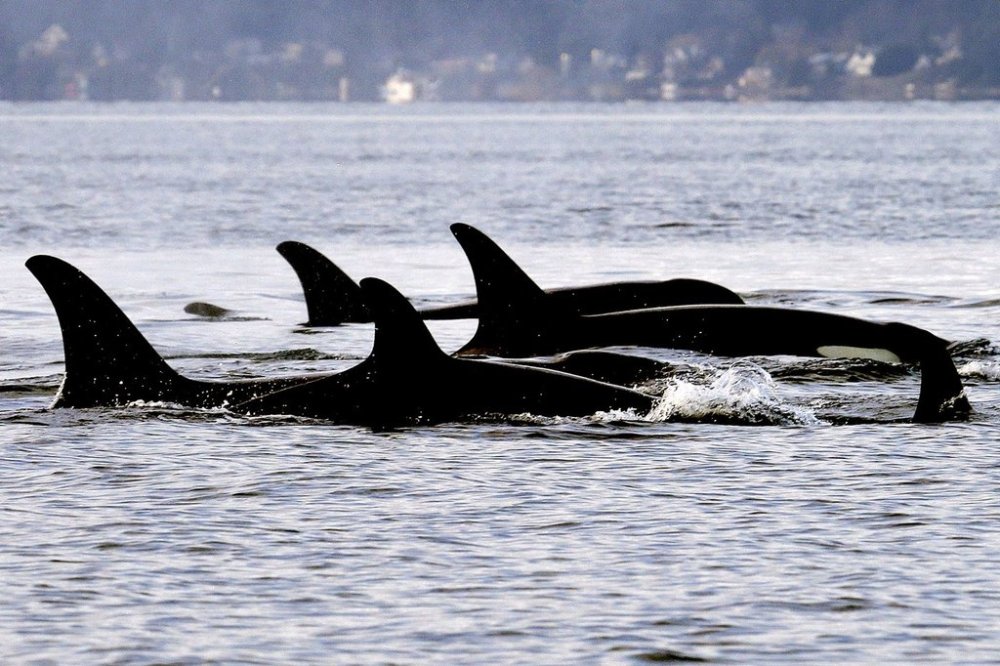
The group says the calf appears to be doing well and is “filling out nicely.”
The centre has previously said that new females are important for southern resident killer whales as they are “largely limited by the number of reproductively aged females.”
The post this week also says researchers were able to confirm the adult female J35, or Tahlequah, is no longer carrying the body of her dead calf, which she started pushing around Jan. 1.
Researchers have previously said the behaviour is an apparent act of grief, and that J35 has now lost two of her four documented calves.
She captured headlines worldwide when she pushed the remains of another calf for 17 days in 2018.
This report by The Canadian Press was first published Feb. 19, 2025.