Scientists raise concerns as the US stops sharing air quality data from embassies worldwide
Advertisement
Read this article for free:
or
Already have an account? Log in here »
To continue reading, please subscribe:

Digital Subscription
One year of digital access for only $205*
- Enjoy unlimited reading on winnipegfreepress.com
- Read the E-Edition, our digital replica newspaper
- Access News Break, our award-winning app
- Play interactive puzzles
*First annual payment billed as $205.00 + GST for one year. This annual subscription will automatically renew at $233.00 + GST every 52 weeks (10% off the regular annual price of $259.35). Offer available to new and qualified returning subscribers only. Cancel any time.
To continue reading, please subscribe:
Add Free Press access to your Brandon Sun subscription for only an additional
$1 for the first 4 weeks*
- Enjoy unlimited reading on winnipegfreepress.com
- Read the E-Edition, our digital replica newspaper
- Access News Break, our award-winning app
- Play interactive puzzles
*Your next Brandon Sun subscription payment will increase by $1.00 and you will be charged $17.95 plus GST for four weeks. After four weeks, your payment will increase to $24.95 plus GST every four weeks.
Read unlimited articles for free today:
or
Already have an account? Log in here »
Hey there, time traveller!
This article was published 05/03/2025 (575 days ago), so information in it may no longer be current.
NEW DELHI (AP) — The U.S. government will stop sharing air quality data gathered from its embassies and consulates, worrying local scientists and experts who say the effort was vital to monitor global air quality and improve public health.
In response to an inquiry from The Associated Press, the State Department said Wednesday that its air quality monitoring program would no longer transmit air pollution data from embassies and consulates to the Environmental Protection Agency’s AirNow app and other platforms, which allowed locals in various countries, along with scientists around the globe, to see and analyze air quality in cities around the world.
The stop in sharing data was “due to funding constraints that have caused the Department to turn off the underlying network” read the statement, which added that embassies and consulates were directed to keep their monitors running and the sharing of data could resume in the future if funded was restored. The fiscal cut, first reported by the New York Times, is one of many under President Donald Trump, whose administration has been deprioritizing environmental and climate initiatives.
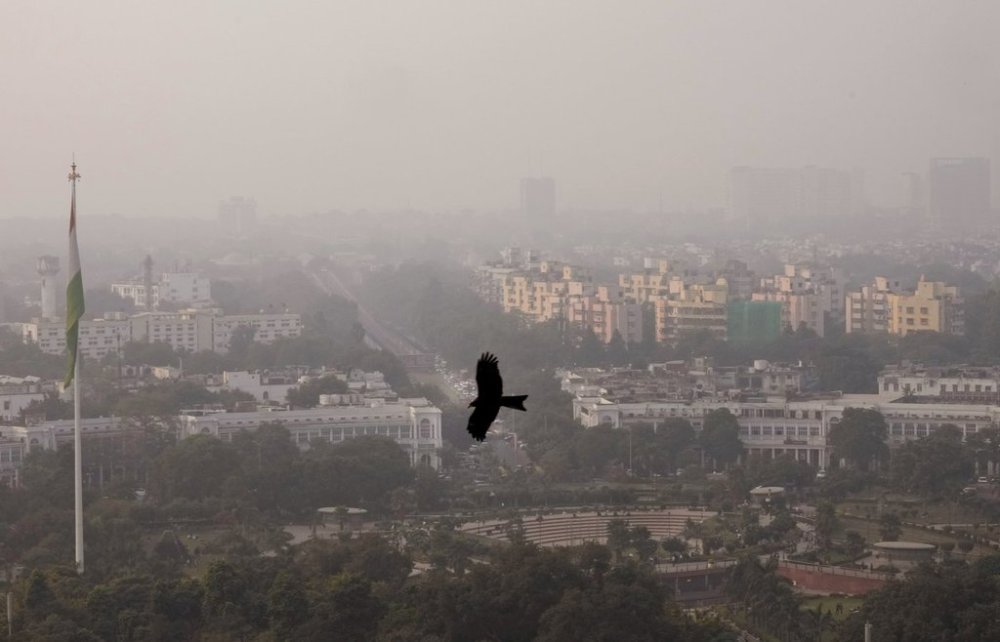
The U.S. air quality monitors measured dangerous fine particulate matter, known as PM2.5, which can penetrate deep into the lungs and lead to respiratory diseases, heart conditions, and premature death. The World Health Organization estimates that air pollution kills around 7 million people each year.
News of the data sharing being cut prompted immediate reaction from scientists who said the data were reliable, allowed for air quality monitoring around the world and helped prompt governments to clean up the air.
“A big blow” to global air quality research
Bhargav Krishna, an air pollution expert at New Delhi-based Sustainable Futures Collaborative, called the loss of data “a big blow” to air quality research.
“They were part of a handful of sensors in many developing countries and served as a reference for understanding what air quality was like,” Krishna said. “They were also seen to be a well-calibrated and unbiased source of data to cross-check local data if there were concerns about quality.”
“It’s a real shame”, said Alejandro Piracoca Mayorga, a Bogota, Colombia-based freelance air quality consultant. U.S. embassies and consulates in Lima, Peru, Sao Paulo and Bogota have had the public air monitoring. “It was a source of access to air quality information independent of local monitoring networks. They provided another source of information for comparison.”
Khalid Khan, an environmental expert and advocate based in Pakistan, agreed, saying the shutdown of air quality monitoring will “have significant consequences.”
Khan noted that the monitors in Peshawar, Pakistan, one of the most polluted cities in the world, “provided crucial real-time data” which helped policy makers, researchers and the public to take decisions on their health.
“Their removal means a critical gap in environmental monitoring, leaving residents without accurate information on hazardous air conditions,” Khan said. He said vulnerable people in Pakistan and around the world are particularly at risk as they are the least likely to have access to other reliable data.
In Africa, the program provided air quality data for over a dozen countries including Senegal, Nigeria, Chad and Madagascar. Some of those countries depend almost entirely on the U.S. monitoring systems for their air quality data.
The WHO’s air quality database will also be affected by the closing of U.S. program. Many poor countries don’t track air quality because stations are too expensive and complex to maintain, meaning they are entirely reliant on U.S. embassy monitoring data.
Monitors strengthened local efforts
In some places, the U.S. air quality monitors propelled nations to start their own air quality research and raised awareness, Krishna said.
In China, for example, data from the U.S. Embassy in Beijing famously contradicted official government reports, showing worse pollution levels than authorities acknowledged. It led to China improving air quality.
Officials in Pakistan’s eastern Punjab province, which struggles with smog, said they were unfazed by the removal of the U.S. monitors. Environment Secretary Raja Jahangir said Punjab authorities have their own and plan to purchase 30 more.
Shweta Narayan, a campaign lead at the Global Climate and Health Alliance, said the shutdown of monitors in India is a “huge setback” but also a “critical opportunity” for the Indian government to step up and fill the gaps.

“By strengthening its own air quality monitoring infrastructure, ensuring data transparency, and building public trust in air quality reporting, India can set a benchmark for accountability and environmental governance,” Narayan said.
___
Adebayo reported from Abuja, Nigeria. Babar Dogar in Lahore, Pakistan, Riaz Khan in Peshawar, Pakistan, Aniruddha Ghosal in Hanoi, Vietnam, and Steven Grattan in Bogota, Colombia, contributed to this report.
___
The Associated Press’ climate and environmental coverage receives financial support from multiple private foundations. AP is solely responsible for all content. Find AP’s standards for working with philanthropies, a list of supporters and funded coverage areas at AP.org.