Potassium mining project in Brazil’s Amazon rainforest divides Indigenous tribe
Advertisement
Read this article for free:
or
Already have an account? Log in here »
To continue reading, please subscribe:

Digital Subscription
One year of digital access for only $205*
- Enjoy unlimited reading on winnipegfreepress.com
- Read the E-Edition, our digital replica newspaper
- Access News Break, our award-winning app
- Play interactive puzzles
*First annual payment billed as $205.00 + GST for one year. This annual subscription will automatically renew at $233.00 + GST every 52 weeks (10% off the regular annual price of $259.35). Offer available to new and qualified returning subscribers only. Cancel any time.
To continue reading, please subscribe:
Add Free Press access to your Brandon Sun subscription for only an additional
$1 for the first 4 weeks*
- Enjoy unlimited reading on winnipegfreepress.com
- Read the E-Edition, our digital replica newspaper
- Access News Break, our award-winning app
- Play interactive puzzles
*Your next Brandon Sun subscription payment will increase by $1.00 and you will be charged $17.95 plus GST for four weeks. After four weeks, your payment will increase to $24.95 plus GST every four weeks.
Read unlimited articles for free today:
or
Already have an account? Log in here »
Hey there, time traveller!
This article was published 07/03/2025 (549 days ago), so information in it may no longer be current.
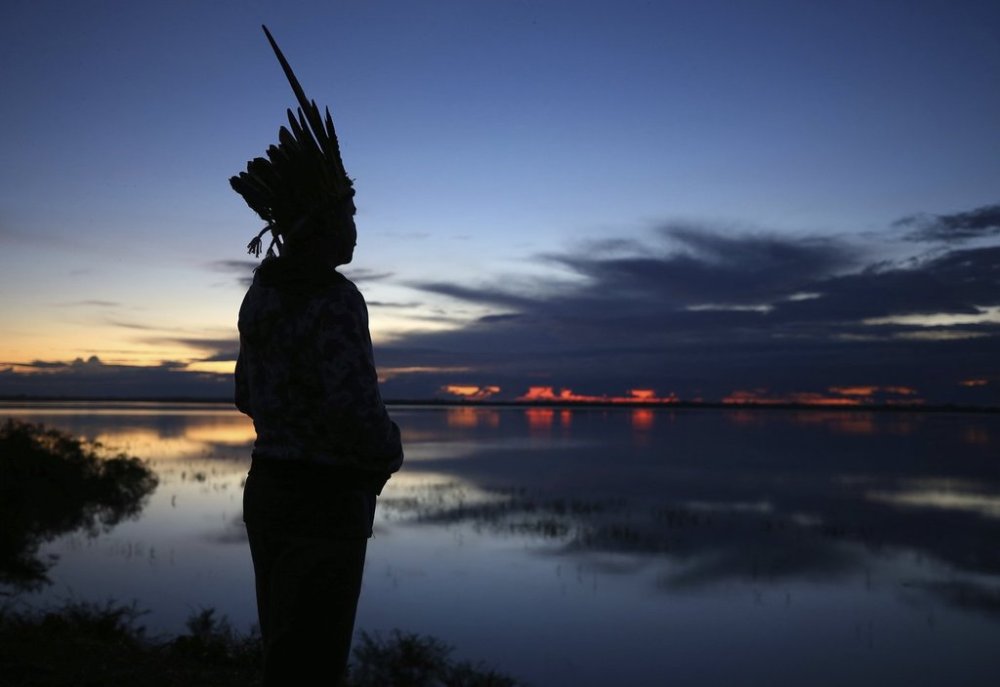
LAGO DO SOARES, Brazil (AP) — Indigenous leader Filipe Gabriel Mura stands before Soares Lake in Brazil’s Amazon, looking out at the amber waters that are surrounded by a jagged shoreline that has been home for centuries to Indigenous people known as Mura.
“It’s the most beautiful sunset,” said Mura. “I doubt there’s another like it in the world.”
Mura and others from the tribe fear that the pristine beauty of the place may soon change. Hidden from view dozens of miles below ground, the region holds one of the largest reserves of potash, a mineral that includes potassium, on the planet. Now, Brazil Potash Corp., a Toronto-based mining company listed in the New York Stock Exchange, is set to start tapping the mineral, which is used to make fertilizer and is a key to Brazil’s booming agribusiness.
As can happen when mammoth projects are planned in Indigenous communities, Brazil Potash’s plans are sparking fears of environmental impact and creating divisions. Opponents fear that mining will expose the tribe to harmful pollution and hurt tribal unity, while supoorters think it will raise their standard of living.
The project, expected to soon break ground, has an estimated cost of $2.5 billion. It is planned near the mouth of the Madeira River, which flows into the Amazon River. The build-out will include two shafts reaching a depth of 920 meters (3,018 feet) below ground—the equivalent to a 300-story building. One shaft will be to transport workers and the ore they mine while the other will be for ventilation.
Above ground, the project includes a processing plant, an area for solid waste storage, a 13-kilometer (8 miles) road and a port connecting to the Madeira River. The estimate production is 9.2 million tons of potash ore annually, which would meet 17% of Brazil’s current demand, according to the company. The project received licensing by Amazonas Environmental Protection Institute, a state-level agency. However, it faces lawsuits from the Office of the Attorney General for a lack of proper consultation with the Mura and potential environmental risks, such as soil and water contamination, as the plant will be in a region prone to seasonal flooding.
“We risk losing our culture if the state denies our existence and that of our ancestors to pave the way for mining. I am honored to represent a people determined not to be erased,” said Mura, the tribal leader.
Key Mura villages don’t have government recognition
In colonial times, the Mura were nearly driven to extinction while resisting non-Indigenous settlers. Today, the population is about 13,000 spread across this stretch of the Madeira River, a maze of smaller rivers, lakes and headwaters.
Soares, a small village, is the closest to the planned mining site while nearby Urucurituba, another small village, is where the port will be built. Neither village has been officially recognized as an Indigenous territory, despite a formal request by the tribe in 2003. Historical records show the tribe has inhabited the area for at least 200 years. Brazilian law prohibits mining on Indigenous land.
In a statement to The Associated Press, Brazil’s Indigenous bureau, known as FUNAI, said that the recognition process was underway but couldn’t provide more details on when or if the territorial designation may be made.
FUNAI added that there was strong evidence that Soares and Urucurituba are Indigenous lands and that the project could bring deforestation, noise and air pollution, changes in aquatic fauna and other environmental impacts.
Brazil Potash says it has consulted the Mura people and that the majority support the project. In a filing with the U.S. Securities and Exchange Commission, the company said 90% of representatives from 34 out of 36 nearby villages voted. However, Brazil’s Attorney General’s Office, which is tasked with defending Indigenous rights, argues the consultation process was flawed. It secured a court order prohibiting company representatives from entering Mura territory.
In a statement to the AP, Brazil Potash said it does not comment on ongoing lawsuits and declined to respond to emailed questions.
Some Mura see a chance to raise their standard of living
Aldinelson Moraes Pavão, 53, a leader of the Mura Indigenous Council who lives near the projected port, says the mining is a way out poverty and a way to preserve their culture.
“We’re going to get schools and health grants. Professionals will be hired to work here. We are hopeful,” said Pavão.
Another leader, Marcelo Lopes, a father of nine, says that the crops and fishing yields are no longer enough to sustain his Urucurituba village. Life has become more difficult thanks to drought, wildfires and the resulting smoke.
“Many times, we’re left begging. It’s humiliating, especially now that we have this treasure,” Lopes said.
In the lawsuit, the Attorney General’s Office says the internal division is one of the project’s first consequences. The suit alleges that the mining company acquired plots in the project area through deception, threats and coercion. It also highlights what it says are flaws in the licensing process.
The project has potential risks and government support
One environmental risk is the handling of rock salt, a byproduct of the mining called brine. The company says there will be two sites next to brine ponds to collect surface water, and thus contaminated water will be contained. According to the Attorney General, the site will be in a flood-prone area vulnerable to seasonal rising and falling river levels.
Geologist Cisnea Basílio says that while the location is attractive because the mining can happen at relatively shallow depths, that comes with inherent risks. She warns that the underground mining carries the potential to crumble the surface, swallowing nearby villages.
“Accidents happen even in developed countries,” she said.
The federal government supports the project as vital for the economy. Brazil is one of world’s largest importers of potash. The leading suppliers include Russia, Belarus and Israel, raising concerns that armed conflicts may cut supply or lead prices to skyrocket, which happened after Russia began its invasion of Ukraine in 2022.
In the agribusiness sector, Brazil Potash has secured a transportation agreement with giant Amaggi conglomerate, which holds 362,000 hectares (894,000 acres) of productive area, almost five times the size of New York City. The plan is to transport the mineral in large barges through major Amazon Rivers to reach Mato Grosso State, Brazil’s largest soybean producer.
Internal disagreements have led to alienation
Divisions over the project have become so deep that the tribal members are no longer meeting together, or taking collective decisions.
On Feb. 19, 34 villages in favor of mining gathered at the Mura Indigenous Council’s headquarters in Autazes. Amid cultural celebrations, they delivered hopeful speeches, anticipating prosperity from the mining.
The next day, opponents met a few kilometers (miles) away, in Moyray village, and decided to break with the council, which was created over 30 years ago to represent the tribe. Instead, they created the Indigenous Organization for Mura Resistance of Autazes.
“I feel sad,” Vavá Izague dos Santos, 48, a member of the new organization, said of the internal division. “We always walked together, stood together in the Indigenous struggle.”
___
Associated Press reporter Fabiano Maisonnave contributed from Brasilia.
___
The Associated Press’ climate and environmental coverage receives financial support from multiple private foundations. AP is solely responsible for all content. Find AP’s standards for working with philanthropies, a list of supporters and funded coverage areas at AP.org