

Drought-stricken Algeria plans to import 1 million sheep ahead of Islam’s Eid Al-Adha
Advertisement
Read this article for free:
or
Already have an account? Log in here »
To continue reading, please subscribe:
Monthly Digital Subscription
$1 per week for 24 weeks*
- Enjoy unlimited reading on winnipegfreepress.com
- Read the E-Edition, our digital replica newspaper
- Access News Break, our award-winning app
- Play interactive puzzles
*Billed as $4.00 plus GST every four weeks. After 24 weeks, price increases to the regular rate of $19.95 plus GST every four weeks. Offer available to new and qualified returning subscribers only. Cancel any time.
Monthly Digital Subscription
$4.99/week*
- Enjoy unlimited reading on winnipegfreepress.com
- Read the E-Edition, our digital replica newspaper
- Access News Break, our award-winning app
- Play interactive puzzles
*Billed as $19.95 plus GST every four weeks. Cancel any time.
To continue reading, please subscribe:
Add Free Press access to your Brandon Sun subscription for only an additional
$1 for the first 4 weeks*
*Your next subscription payment will increase by $1.00 and you will be charged $16.99 plus GST for four weeks. After four weeks, your payment will increase to $23.99 plus GST every four weeks.
Read unlimited articles for free today:
or
Already have an account? Log in here »
Hey there, time traveller!
This article was published 10/03/2025 (385 days ago), so information in it may no longer be current.
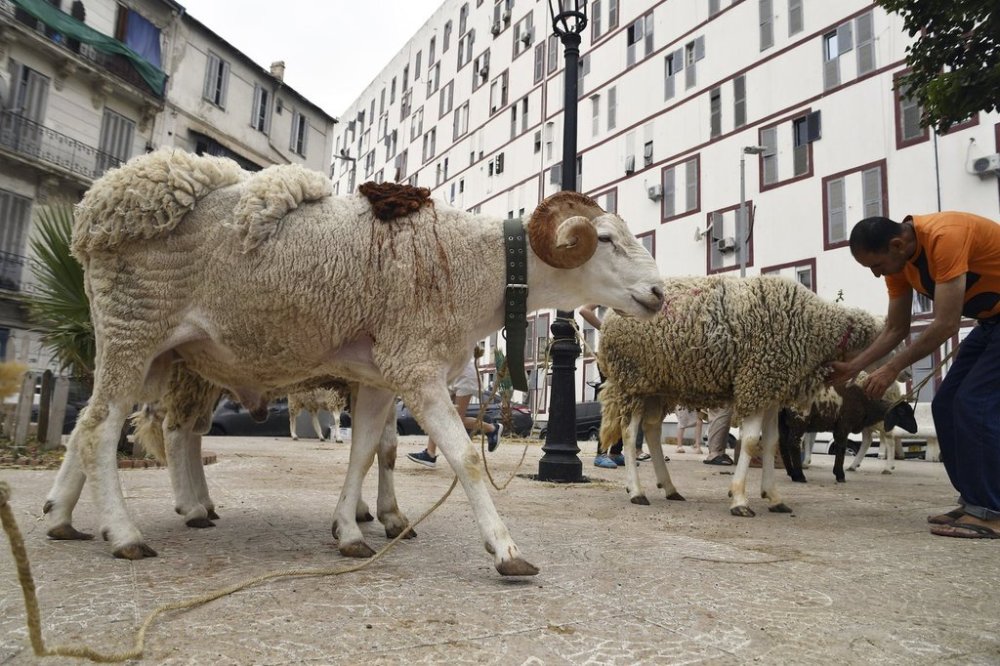
ALGIERS, Algeria (AP) — Algeria’s president has announced plans to import a staggering 1 million sheep ahead of this year’s Eid al-Adha, the holiday during which Muslims worldwide purchase livestock for sacrifice.
President Abdelmadjid Tebboune on Sunday instructed his ministers to launch plans for the massive livestock import effort to stabilize costs and meet soaring demand.
The plan is the latest in a series of measures designed to ease public frustration over rising costs and the military-backed government’s uncompromising grip on power.
It builds on previous efforts to flood markets with food staples throughout Islam’s holy month of Ramadan. Yet its scale has few parallels.
North Africa is enduring its seventh consecutive year of extreme heat and below-average rainfall. The record drought has shrunk harvests and driven up the price of animal feed needed to raise livestock, including in the northern Algerian highlands where breeders raise sheep revered by the population for their quality.
Algeria’s government has traditionally played a dominant role in the economy and in the past imported livestock in small quantities to ensure affordable options for low-income citizens. Last year, it facilitated the sale of 100,000 sheep in state-run stores, sourcing them from Argentina, Australia, Brazil and Spain.
Eid al-Adha, which takes place this year in early June, is an annual “feast of sacrifice” in which Muslims slaughter sheep to honor a passage of the Quran in which the prophet Ibrahim prepared to sacrifice his son as an act of obedience to God, who intervened and replaced the child with a sheep.
It’s a celebrated tradition in Muslim-majority Algeria, yet also a pricey proposition. During last year’s Eid, sheep prices skyrocketed to 200,000 Algerian dinars ($1,496) in some markets — ten times the country’s minimum wage. Many Algerians have in recent years been forced to forgo the cherished tradition.
This year’s initiative aims to prevent price spikes and shortages that could put the ritual sacrifice out of reach for most Algerian families.
The Ministries of Agriculture and Trade will immediately seek international sources to meet Tebboune’s target, hoping to counteract the soaring inflation that has pushed basic goods and services — including meat — beyond the reach of many.
“Thank God, this year’s Ramadan is a blessing. The markets are well-stocked, housewives can shop without stress, without pressure. Products are available, and prices are accessible,” said Yasmine Zireg, a mother of three, on Monday.
History has shown that food prices can incite widespread political anger in North Africa and Algeria isn’t the only country taking steps ahead of Eid Al-Adha.
Its import plan comes just ten days after neighboring Morocco’s King Mohammed VI offered his subjects a reprieve from the costly ritual. The King said in a Feb. 27 letter read on state-run television, warned that the slaughter could burden low-income Moroccans and, as the highest religious authority under Moroccan law, said they could forgo it.
The move — which was widely covered in Algerian media — could harm livestock producers and put disparities between those who can afford sheep and those who can’t on stark display.
Tebboune’s intervention is also designed to make the Eid more feasible for those who otherwise couldn’t afford sheep. It’s one of several government spending policies Algeria has put in place to calm social unrest while continuing to crack down on opposition parties, journalists and people critical of the military-backed government.