Scientists hope hungry weevils from Louisiana can tackle South Africa’s invasive water plants
Advertisement
Read this article for free:
or
Already have an account? Log in here »
To continue reading, please subscribe:

Digital Subscription
One year of digital access for only $205*
- Enjoy unlimited reading on winnipegfreepress.com
- Read the E-Edition, our digital replica newspaper
- Access News Break, our award-winning app
- Play interactive puzzles
*First annual payment billed as $205.00 + GST for one year. This annual subscription will automatically renew at $233.00 + GST every 52 weeks (10% off the regular annual price of $259.35). Offer available to new and qualified returning subscribers only. Cancel any time.
To continue reading, please subscribe:
Add Free Press access to your Brandon Sun subscription for only an additional
$1 for the first 4 weeks*
- Enjoy unlimited reading on winnipegfreepress.com
- Read the E-Edition, our digital replica newspaper
- Access News Break, our award-winning app
- Play interactive puzzles
*Your next Brandon Sun subscription payment will increase by $1.00 and you will be charged $17.95 plus GST for four weeks. After four weeks, your payment will increase to $24.95 plus GST every four weeks.
Read unlimited articles for free today:
or
Already have an account? Log in here »
Hey there, time traveller!
This article was published 29/03/2025 (565 days ago), so information in it may no longer be current.
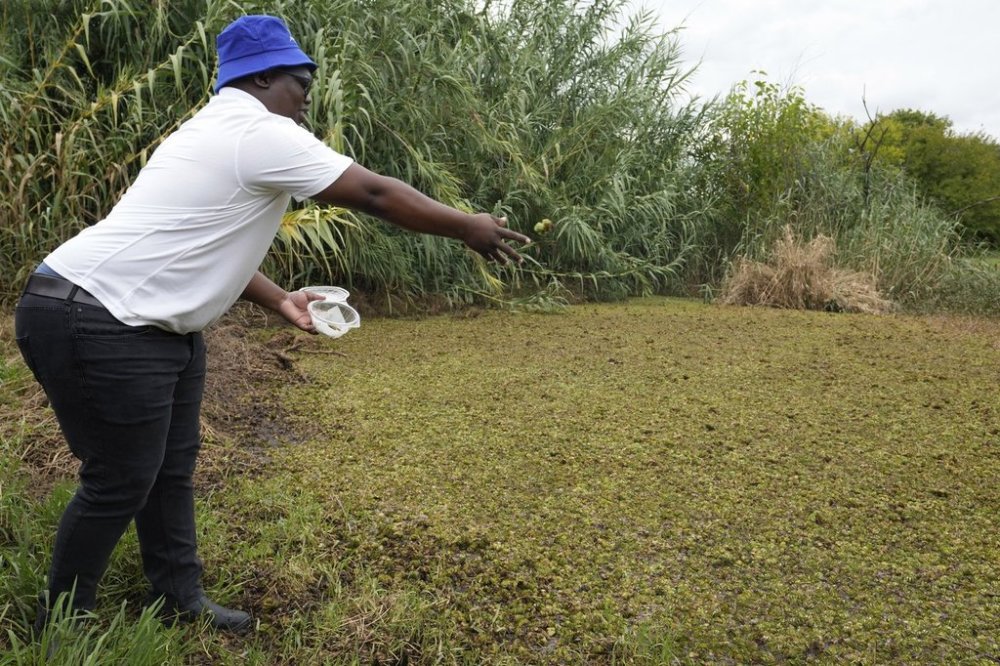
HARTBEESPOORT, South Africa (AP) — Dozens of tiny black weevils cling onto a fern plant as it is tossed onto a leafy green mat coating the surface of South Africa’s Crocodile River.
Those weevils aren’t tossed into the river by accident: scientists hope that the insects and their larvae will munch their way through the green mat, which is made up of an unwanted, invasive South American aquatic plant called Salvinia minima.
The plant is steadily taking over freshwater bodies in the northern region of South Africa, suffocating aquatic life, including on the Crocodile River and the Hartbeespoort Dam it flows into.
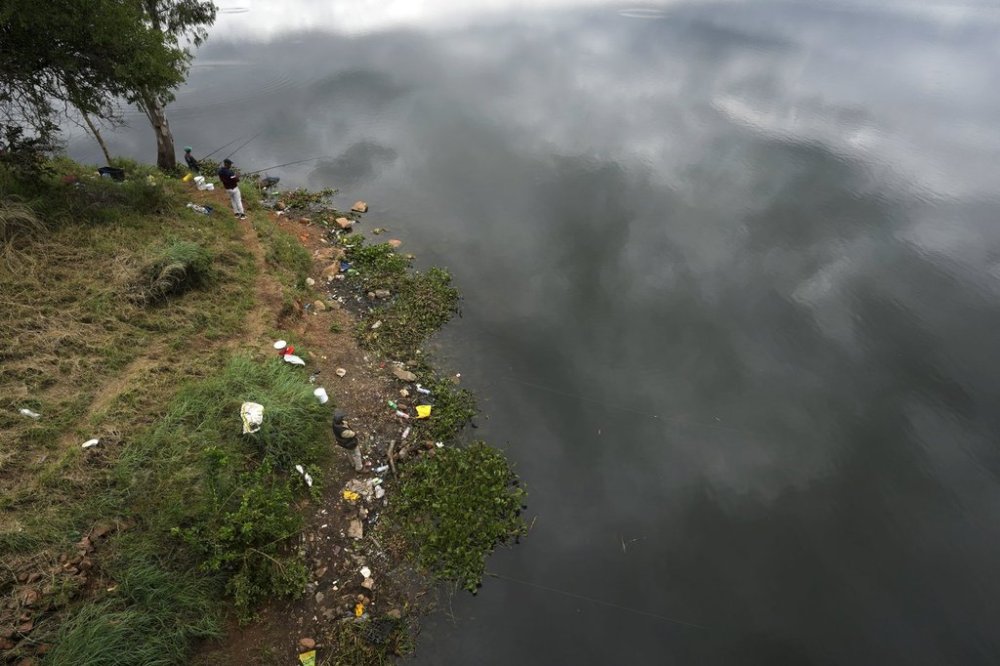
The weevils, which have been used effectively elsewhere in the world to fight water weeds, are now leading South Africa’s charge against the life-sucking plants threatening ecosystems in at least three northern provinces and creeping into neighboring countries.
After the weevils helped control the spread of salvinia in parts of the United States, scientists from both countries worked together on a project to gather a starter population in South Africa.
The 1-millimeter-long (0.03 inches) insects were brought over 8,700 miles from Louisiana. Rearing stations are being set up near several dams to grow the weevil population.
Once released at an infested site, the beetles make themselves at home on the salvinia, the only thing they eat, without damaging the local ecosystem, scientists say.
“They lay eggs on this plant, feed on this plant and die on this plant. If this plant dies, they will die as well,” said professor Julie Coetzee, the principal scientist at the South African Institute for Aquatic Biodiversity. “They damage certain tissues, those tissues become waterlogged and then those plants sink to the bottom.”
A floating menace
Hartbeespoort Dam north of Johannesburg, the location for the pilot project, is an important source of irrigation for nearby farms and a popular recreation site.
“When we bought the property there was this beautiful little floating plant on the dam and I thought well that’s quite nice,” said 53-year-old resident and business operator Max Moller. “Little did I realize this little floating fern was an absolute menace.”
Moller, the owner of Mogi’s hiking trail, said the salvinia have clogged up and damaged boat engines and also hurt fishing communities over the nine years that he has lived in the area.
South Africa’s already vulnerable freshwater systems face a significant threat from salvinia, scientists say. The plants have had two major growth spurts in 2021 and 2022, surviving on the high nitrate contents in the water.
The plant initially surfaced more than a decade ago at the dam, which has also long been battling with a water hyacinth invasion, another problematic species.
“If you pull the hyacinth away, this plant is lurking,” said Coetzee. The invasive plants block out the sunlight, which means no oxygen in the water, she said.
“If there is no oxygen, there’s no fish, there’s no crab, there’s no insects and so you completely destroy or alter the aquatic ecosystem,” she said.
Salvinia has a rapid growth rate and its spread has been most notable across Gauteng province, where South Africa’s biggest city of Johannesburg and its capital, Pretoria, are located. The plant is compounding existing water supply problems by depleting the oxygen and sapping the supply in a country that’s already struggling with increasing demand and deteriorating water infrastructure.
Concerns over the weevils’ impact
While releasing the weevils will help combat salvinia, experts warn that there could be unintended side-effects.
Anthony Turton, a water expert and researcher at South Africa’s University of the Free State, cautioned that their introduction could turn rivers and dams into more suitable homes for bacteria and dangerous organisms.
That includes poisonous blue-green algae, known as cyanobacteria, which flourish in nutrient-rich, contaminated waterways and already affect almost 60% of the nation’s dams.
“With more light and less competition for nutrients, those cyanobacteria will go into a condition known as a bloom,” he said. “This is exponential population growth that radically populates the entire water column.”
Turnton said simultaneous action to repair damaged sewage systems and limit agriculture fertilizer runoff are essential for a lasting solution.
“Unless there are efforts to reduce the inflow of nutrients from sewage flows, then we are only creating space for cyanobacteria to grow without competition from floating weeds,” he said.
Threat of spreading to other countries
The weevils aren’t the first insects to be introduced to curb an invasive threat in South Africa. The country brought in a bug in the 1930s to control the spread of a hardy cactus native to Mexico that was hurting ecosystems. That project was viewed as a success.
The speedy growth of the salvinia has put pressure on the government to act, particularly as researchers warn that neighboring countries also now face an invasion.

Coetzee said that salvinia was popping up on the confluence of the Crocodile and Limpopo rivers in the far north of South Africa.
“That now poses a huge threat to our neighbors because this plant has been transported by our rivers onto our borders,” she said. “It is likely to go all the way along the Limpopo, along Botswana and Zimbabwe’s borders and into Mozambique.”
“We really have a responsibility to control this plant,” she added.
___
AP Africa news: https://apnews.com/hub/africa