Rare greenhouse gas law in Southern state could get pulled back by GOP legislators
Advertisement
Read this article for free:
or
Already have an account? Log in here »
To continue reading, please subscribe:

Digital Subscription
One year of digital access for only $205*
- Enjoy unlimited reading on winnipegfreepress.com
- Read the E-Edition, our digital replica newspaper
- Access News Break, our award-winning app
- Play interactive puzzles
*First annual payment billed as $205.00 + GST for one year. This annual subscription will automatically renew at $233.00 + GST every 52 weeks (10% off the regular annual price of $259.35). Offer available to new and qualified returning subscribers only. Cancel any time.
To continue reading, please subscribe:
Add Free Press access to your Brandon Sun subscription for only an additional
$1 for the first 4 weeks*
- Enjoy unlimited reading on winnipegfreepress.com
- Read the E-Edition, our digital replica newspaper
- Access News Break, our award-winning app
- Play interactive puzzles
*Your next Brandon Sun subscription payment will increase by $1.00 and you will be charged $17.95 plus GST for four weeks. After four weeks, your payment will increase to $24.95 plus GST every four weeks.
Read unlimited articles for free today:
or
Already have an account? Log in here »
Hey there, time traveller!
This article was published 02/04/2025 (555 days ago), so information in it may no longer be current.
RALEIGH, N.C. (AP) — North Carolina Republican lawmakers and the Democratic governor worked together in 2021 to enact a rare energy law in the South that sought to sharply reduce power plant emissions by 2030 and ultimately reach carbon neutrality.
“Today, North Carolina moves strongly into a reliable and affordable clean energy future,” then-Gov. Roy Cooper said at the October 2021 bill signing ceremony. “This is a new beginning.”
But now, amid changing priorities at the federal level, the state’s Republican-controlled legislature is seeking to repeal the law’s requirement of taking “all reasonable steps to achieve” reducing carbon dioxide output 70% from 2005 levels by 2030. The legislation wouldn’t end meeting the carbon neutrality standard by 2050 as the 2021 law still requires.
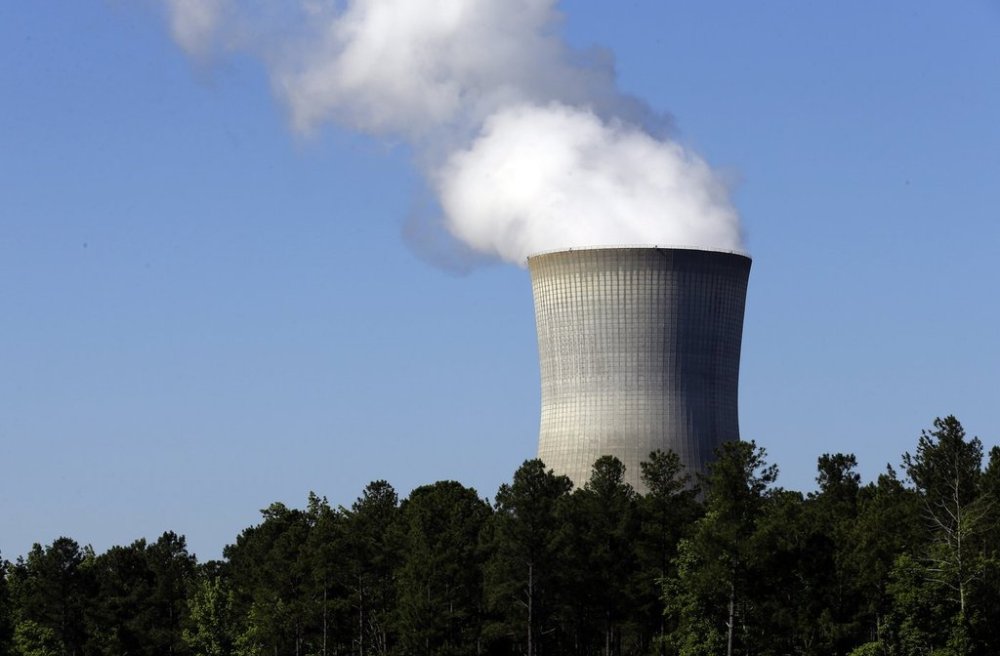
Senate bill supporters contend getting rid of the 70% target deadline would help Duke Energy — the state’s dominant electric utility — assemble less expensive power sources now and moderate the electricity rate increases necessary to reach the 2050 standard. Besides, they say, state regulators already recently pushed back the interim deadline, as the law allows.
The effort comes as President Donald Trump’s administration has proposed rolling back federal environmental and climate change policies, which critics say could boost pollution and threaten human health. Republicans in Washington, D.C., and Raleigh are touting them as ways to reduce the cost of living and boost the economy.
Trump “is taking bold action to make America energy-dominant!” state Senate leader Phil Berger, a bill sponsor, wrote on the social platform X. “To bolster his efforts here in NC, we’re cutting costs for families, removing arbitrary benchmarks, and encouraging new nuclear facilities.”
At least 17 other states — most controlled by Democrats — have laws setting similar net-zero power plant emissions or 100% renewable energy targets, the Natural Resources Defense Council says. North Carolina and Virginia are the only ones from the Southeast.
2021 law allowed for delays
Some North Carolina environmental groups didn’t embrace the 2021 law, saying it lacked low-income customer assistance and contained loopholes to delay the 2030 mandate. Now they’re criticizing the bill passed by the Senate in March as stalling climate action and benefiting Duke Energy financially. The 2021 law also lets the utility seek multiyear rate increases and performance-based incentives.
“Duke Energy agreed four years ago to carbon-reduction goals in exchange for an easier path to rate increases. It’s taken full advantage of the smoother rate-setting process, but now wants to renege on its end of the deal,” North Carolina Sierra Club director Chris Herndon said.
Last fall, the state Utilities Commission, which regulates rates and services for public utilities, accepted that it was “no longer reasonable or executable” for Duke Energy to seek the 70% reduction by 2030, pushing that deadline back by at least four years. Eliminating the interim standard likely would mean scaling back or delaying solar and wind energy production now and relying more on natural gas over the next decade, according to modeling from Duke Energy and a state agency that represents consumers before the Utilities Commission.
“The interim goal is not allowing our commission to make least-cost decisions, because the interim goal is driving fast, expensive behavior selecting generation types,” said outgoing Sen. Paul Newton, a retired Duke Energy executive and bill sponsor. The bill also would open the door to the long-term construction of a large nuclear power plant, Newton added.
Customer cost savings?
Senate Republicans cite the models to estimate that removing the interim goal would reduce by at least $13 billion what Duke Energy would have to spend — and pass on to customers — in the next 25 years. Democrats voting against the measure questioned the $13 billion figure and supported an interim goal.
“Not having any target, even an aspirational target, could mean that we don’t stay on track to get to our 2050 goal,” Democratic Sen. Julie Mayfield said.
The bill, now in the House, also would allow Duke Energy to seek higher electric rates to cover incremental construction costs of a nuclear or gas-powered plant, rather than wait until the project’s end. Newton said the option would avoid one massive rate increase at the project’s conclusion, reining in customer costs. Critics say it would boost Duke Energy’s profits on expensive projects even if never completed.
In supporting the bill, Duke Energy said the “legislation allows modern, efficient and always-on generation to be deployed faster and cheaper” and pointed to the commission’s order last fall. While the North Carolina Chamber backs the bill, some companies oppose it.
New governor pans bill
Any approved final bill would head to Cooper’s successor, Gov. Josh Stein. The Democrat contends the bill would hurt electricity users and threaten the state’s clean-energy economy.
“We should be looking for solutions that create jobs and lower costs for hardworking North Carolinians, not increasing their financial burden,” Stein spokesperson Morgan Hopkins said.
While Democrats have enough legislative seats to uphold Stein’s vetoes if they remain united, Duke Energy often finds allies in both parties. Three Democrats voted for the Senate bill with Republicans.
Uncertainty over the bill’s future could grow after Newton resigned from the Senate last week to take a university job.