Most Ontario utilities don’t study climate risk to electrical grid: survey
Advertisement
Read this article for free:
or
Already have an account? Log in here »
To continue reading, please subscribe:

Digital Subscription
One year of digital access for only $205*
- Enjoy unlimited reading on winnipegfreepress.com
- Read the E-Edition, our digital replica newspaper
- Access News Break, our award-winning app
- Play interactive puzzles
*First annual payment billed as $205.00 + GST for one year. This annual subscription will automatically renew at $233.00 + GST every 52 weeks (10% off the regular annual price of $259.35). Offer available to new and qualified returning subscribers only. Cancel any time.
To continue reading, please subscribe:
Add Free Press access to your Brandon Sun subscription for only an additional
$1 for the first 4 weeks*
- Enjoy unlimited reading on winnipegfreepress.com
- Read the E-Edition, our digital replica newspaper
- Access News Break, our award-winning app
- Play interactive puzzles
*Your next Brandon Sun subscription payment will increase by $1.00 and you will be charged $17.95 plus GST for four weeks. After four weeks, your payment will increase to $24.95 plus GST every four weeks.
Read unlimited articles for free today:
or
Already have an account? Log in here »
Hey there, time traveller!
This article was published 15/04/2025 (509 days ago), so information in it may no longer be current.
TORONTO – The majority of Ontario’s electricity utilities don’t study how climate change could threaten parts of the power grid, a survey found as the province eyes changes that would require them to assess their vulnerability to extreme weather and build it into their infrastructure plans.
A survey prepared for the Ontario Energy Board, the provincial regulator, says the utilities have made progress in making the grid more resilient to extreme weather events fuelled by climate change.
“However, several areas remain where further potential actions could be taken to enhance the overall preparedness and response capabilities of distributors,” said the survey prepared by the consulting firm ICF.
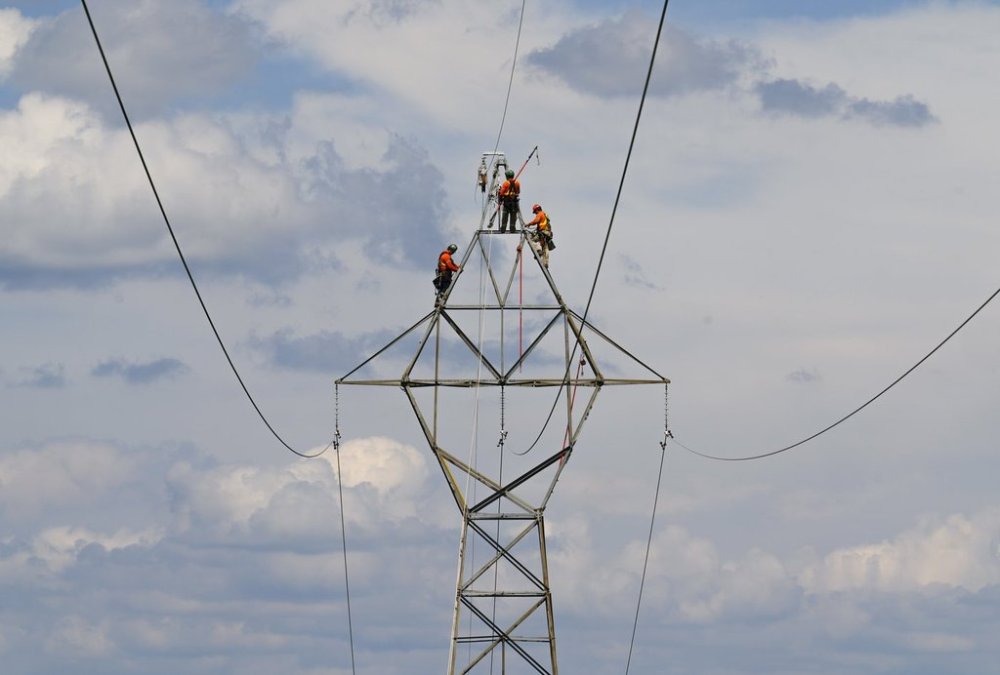
More than a million customers lost power and hundreds of electrical poles were damaged when an ice storm tore through Ontario late last month. The destruction was so severe in some areas that Hydro One, one of the few utilities in Ontario that has started to carry out climate risk planning, said it has to rebuild local sections of the grid.
Climate risk plans can help utilities know how best to rebuild to endure future storms, but they can also be used to help them upgrade and strengthen their grid before disaster strikes, said Ryan Ness, a climate adaptation expert.
A study he co-authored with colleagues at the Canadian Climate Institute suggested proactive measures to make the grid more resilient can reduce damage costs by 80 per cent by the end of the century.
“Every (electrical utility) needs to take a look at its entire system and the breadth of extreme weather and the kinds of climate factors that can cause it to fail and make sure that it’s prioritizing the most risky ones, the ones that stand the most chance of knocking the system out for the most people most often,” said Ness, director of adaptation at the Canadian Climate Institute think tank.
While most utilities, especially larger ones, track their extreme weather-related restoration activities, only about half study past weather data to assess the potential for future service disruptions, according to the survey published in December and cited in regulatory documents.
Less than a quarter go a step further and carry out what’s known as a climate vulnerability assessment, which combines historical data with climate model projections to figure out which parts of their grid, from transformers to electrical poles, could be more vulnerable in a changing climate.
Meanwhile, only 29 per cent track their efforts to “harden” infrastructure against extreme weather, whether that’s selectively cutting down trees around power lines or upgrading poles.
Many smaller utilities, including those that service small rural areas, may struggle to come up with the money and expertise to carry out those assessments, said Jason Thistlethwaite, an associate professor at the University of Waterloo who specializes in climate adaptation and economic vulnerability.
“I think it should be a provincial issue,” he said. “It should be at the top of their list.”
The provincial government has said that it takes the issue seriously and has directed the Ontario Energy Board to develop and implement policies to improve climate resiliency among utilities.
“While Ontario has one of the cleanest grids in North America, our government will continue to invest in providing affordable energy that is available whenever people require it,” said Isha Chaudhuri, a spokesperson for Energy and Mines Minister Stephen Lecce.
The regulator expects utilities will be required to carry out a vulnerability assessment starting in 2026, according to a December draft report prepared by the OEB, which also included the survey of local utility companies. Consultation is ongoing and a final report is expected later this summer.
New requirements are also set to come into force next month that require utilities to provide customers with timely and accurate communications about widespread power interruptions caused by severe weather, a spokesperson said.
“The OEB’s collective efforts in this area highlight the considerable importance being placed by the OEB on the need to ensure the resilience and reliability of distribution systems for the benefit of customers in the face of climate-related challenges,” spokesperson Tom Miller said in a written statement.
Ontario’s utilities have cautioned the regulator against a “one-size-fits-all” approach for resiliency planning, noting that different regions of the province are expected to face different types of climate impacts, from worsening wildfires to increased flooding. Yet, a spokesperson for the industry association said the regulator’s recent initiatives were a welcome step toward “strengthening climate resilience.”
“The Electricity Distributors Association is optimistic this work will reinforce the need for investing in a more resilient distribution grid,” said Kimberly Hicks, a spokesperson for the group.
Ontario has 61 rate-regulated utility companies, serving communities as small as 2,000 people. Ness, the adaptation expert, said a standard vulnerability assessment set by the regulator could help ensure a “level playing field” across the province.
While the regulator consults on those standards, some utilities have already started to carry out the work.
Toronto Hydro and Hydro Ottawa have conducted climate vulnerability assessments of their grids and used them to justify spending on climate change adaptation initiatives, according to a provincewide vulnerability assessment of Ontario’s electricity sector prepared by the Ministry of Energy and published last year.
Wind is by far the most common factor behind major power outages in the province, the report noted. And while wind speeds are generally thought to decrease due to climate change, the frequency and intensity of “extreme wind gusts” is likely to increase in some regions, notably northern Ontario and along the Great Lakes, said the report.
Thunderstorms and freezing rain events, two other major contributors to outages, are expected to increase in some regions too, the report said.
“Weather-related risks are already one of the primary causes of electrical outages, and a changing climate brings with it significant additional pressure over the coming decades,” the report said.
Electricity grid infrastructure has a long lifespan. The overhead cables and transformers installed today are likely to be in service until the end of the century.
At the same time, the report said, Ontario is increasingly reliant on the grid to power cars, home heating and businesses, as the province looks to reduce its dependency on fossil fuels. Extreme heat is also increasing the importance of air conditioning, the report said.

Jurisdictions in the United States have brought in similar rules to those now being considered by Ontario’s regulator. California has required utilities to integrate climate change adaptation into their asset investment plans since 2018.
Provincial documents offered an example of how one electrical company operating in the United Kingdom used a climate risk study to upgrade its substations.
The company’s substations were initially built to withstand a 100-year flood – a flood event with a one per cent chance of occurring in any given year. When they carried out a study of those substations’ risks from a future 100-year-flood event, they found 47 of 130 were at risk.
Since retrofitting that many stations would be too costly, they evaluated the degree of risk each station faced from flooding and the severity of consequences should that station fail, then picked the highest priority stations and made them resilient to predicted 200- and 1,000-year flood conditions.
This report by The Canadian Press was first published April 15, 2025.