

Officials to test water from Ohio village near Cold War-era weapons plant after newspaper probe
Advertisement
Read this article for free:
or
Already have an account? Log in here »
To continue reading, please subscribe:
Monthly Digital Subscription
$1 per week for 24 weeks*
- Enjoy unlimited reading on winnipegfreepress.com
- Read the E-Edition, our digital replica newspaper
- Access News Break, our award-winning app
- Play interactive puzzles
*Billed as $4.00 plus GST every four weeks. After 24 weeks, price increases to the regular rate of $19.95 plus GST every four weeks. Offer available to new and qualified returning subscribers only. Cancel any time.
Monthly Digital Subscription
$4.99/week*
- Enjoy unlimited reading on winnipegfreepress.com
- Read the E-Edition, our digital replica newspaper
- Access News Break, our award-winning app
- Play interactive puzzles
*Billed as $19.95 plus GST every four weeks. Cancel any time.
To continue reading, please subscribe:
Add Free Press access to your Brandon Sun subscription for only an additional
$1 for the first 4 weeks*
*Your next subscription payment will increase by $1.00 and you will be charged $16.99 plus GST for four weeks. After four weeks, your payment will increase to $23.99 plus GST every four weeks.
Read unlimited articles for free today:
or
Already have an account? Log in here »
Hey there, time traveller!
This article was published 25/04/2025 (337 days ago), so information in it may no longer be current.
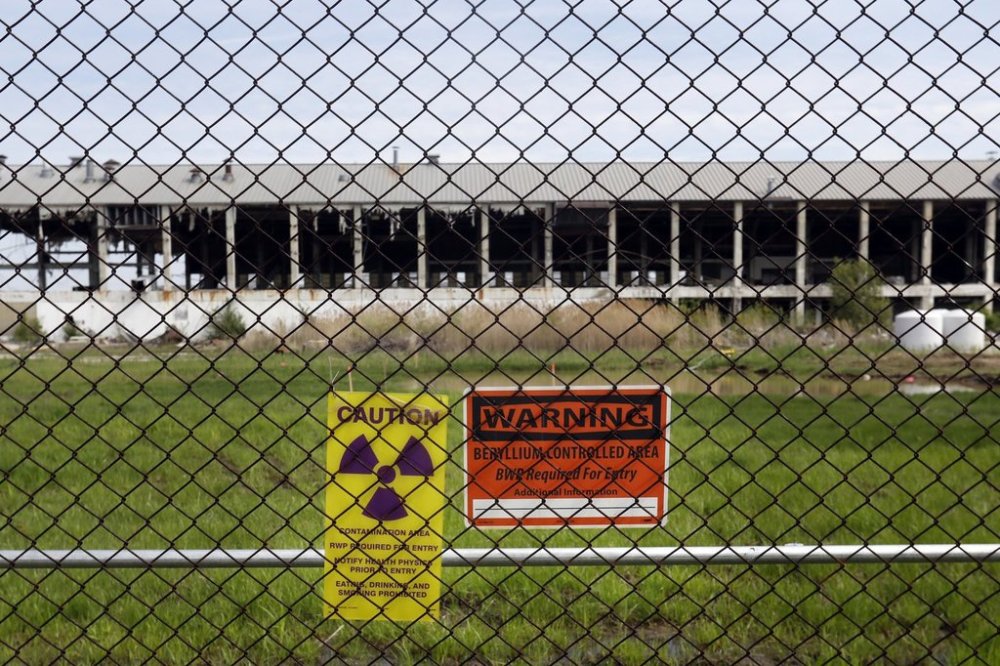
LUCKEY, Ohio (AP) — Authorities in Ohio plan to test the groundwater supply across a village near a former weapons plant after a newspaper investigation published Friday found high levels of radioactivity in samples taken at a school, athletic field, library and other sites.
The Army Corps of Engineers has been removing tons of contaminated soil from the Cold War-era site since 2018 and has long maintained that residential areas were not affected by the work.
However, The Blade in Toledo said its tests showed radioactivity levels 10 times higher than normal in water from a drinking fountain at Eastwood Middle School, 45 times higher than normal at the Luckey Library and 1,731 times higher than normal at a water pump near athletic fields.
“We’ve got to get to the bottom of this,” said Lt. Col. Robert Burnham, commander of the U.S. Army Corps of Engineers’ Buffalo District, which oversees the cleanup.
Nineteen of the 39 samples collected by the newspaper from well water across Luckey — at homes, businesses, and public places — showed radioactivity at least 10 times greater than what the federal government calls normal for the area, the newspaper said. The Blade hired an accredited private lab to conduct the testing.
The radioactivity detected was primarily bismuth-214, which decays from the radioactive gas radon-222. Experts agree that high levels of bismuth-214 suggest high levels of radon are also present.
Radon exposure is the leading cause of lung cancer in nonsmokers.
The testing also found low levels of radioactive cobalt-60, a man-made isotope, in two wells. Experts called that finding extremely rare.
Taehyun Roh, a Texas A&M University scientist who specializes in environmental exposures, said regulators should also conduct air and soil testing to assess the extent of the contamination and identify the source.
“Since this area likely has high radon levels, testing for radon in both air and water is advisable,” he wrote in an email. “A safe drinking water advisory should be issued, recommending the use of bottled water until further assessments and mitigation measures are in place.”
The Corps of Engineers has long maintained that residential drinking water was not being contaminated by the removal work. Burnham and others said they still believe that to be true, citing thousands of their own soil samples.
The state Environmental Protection Agency and Department of Health will lead the testing. In an email, Ohio EPA spokesperson Katie Boyer told the newspaper the contaminant levels in the public drinking water are still “within acceptable drinking water standards.” She said any concerns raised by the state testing would be addressed.
The 44-acre industrial site — 22 miles (35 kilometers) south of Toledo — was long crucial to America’s nuclear weapons program. In the 1940s, farmland was replaced by a sprawling defense plant that produced magnesium metal for the Manhattan Project. In the 1950s, the plant became the government’s sole source of beryllium metal for nuclear bombs, Cold War missiles and Space Race products, including a heat shield for Project Mercury.
“Things that happened generations ago are still affecting us,” said Karina Hahn-Claydon, a 50-year-old teacher whose family lives less than a mile from the site. “And that’s because the government didn’t take care of it.”
Private drinking wells, unlike municipal systems, are not regulated, and responsibility for testing is left to owners. The Blade’s testing took place from April 2024 through January.
Radioactivity has been linked to an increased risk of various cancers, including blood and thyroid cancers.