Ontario’s new mining bill is a ‘vendetta’ against species at risk: environmentalists
Advertisement
Read this article for free:
or
Already have an account? Log in here »
To continue reading, please subscribe:

Digital Subscription
One year of digital access for only $205*
- Enjoy unlimited reading on winnipegfreepress.com
- Read the E-Edition, our digital replica newspaper
- Access News Break, our award-winning app
- Play interactive puzzles
*First annual payment billed as $205.00 + GST for one year. This annual subscription will automatically renew at $233.00 + GST every 52 weeks (10% off the regular annual price of $259.35). Offer available to new and qualified returning subscribers only. Cancel any time.
To continue reading, please subscribe:
Add Free Press access to your Brandon Sun subscription for only an additional
$1 for the first 4 weeks*
- Enjoy unlimited reading on winnipegfreepress.com
- Read the E-Edition, our digital replica newspaper
- Access News Break, our award-winning app
- Play interactive puzzles
*Your next Brandon Sun subscription payment will increase by $1.00 and you will be charged $17.95 plus GST for four weeks. After four weeks, your payment will increase to $24.95 plus GST every four weeks.
Read unlimited articles for free today:
or
Already have an account? Log in here »
Hey there, time traveller!
This article was published 25/04/2025 (529 days ago), so information in it may no longer be current.
TORONTO – Ontario is moving to gut protections for endangered plants and animals as part of a mining bill, environmental groups say, with some calling it the most comprehensive attack on the province’s at-risk species legislation in nearly two decades.
The province disputes that characterization. Yet, policy advocates who reviewed the proposed legislation say the sweeping changes would erode already loosely enforced protections for more than 200 at-risk species, while giving the government greater power over scientists to decide what gets protected.
“This is really the most comprehensive undermining of the (Endangered Species Act) we’ve seen,” said Laura Bowman, a staff lawyer with environmental law charity Ecojustice.
Last week, the province tabled an omnibus bill it says is aimed at speeding up new mining projects. As part of that bill, the government eyes immediate changes to the Endangered Species Act, which it ultimately plans to repeal and replace with a new law.
The process to get a permit under the current law is “slow and complex,” the government’s proposal said, and the changes would offer a “reasonable, balanced approach to protecting species in Ontario.”
Environmentalists say there’s nothing balanced about the approach.
The government wants to dramatically narrow what “habitat” means and do away with requirements to create a strategy for how to recover at-risk species. It also appears to give itself greater power over an independent science-based committee to add and remove species from a protected list.
“I don’t think this is a major benefit to any industry. I think… it’s just an irrational vendetta against species that some industrial players are blaming for their delays,” said Bowman.
The definition of habitat would change from the entire area needed for a species to survive, to just its nest or den and the area immediately surrounding it. The changes would also strip the government of a responsibility to develop recovery strategies and management plans for at-risk species.
They would also allow companies to start developing a project that could destroy habitat or kill at-risk species without first getting a permit. Instead, the government is proposing to move to a not-yet-defined “registration-first approach” for all projects, which it says is already in place for most.
Critics fear registrations will only require broad, standardized measures to mitigate impacts to at-risk species, rather than project-specific permits that require a company to show how they plan to help.
“It’s very simplistic, it’s not rooted in the latest science,” said Anna Baggio, conservation director of Wildlands League. “They’re not even trying to pretend anymore, nature and biodiversity is just something in the way of development.”
A spokesperson for Environment, Conservation and Parks Minister Todd McCarthy said the proposed Species Conservation Act, which will replace the Endangered Species Act, will establish “robust environmental protections by creating clear, enforceable rules for businesses to follow and strengthening the ability to enforce species conservation laws.”
“This includes creating a mandatory requirement to register their project and tough fines for non-compliance – there will be no tolerance for bad actors,” said Alex Catherwood.
The Committee on the Status of Species at Risk in Ontario, also known as COSSARO, would continue to provide science-based advice on the listing of species, Catherwood said.
Green Party Leader Mike Schreiner said the new bill has caused him to rethink his plan to support the government’s moves to help workers in the face of the U.S. trade war.
“That goodwill gets undermined when you then use it to completely dismantle vital environmental protection and Indigenous consultation and consent,” Schreiner said.
“If you’re an animal or plant in Ontario, this is a pretty bad day for you, but it’s a bad day for people too because healthy ecosystems are vital to human survival and to undermine that I think is just reckless, dangerous, and short sighted.”
Many First Nations have come out against the proposed changes designed to speed up mining in their traditional territories, though some are in support. The mining industry supports the changes.
An industry association representing Ontario homebuilders also welcomed the changes and blamed permit delays in part on what it called a process that is “expensive, slow, and unnecessarily complicated.”
The new legislation would clear up the definition of endangered species and help “increase protections while allowing approvals for vital projects to go forward in a timely manner,” said Andres Ibarguen, a spokesman for the Ontario Home Builders Association.
Between 2015 and 2021 it took on average 851 days to complete a development-related permit process, but as of August 2020 that number had come down to 256 days, the province’s auditor general reported in 2021. Companies that complained to higher levels within the Environment Ministry were found to have received permits 43 per cent faster.
Permits were also delayed for some conservation work and fast-tracked for some developers, the audit found. Ministry staff suggested delays to a permit to help conserve the Massasauga rattlesnake likely contributed to the species becoming locally extinct, the report said.
Premier Doug Ford’s government has feverishly overhauled Ontario’s nature protection and oversight rules in recent years in what it suggests is a bid to speed up the construction of homes, mines, highways and other infrastructure in Ontario.
Ford teed off last year when asked about curbing environmental protections to get Highway 413 built, which included shrinking protected habitat for the red side dace, a fish in the project’s path.
“Let’s build the damn highway,” he said. “There’s hundreds of thousands of people stuck in their cars, backed up from here to Timbuktu, and you’re worried about a grasshopper jumping across the highway. We need to start building and we’re going to start building, simple as that.”
Ontario’s endangered species law, once considered a gold standard for its automatic protection for critical habitat and science-based assessments, has been repeatedly weakened by regulations, environmental groups say.
Forestry companies have been exempted from the law since it was passed, a carveout made permanent during the pandemic despite the possible risks to endangered caribou. Since 2021, developers have been allowed to pay into a conservation fund instead of taking on-site measures to protect species.
That fund will now be wound down since the registration approach won’t include the option to pay a fee, the government’s proposal said. To date, none of the money had been spent on species protections.
The government says the funds will still go toward activities “in alignment” with species protection and conservation goals. It’s also quadrupling a species conservation program to $20 million annually to support “efforts to conserve and protect listed species,” said Catherwood, the minster’s spokesperson.
What protections do exist in law for at-risk species have been found to be laxly applied and enforced.
The Environment Ministry has never turned down an application to harm a species or its habitat, the auditor general reported in 2021. Most approvals were granted automatically without review and no inspections were carried out to make sure companies followed their conditions once work started.
The ministry also didn’t consider the cumulative impact of permitting activities that could repeatedly harm the same species, the audit found.
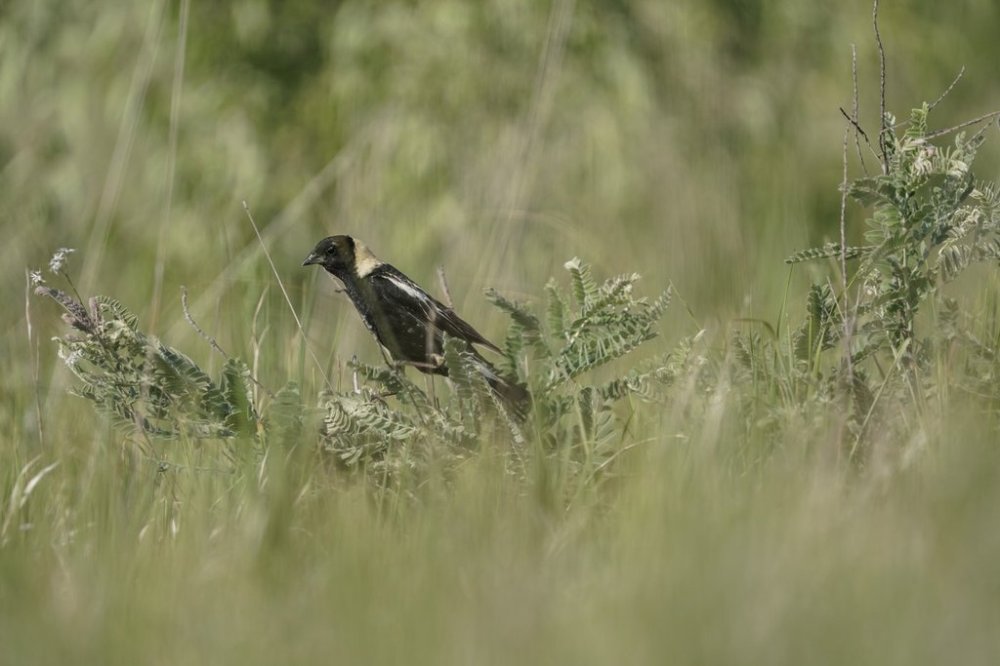
Blanding turtles, which have seen their numbers decline by 60 per cent over three generations largely due to habitat loss, had been impacted by more than 1,400 approvals from 2007 to 2021, the report found. Bobolink, a grassland songbird whose numbers have collapsed by 77 per cent since the 1970s, had been impacted by more than 2,000 approvals.
A 2023 followup report found the government had fully implemented four of the auditor’s 52 recommendations. Seventeen had seen little or no progress and 22 would not be implemented.
This report by The Canadian Press was first published April 25, 2025.