

Judge awards $680K to 17 families exposed to jet fuel-tainted water at Hawaii Naval base
Advertisement
Read this article for free:
or
Already have an account? Log in here »
To continue reading, please subscribe:
Monthly Digital Subscription
$1 per week for 24 weeks*
- Enjoy unlimited reading on winnipegfreepress.com
- Read the E-Edition, our digital replica newspaper
- Access News Break, our award-winning app
- Play interactive puzzles
*Billed as $4.00 plus GST every four weeks. After 24 weeks, price increases to the regular rate of $19.95 plus GST every four weeks. Offer available to new and qualified returning subscribers only. Cancel any time.
Monthly Digital Subscription
$4.99/week*
- Enjoy unlimited reading on winnipegfreepress.com
- Read the E-Edition, our digital replica newspaper
- Access News Break, our award-winning app
- Play interactive puzzles
*Billed as $19.95 plus GST every four weeks. Cancel any time.
To continue reading, please subscribe:
Add Free Press access to your Brandon Sun subscription for only an additional
$1 for the first 4 weeks*
*Your next subscription payment will increase by $1.00 and you will be charged $16.99 plus GST for four weeks. After four weeks, your payment will increase to $23.99 plus GST every four weeks.
Read unlimited articles for free today:
or
Already have an account? Log in here »
Hey there, time traveller!
This article was published 08/05/2025 (325 days ago), so information in it may no longer be current.
A federal judge has awarded a total of more than $680,000 to 17 families who say they were sickened by a 2021 jet fuel leak into a Navy drinking water system in Hawaii. The bellwether cases set the legal tone for another 7,500 military family members, civilians and service members whose lawsuits are still awaiting resolution.
U.S. District Judge Leslie Kobayashi handed down the ruling Wednesday, awarding from $5,000 to more than $104,000 to each plaintiff. In her order, Kobayashi wrote that it was clear that even though the contaminated water could have caused many of the kinds of medical problems the military families experienced, there wasn’t enough evidence to prove a direct link.
The amount awarded to each of plaintiff was significantly smaller than the roughly $225,000 to $1.25 million that one of their attorneys, Kristina Baehr, requested during the two-week trial in federal court in Honolulu.
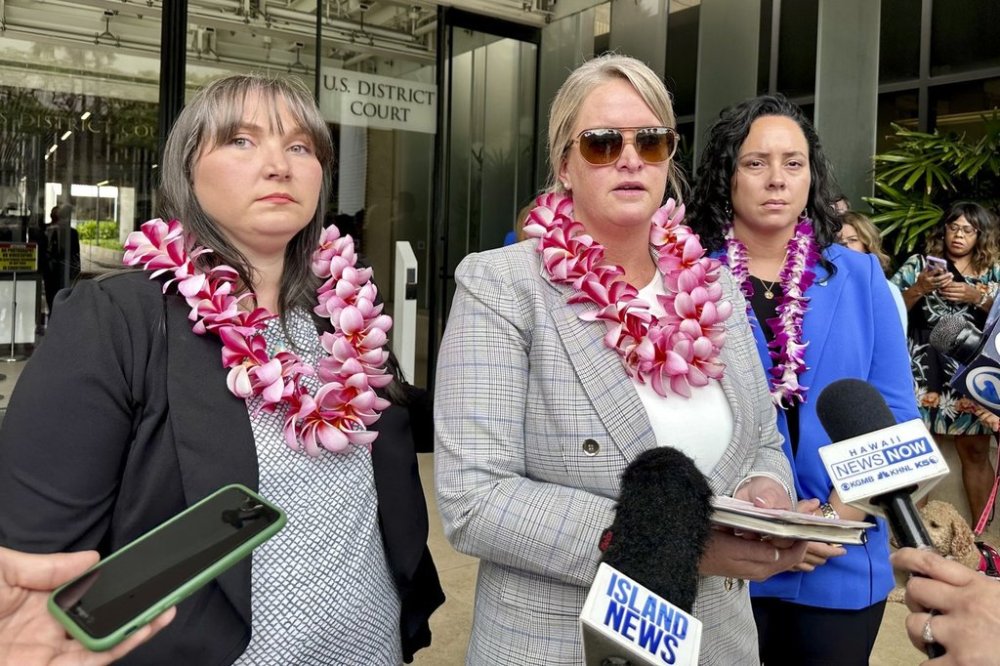
As bellwether plaintiffs, the 17 were chosen because they were seen as representative of the thousands of other people whose cases are still pending.
Baehr called the damage awards disappointing but said the families “prevailed against all odds against the U.S. Government.”
“These families can be proud that they helped prove to the world what truly happened when the Navy poisoned the water supply near Pearl Harbor and sickened so many,” Baehr said in a press release. “The Court rejected the Government’s argument that thousands of our clients were just psychosomatic and that there was not enough fuel to make anyone sick.”
Baehr said the legal team was reviewing options for resolving the thousands of remaining cases.
The government admitted liability for the spill before the trial began, but its attorneys disputed whether the plaintiffs were exposed to enough jet fuel to cause the vomiting, rashes and other alleged negative health effects.
The spill happened at the Red Hill Bulk Fuel Storage Facility, a giant installation built in the early 1940s to supply the planes and ships crossing the Pacific Ocean. The installation includes a series of massive tanks — each roughly the height of a 25-story building, capable of holding 12.5 million gallons (47.3 million liters) — hidden inside caverns that the military excavated from a mountain ridge above Pearl Harbor.
Underneath it all is an aquifer, equipped with wells that provided drinking water to the Navy and to the city of Honolulu.

In May of 2021, a ruptured pipe allowed more than 20,000 gallons (75,700 liters) of fuel to spill into a fire suppression line. It remained unnoticed inside the sagging line for six months until a cart rammed the line, releasing the trapped fuel. Around Thanksgiving Day, much of that fuel flowed into a drain and drinking water well that supplied 90,000 people at Joint Base Pearl Harbor-Hickam.
A Navy investigation report released the following year found that military officials failed to immediately notify the state Department of Health, that the Navy missed four separate opportunities to activate emergency response plans to respond to the water contamination, and that the Navy told residents that the drinking water was safe without doing any laboratory analysis to confirm that was the case.
Within a week of the spill, military families started complaining about health problems — including peeling skin, stomach pain, vomiting and diarrhea and other issues.
The plaintiffs said they were left with ongoing health problems, including seizures, asthma, eczema and vestibular dysfunction.
The spill sparked an outcry from lawmakers, environmental groups and residents, and the military eventually agreed to drain the tanks and close the facility. The tanks were drained last year.