

Endangered whales gave birth to few babies this year as population declines
Advertisement
Read this article for free:
or
Already have an account? Log in here »
To continue reading, please subscribe:
Monthly Digital Subscription
$1 per week for 24 weeks*
- Enjoy unlimited reading on winnipegfreepress.com
- Read the E-Edition, our digital replica newspaper
- Access News Break, our award-winning app
- Play interactive puzzles
*Billed as $4.00 plus GST every four weeks. After 24 weeks, price increases to the regular rate of $19.95 plus GST every four weeks. Offer available to new and qualified returning subscribers only. Cancel any time.
Monthly Digital Subscription
$4.99/week*
- Enjoy unlimited reading on winnipegfreepress.com
- Read the E-Edition, our digital replica newspaper
- Access News Break, our award-winning app
- Play interactive puzzles
*Billed as $19.95 plus GST every four weeks. Cancel any time.
To continue reading, please subscribe:
Add Free Press access to your Brandon Sun subscription for only an additional
$1 for the first 4 weeks*
*Your next subscription payment will increase by $1.00 and you will be charged $16.99 plus GST for four weeks. After four weeks, your payment will increase to $23.99 plus GST every four weeks.
Read unlimited articles for free today:
or
Already have an account? Log in here »
Hey there, time traveller!
This article was published 19/05/2025 (314 days ago), so information in it may no longer be current.
SCARBOROUGH, Maine (AP) — A vanishing species of whale gave birth to few babies this birthing season, raising alarms among scientists and conservationists who fear the animal could go extinct.
The whale is the North Atlantic right whale, which numbers only about 370 and has declined in population in recent years. The whales give birth to calves off the southeastern United States from mid-November to mid-April, and federal authorities have said they need to have at least 50 calves per season to start recovering.
The whales didn’t come anywhere near that number this year. The calving season produced only 11 mother-calf pairs, scientists with the New England Aquarium in Boston said.
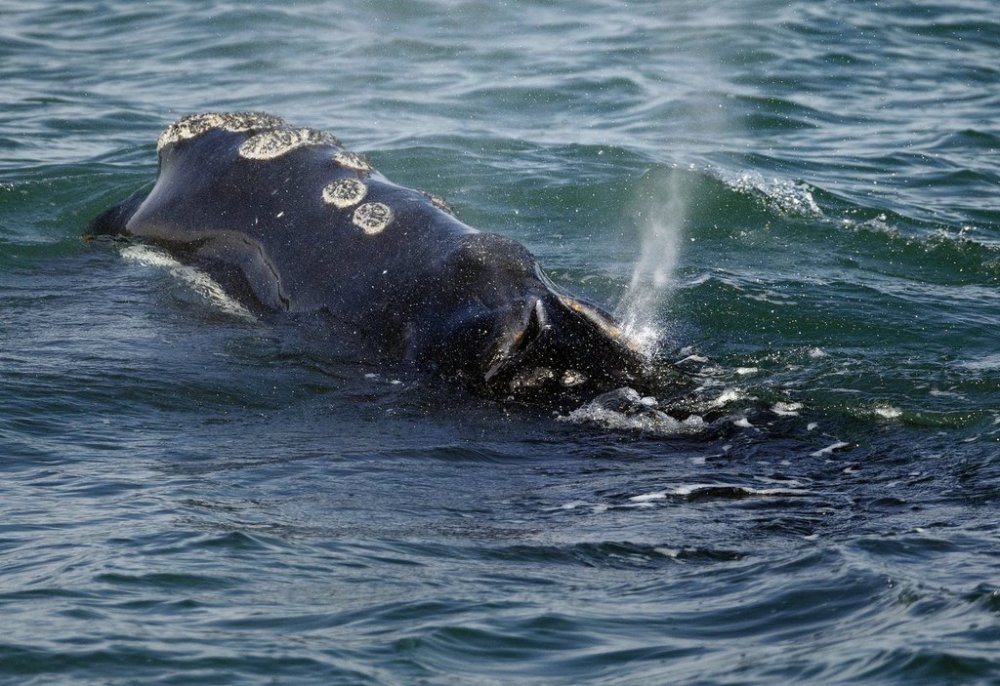
The lack of baby whales underscores the need for protection of the whales, conservationists said Monday. The whales are vulnerable to entanglement in marine fishing gear and collisions with large ships.
“They’re also reproducing more slowly than they used to,” said the International Fund for Animal Welfare in its calving season report card. “This is likely due to stress from entanglements, navigation among busy maritime traffic, increasing ocean noise, and the changing distribution of their food sources.”
The calving season did have some bright spots. Several females gave birth for the first time, and that gives hope for the future, the aquarium said in a statement. The whale population only has about 70 reproductive females left.
“With past calf counts ranging from 39 to zero, we never know how any calving season will unfold. While the calf count is relatively low this year, I am encouraged by four new mothers being added to the reproductive pool,” said Philip Hamilton, senior scientist in the Aquarium’s Anderson Cabot Center for Ocean Life.

The whales can weigh up to 150,000 pounds (45,360 kilograms) and were heavily exploited during the era of commercial whaling. They’ve been protected for decades, but have been slow to recover.
In recent years, scientists have said the whales have strayed from established protected zones in search of food, and that has put them at elevated risk of entanglements and collisions. The whales migrate from the south to New England and Canada to feed on tiny ocean organisms.