

Environmental lawyers tell courtroom Ottawa’s protections for piping plovers flawed
Advertisement
Read this article for free:
or
Already have an account? Log in here »
To continue reading, please subscribe:
Monthly Digital Subscription
$1 per week for 24 weeks*
- Enjoy unlimited reading on winnipegfreepress.com
- Read the E-Edition, our digital replica newspaper
- Access News Break, our award-winning app
- Play interactive puzzles
*Billed as $4.00 plus GST every four weeks. After 24 weeks, price increases to the regular rate of $19.95 plus GST every four weeks. Offer available to new and qualified returning subscribers only. Cancel any time.
Monthly Digital Subscription
$4.99/week*
- Enjoy unlimited reading on winnipegfreepress.com
- Read the E-Edition, our digital replica newspaper
- Access News Break, our award-winning app
- Play interactive puzzles
*Billed as $19.95 plus GST every four weeks. Cancel any time.
To continue reading, please subscribe:
Add Free Press access to your Brandon Sun subscription for only an additional
$1 for the first 4 weeks*
*Your next subscription payment will increase by $1.00 and you will be charged $16.99 plus GST for four weeks. After four weeks, your payment will increase to $23.99 plus GST every four weeks.
Read unlimited articles for free today:
or
Already have an account? Log in here »
Hey there, time traveller!
This article was published 21/05/2025 (311 days ago), so information in it may no longer be current.
HALIFAX – Environmental groups argued in Federal Court this week that Ottawa’s plans for protecting the habitat of the piping plover are too vague to provide adequate protection to the endangered species.
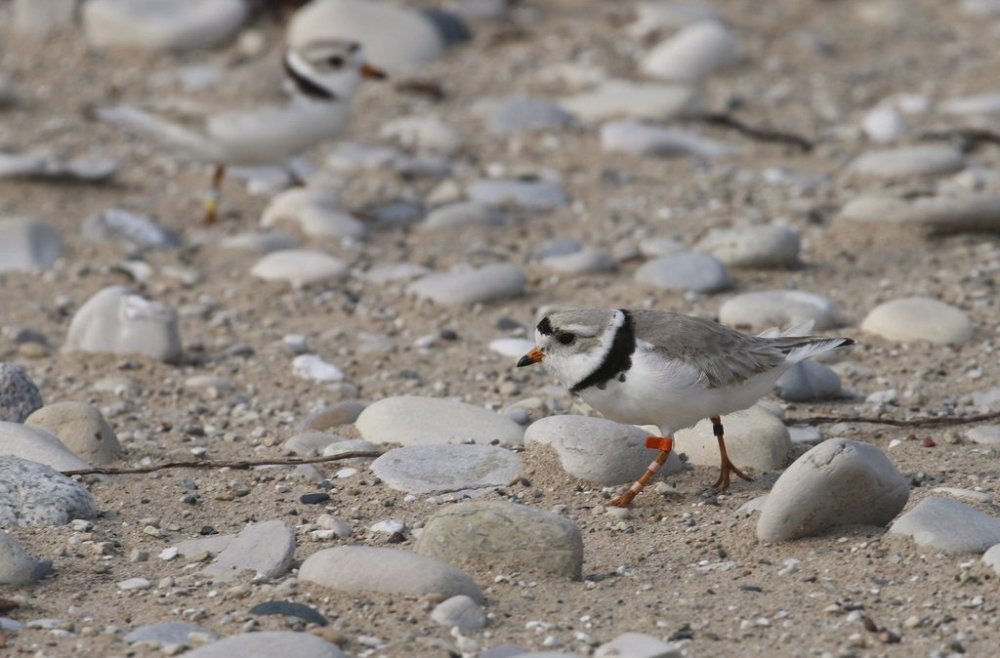
The migratory shorebirds build their nests along coastal beaches of the Atlantic Ocean, where the animals are increasingly at risk from human activities.
Lawyers for East Coast Environmental Law and for Nature Nova Scotia presented their case on Tuesday, arguing that the approach approved by the federal minister in 2022 for protecting specific parts of beaches has unclear language and is weaker than Ottawa’s prior conservation strategy from a decade earlier.
Federal lawyers provided countering arguments in the Halifax hearing on Wednesday morning before Justice Richard Southcott, who reserved his decision on the matter.
Tina Northrup, a staff lawyer with East Coast Environmental Law, said in an interview Wednesday that the system of defining critical habitat within specific portions – or grids – of beaches is creating uncertainty.
“We’ve moved away from an approach that identified entire beaches as critical habitats for plover,” said Northrup, adding that the old system led to a simple warning sign for an entire area that clearly prohibited activities harmful to the birds.
“Now we have a situation where it’s not necessarily the entire beach, it’s pieces of the beach, and even within those pieces, you’re not 100 per cent sure whether it’s critical habit (for the plovers) because that definition depends on whether key biological and physical features may or may not be there,” she said.
The environmental groups say the changes don’t comply with “the overall purpose and scheme” of the federal Species at Risk Act and therefore aren’t legal.
A spokeswoman for the Environment Department said in an email on Tuesday night the new approach was developed using information and input from federal, provincial, territorial and Indigenous governments. Cecelia Parsons also said the protection strategy meets Canada’s obligations under the Species at Risk Act, using refined habitat mapping and “conservation efforts based on the latest science.”
According to the 2022 federal recovery plan, the plovers’ breeding population declined in Atlantic Canada and Quebec over the past century, and in 2002 the birds were listed as endangered – meaning they risk going extinct in the near future.
According to the court submissions by Nature Nova Scotia and East Coast Environmental Law, the current population of nesting pairs is estimated at between 170 and 190 pairs – considerably lower than the 2022 recovery plan’s long-term goal of 310 nesting pairs.
The birds, which spend about half the year along the Atlantic coasts, rely on the palette of natural colours in their plumage and on their backs as camouflage against predators.
This report by The Canadian Press was first published May 21, 2025.