Army Corps analysis finds Great Lakes pipeline tunnel would have sweeping environmental impacts
Advertisement
Read this article for free:
or
Already have an account? Log in here »
To continue reading, please subscribe:

Digital Subscription
One year of digital access for only $205*
- Enjoy unlimited reading on winnipegfreepress.com
- Read the E-Edition, our digital replica newspaper
- Access News Break, our award-winning app
- Play interactive puzzles
*First annual payment billed as $205.00 + GST for one year. This annual subscription will automatically renew at $233.00 + GST every 52 weeks (10% off the regular annual price of $259.35). Offer available to new and qualified returning subscribers only. Cancel any time.
To continue reading, please subscribe:
Add Free Press access to your Brandon Sun subscription for only an additional
$1 for the first 4 weeks*
- Enjoy unlimited reading on winnipegfreepress.com
- Read the E-Edition, our digital replica newspaper
- Access News Break, our award-winning app
- Play interactive puzzles
*Your next Brandon Sun subscription payment will increase by $1.00 and you will be charged $17.95 plus GST for four weeks. After four weeks, your payment will increase to $24.95 plus GST every four weeks.
Read unlimited articles for free today:
or
Already have an account? Log in here »
Hey there, time traveller!
This article was published 30/05/2025 (503 days ago), so information in it may no longer be current.
Building an underground tunnel for an aging Enbridge oil pipeline that stretches across a Great Lakes channel could destroy wetlands and harm bat habitats but would eliminate the chances of a boat anchor rupturing the line and causing a catastrophic spill, the U.S. Army Corps of Engineers said Friday in a long-awaited draft analysis of the proposed project’s environmental impacts.
The analysis moves the corps a step closer to approving the tunnel for Line 5 in the Straits of Mackinac. The tunnel was proposed in 2018 at a cost of $500 million but has been bogged down by legal challenges. The corps fast-tracked the project in April after President Donald Trump ordered federal agencies in January to identify energy projects for expedited emergency permitting.
A final environmental assessment is expected by autumn, with a permitting decision to follow later this year. The agency initially planned to issue a permitting decision in early 2026.
With that permit in hand, Enbridge would only need permission from the Michigan Department of Environment, Great Lakes and Energy before it could begin constructing the tunnel. That’s far from a given, though.
Environmentalists have been pressuring the state to deny the permit. Meanwhile, Michigan Attorney General Dana Nessel and Gov. Gretchen Whitmer are trying to win court rulings that would force Enbridge to remove the existing pipeline from the straits for good.
Construction could have major short-term, long-term impacts
The analysis notes that the tunnel would eliminate the risk of a boat anchor rupturing the pipeline and causing a spill in the straits, a key concern for environmentalists. But the construction would have sweeping effects on everything from recreation to wildlife.
Many of the impacts, such as noise, vistas marred by 400-foot (121-meter) cranes, construction lights degrading stargazing opportunities at Headlands International Dark Sky Park and vibrations that would disturb aquatic wildlife would end when the work is completed, the report found.
Other impacts would last longer, including the loss of wetlands and vegetation on both sides of the strait that connects Lake Huron and Lake Michigan, and the loss of nearly 300 trees that the northern long-eared bat and tricolored bat use to roost. Grading and excavation also could disturb or destroy archaeological sites.
The tunnel-boring machine could cause vibrations that could shift the area’s geology. Soil in the construction area could become contaminated and nearly 200 truck trips daily during the six-year construction period would degrade area roads, the analysis found. Gas mixing with water seeping into the tunnel could result in an explosion, but the analysis notes that Enbridge plans to install fans to properly ventilate the tunnel during excavation.
Enbridge has pledged to comply with all safety standards, replant vegetation where possible and contain erosion, the analysis noted. The company also has said it would try to limit the loudest work to daytime hours as much as possible, and offset harm to wetlands and protected species by buying credits through mitigation banks. That money can then be used to fund restoration in other areas.
“Our goal is to have the smallest possible environmental footprint,” Enbridge officials said in a statement.
The Sierra Club issued a statement Friday saying the tunnel remains “an existential threat.”
“Chances of an oil spill in the Great Lakes — our most valuable freshwater resource — skyrockets if this tunnel is built in the Straits,” the group said. “We can’t drink oil. We can’t fish or swim in oil.”
Julie Goodwin, a senior attorney with Earthjustice, an environmental law group that opposes the project, said the corps failed to consider the impacts of a spill that could still happen on either side of the straits or stopping the flow of oil through the Great Lakes.
“My key takeaways are the Army corps has put blinders are in service to Enbridge and President Trump’s fossil fuel agenda,” she said.
Tunnel would protect portion of Line 5 running through straits
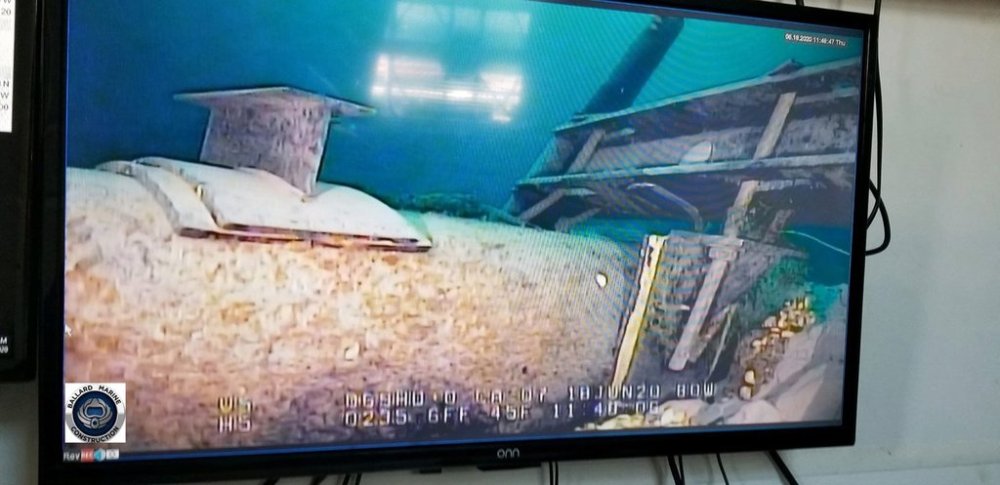
Enbridge has been using the Line 5 pipeline to transport crude oil and natural gas liquids between Superior, Wisconsin, and Sarnia, Ontario, since 1953. Roughly 4 miles (6 kilometers) of the pipeline runs along the bottom of the Straits of Mackinac.
Concerns about the aging pipeline rupturing and causing a potentially disastrous spill in the straits have been building over the last decade. Those fears intensified in 2018 when an anchor damaged the line.
Enbridge contends that the line remains structurally sound, but it struck a deal with then-Michigan Gov. Rick Snyder’s administration in 2018 that calls for the company to replace the straits portion of the line with a new section that would be encased in a protective underground tunnel.
Enbridge and environmentalists spar in court battles

Environmentalists, Native American tribes and Democrats have been fighting in court for years to stop the tunnel and force Enbridge to remove the existing pipeline from the straits. They’ve had little success so far.
A Michigan appellate court in February validated the state Public Service Commission’s permits for the tunnel. Nessel sued in 2019 seeking to void the easement that allows Line 5 to run through the straits. That case is still pending. Whitmer revoked the easement in 2020, but Enbridge challenged that decision and a federal appellate court in April ruled that the case can proceed.
Another legal fight over Line 5 in Wisconsin
About 12 miles (19 kilometers) of Line 5 runs across the Bad River Band of Lake Superior Chippewa’s reservation in northern Wisconsin. That tribe sued in 2019 to force Enbridge to remove the line from the reservation, arguing it’s prone to spilling and that easements allowing it to operate on the reservation expired in 2013.
Enbridge has proposed a 41-mile (66-kilometer) reroute around the reservation. The tribe has filed a lawsuit seeking to void state construction permits for the project and has joined several other groups in challenging the permits through the state’s contested case process.