

Peru reinstates full protection of Nazca Lines reserve after controversial cutback
Advertisement
Read this article for free:
or
Already have an account? Log in here »
To continue reading, please subscribe:
Monthly Digital Subscription
$1 per week for 24 weeks*
- Enjoy unlimited reading on winnipegfreepress.com
- Read the E-Edition, our digital replica newspaper
- Access News Break, our award-winning app
- Play interactive puzzles
*Billed as $4.00 plus GST every four weeks. After 24 weeks, price increases to the regular rate of $19.95 plus GST every four weeks. Offer available to new and qualified returning subscribers only. Cancel any time.
Monthly Digital Subscription
$4.99/week*
- Enjoy unlimited reading on winnipegfreepress.com
- Read the E-Edition, our digital replica newspaper
- Access News Break, our award-winning app
- Play interactive puzzles
*Billed as $19.95 plus GST every four weeks. Cancel any time.
To continue reading, please subscribe:
Add Free Press access to your Brandon Sun subscription for only an additional
$1 for the first 4 weeks*
*Your next subscription payment will increase by $1.00 and you will be charged $16.99 plus GST for four weeks. After four weeks, your payment will increase to $23.99 plus GST every four weeks.
Read unlimited articles for free today:
or
Already have an account? Log in here »
Hey there, time traveller!
This article was published 09/06/2025 (290 days ago), so information in it may no longer be current.
BOGOTA, Colombia (AP) — Peru’s government has reversed its controversial decision to shrink the protected area surrounding the Nazca Lines, which had faced criticism for opening the area to informal miners.
The country’s culture ministry on Sunday nullified last week’s resolution that had reinstated the boundary map set in 2004. The switch followed severe backlash after the government approved a 42% reduction in the zone — about 2,400 square kilometers (926 square miles) — and to allow miners to seek formal permits in previously restricted areas.
The original protected zone — spanning 5,600 square kilometers (2,162 square miles) — will remain in effect. The ministry also ordered an update of the site’s management plan within 10 days and the formation of a technical panel, which will include government representatives, academics, UNESCO, and civil society figures to define future use and conservation strategies.
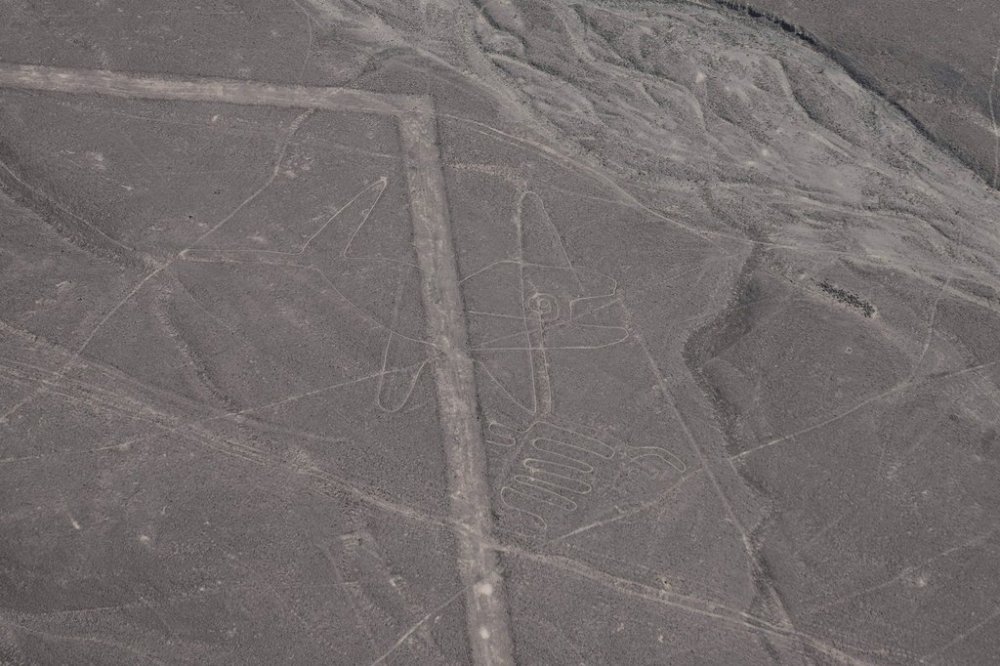
The area in question forms part of a UNESCO-recognized World Heritage Site, home to the Nazca Lines — massive geoglyphs etched into the desert over 1,500 years ago — and one of Peru’s most fragile desert ecosystems.
“Thanks to the strong rejection by national and international public opinion, the government revoked the reduction of the area of the Nazca Archaeological Reserve,” Mariano Castro, Peru’s former vice minister of the environment, told The Associated Press.
Castro said the government justified its decision by saying it had not previously discussed its decision publicly.
“In other words, it (the government) does not go so far as to admit the measure was wrong, despite evidence of the presence of illegal mining, which seriously endangers and threatens the integrity of the Nazca Lines and petroglyphs,” he said.
The ministry said a new government entity will be created to oversee the site’s management, and technical studies will be published to ensure transparency and accountability.
Peruvian environmental lawyer, César Ipenza, who follows the issue closely, welcomes the technical panel, which will include local authorities, but he still has concerns.
“The truth is that the local authority is actually the one that has been calling for the reduction of the boundaries of the Nazca Lines,” Ipenza told the AP. “There will also be strong pressure from miners for this to go ahead.”

Ipenza is concerned that informal mining has been steadily expanding in the area, even though all mining activity is officially banned.
“The government hasn’t taken action to remove these miners and as a result, there has been pressure to officially open the area to allow informal and illegal miners to become formalized,” he said.
Following last week’s announcement, UNESCO told AP it has sent a letter to the Peruvian authorities requesting more information. The organization had no further comment.
—-
The Associated Press’ climate and environmental coverage receives financial support from multiple private foundations. AP is solely responsible for all content. Find AP’s standards for working with philanthropies, a list of supporters and funded coverage areas at AP.org.