

Nigerian leader’s pardon of executed Ogoni activists draws criticisms
Advertisement
Read this article for free:
or
Already have an account? Log in here »
To continue reading, please subscribe:
Monthly Digital Subscription
$1 per week for 24 weeks*
- Enjoy unlimited reading on winnipegfreepress.com
- Read the E-Edition, our digital replica newspaper
- Access News Break, our award-winning app
- Play interactive puzzles
*Billed as $4.00 plus GST every four weeks. After 24 weeks, price increases to the regular rate of $19.95 plus GST every four weeks. Offer available to new and qualified returning subscribers only. Cancel any time.
Monthly Digital Subscription
$4.99/week*
- Enjoy unlimited reading on winnipegfreepress.com
- Read the E-Edition, our digital replica newspaper
- Access News Break, our award-winning app
- Play interactive puzzles
*Billed as $19.95 plus GST every four weeks. Cancel any time.
To continue reading, please subscribe:
Add Free Press access to your Brandon Sun subscription for only an additional
$1 for the first 4 weeks*
*Your next subscription payment will increase by $1.00 and you will be charged $16.99 plus GST for four weeks. After four weeks, your payment will increase to $23.99 plus GST every four weeks.
Read unlimited articles for free today:
or
Already have an account? Log in here »
Hey there, time traveller!
This article was published 13/06/2025 (290 days ago), so information in it may no longer be current.
ABUJA, Nigeria (AP) — Nigeria’s President Bola Tinubu has posthumously pardoned nine environmental activists executed 30 years ago by the then-ruling military junta, drawing sharp criticism and anger from activists who argued on Friday that the individuals committed no crime.
During an event Thursday to mark the 26th anniversary of Nigeria’s return to democracy, Tinubu pardoned the “Ogoni Nine,” including celebrated writer Ken Saro-Wiwa, and described them as “national heroes.”
The men were convicted of murdering four local chiefs and were hanged in 1995 by the then-military regime led by Gen. Sani Abacha. They were part of the Ogoni ethnic group in the oil-rich Niger Delta region, and had protested environmental pollution in the region by multinational oil companies, particularly Shell.
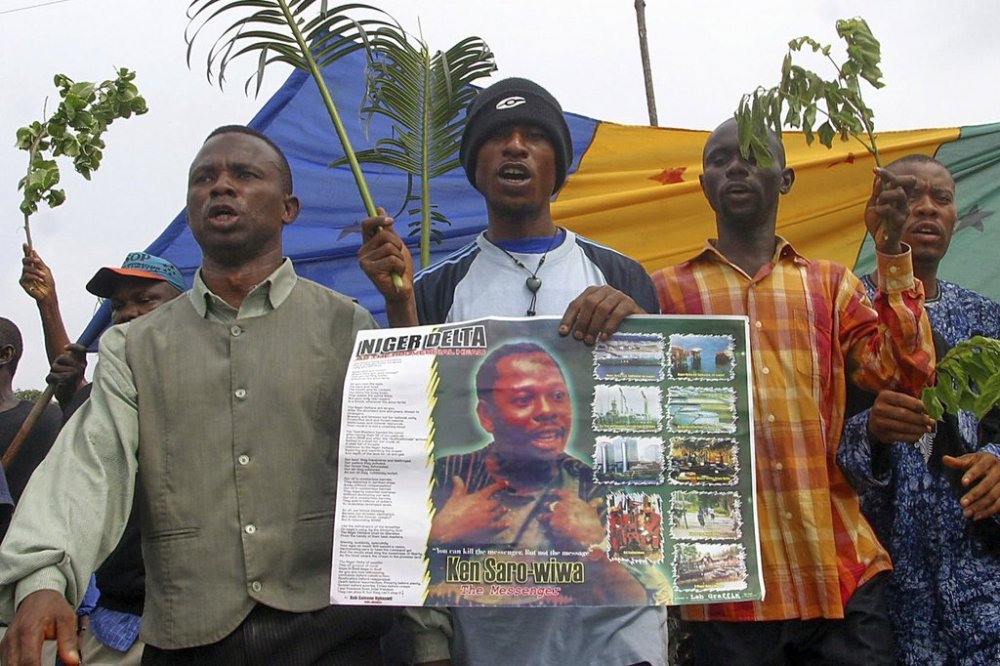
Their trial and murder sparked international outrage at the time, with rights groups calling it unjust and lacking credible evidence.
Local rights and civil society groups described Tinubu’s pardon as misleading and “insulting.”
“A pardon is given to people who have been convicted of wrongdoing,” said Ken Henshaw, executive director of local rights group We The People.

Henshaw said the process leading to their execution did not prove that they were guilty of the allegations against them. “For him (Tinubu) to say he wants to pardon them is a misnomer,” he added.
The Nigerian government must also recognize formally that the murdered activists are “innocent of any crime and fully exonerate them,” said Isa Sanusi, Amnesty International Nigeria’s director.
“Full justice for the Ogoni Nine is only a first step,” said Sanusi. “Much more needs to be done to get justice for communities in the Niger Delta, including holding Shell and other oil companies to account for the damage they have done and continue to do.”
____
Follow AP’s Africa coverage at: https://apnews.com/hub/africa